{{CTA1}}
A comprehensive guide to pricing strategies, project estimation, and client communication for residential remodeling professionals.
Setting the right price for a remodeling project is one of the most critical challenges for any home remodeling contractor. It's a delicate balance between winning the bid and ensuring profitability.
Underprice a kitchen remodel, and you could end up working for free or, worse, losing money.
Overprice it, and you risk losing the job to a competitor. This guide will explore proven pricing strategies, compare different bidding models, and provide a framework for creating accurate, profitable estimates that win clients and build a sustainable business.
Why Effective Pricing is Crucial for Your Remodeling Business
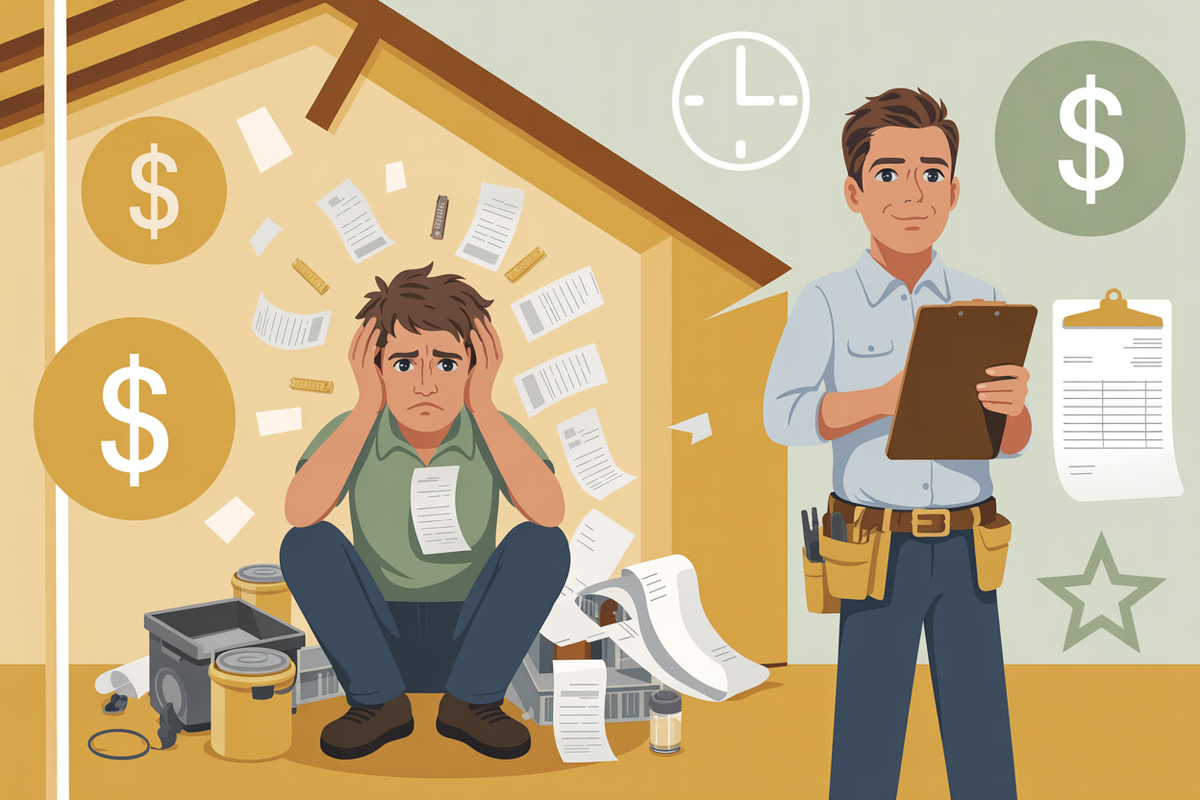
In the home remodeling industry, your reputation is everything. Effective pricing is at the heart of that reputation. While it might be tempting to submit the lowest bid to win a job, this strategy is often unsustainable. A high-volume, low-margin business model can lead to burnout, financial instability, and a greater risk of cutting corners, which can result in liability issues and a damaged reputation.
Conversely, if your prices are consistently higher than the competition without clear justification, you'll struggle to win projects. The key is to develop a pricing strategy that covers all your costs, generates a healthy profit margin, and communicates the value of your craftsmanship and service to the client.
Pricing Models for Remodeling Projects: Fixed-Price vs. Cost-Plus
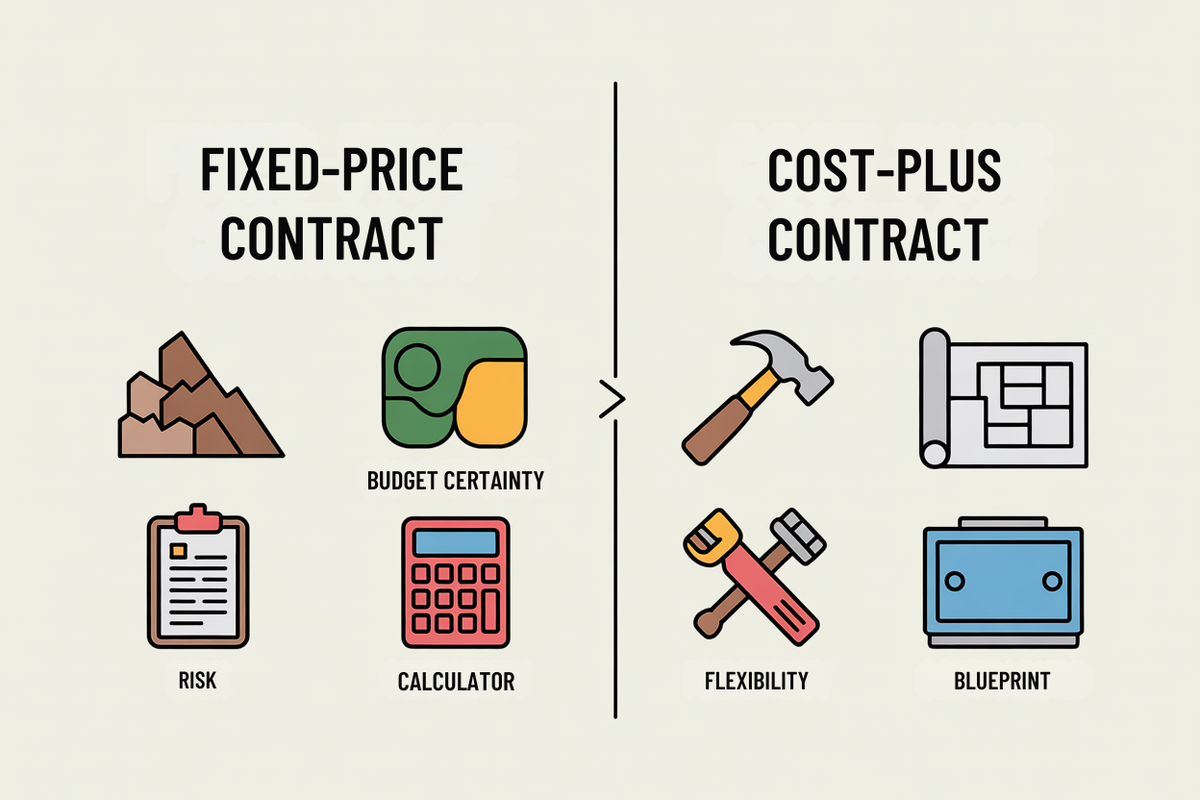
Most remodeling projects are priced using one of two primary models: Fixed-Price (also known as a lump sum or flat rate) or Cost-Plus (also known as time and materials).
Fixed-Price Contracts

A fixed-price contract is a single price for the entire project. This model is often preferred by clients because it provides budget certainty. For the contractor, it offers the potential for higher profits if the project is completed under budget and ahead of schedule.
However, the risk falls almost entirely on the contractor. If unforeseen problems arise, such as discovering structural issues once walls are opened, the contractor must absorb the extra costs.
Pros:
- Client Attraction: Clients appreciate knowing the total cost upfront.
- High-Profit Potential: Efficient project management can lead to significant profits.
- Clear Scope: Requires a detailed and clearly defined scope of work from the outset.
Cons:
- High Risk for Contractor: Unexpected issues can quickly erode or eliminate profit margins.
- Requires Detailed Upfront Planning: Accurate estimation is critical; there is little room for error.
- Less Flexibility: Changes to the project require formal change orders, which can be time-consuming to negotiate.
Best for: Standardized projects with a well-defined scope and minimal unknowns, such as a straightforward bathroom vanity replacement or finishing a basement with a simple layout.
Cost-Plus Contracts

A cost-plus contract, also known as a time and materials contract, bills the client for the actual costs of labor and materials, plus a percentage or fixed fee for the contractor's overhead and profit. This model is more flexible and carries less risk for the contractor.
Clients, however, may be hesitant about the lack of a firm final price. To alleviate this concern, many contractors offer a cost-plus contract with a guaranteed maximum price (GMP), which sets a ceiling on the total project cost.
Pros:
- Lower Risk for Contractor: Protects against unforeseen conditions and ensures all costs are covered.
- Transparency for Client: The client sees all receipts and labor charges, which can build trust.
- Flexibility: Easily accommodates changes and adjustments to the project scope.
Cons:
- Budget Uncertainty for Client: The final cost is not known at the start, which can be a major deterrent.
- Requires Meticulous Record-Keeping: Every expense must be tracked and documented.
- Potential for Disputes: Clients may question labor hours or material costs if not clearly communicated.
Best for: Large, complex projects with many unknowns, high-end custom builds, or situations where the client desires a high degree of flexibility and involvement.
The Hybrid Approach: Combining Fixed-Price and Cost-Plus
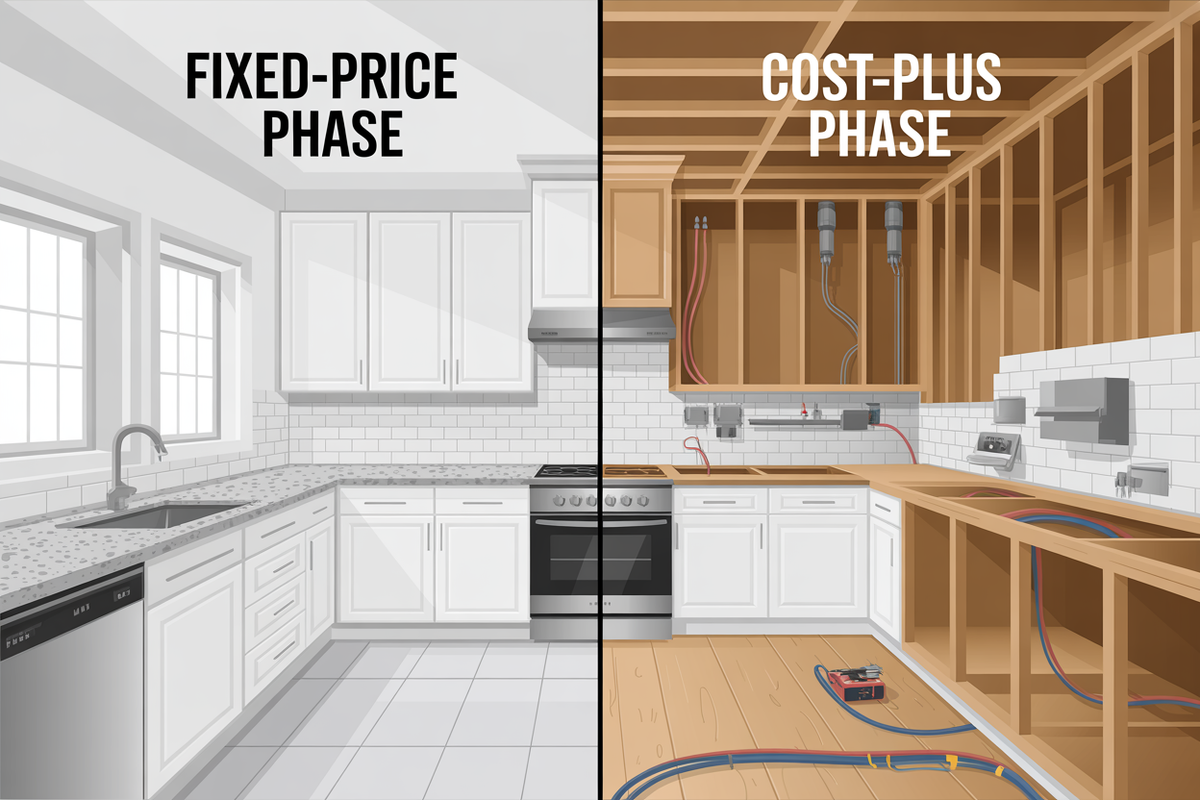
Many successful remodeling contractors use a hybrid model to balance the needs of the client with the risks to their business. This approach might involve using a fixed price for the initial, well-defined phases of a project and then switching to a cost-plus model for elements with more uncertainty.
Example Hybrid Pricing Scenarios:
Kitchen Remodel: Offer a fixed price for the cabinet and countertop installation but use a cost-plus model for the demolition and framing phase, where hidden plumbing or electrical issues may arise.
Historic Home Restoration: Provide a fixed price for specific, predictable tasks like window replacement, but use a cost-plus agreement for the structural repairs, which are often full of surprises.
Allowances: A common hybrid technique is to include allowances in a fixed-price contract. For example, you might include a $5,000 allowance for kitchen appliances. If the client chooses appliances that cost $7,000, they pay the $2,000 difference. This gives the client control over finish selections while keeping the overall budget predictable.
How to Calculate Your Remodeling Project Price
A profitable remodeling business is built on a solid understanding of its numbers. Before you can create an accurate estimate, you need to know your company’s overhead and profit requirements. A simple formula can help you determine your baseline pricing.
The Foundational Pricing Formula
Your pricing needs to cover not just the direct costs of a project (labor and materials) but also your indirect costs (overhead) and your desired profit. The formula is:
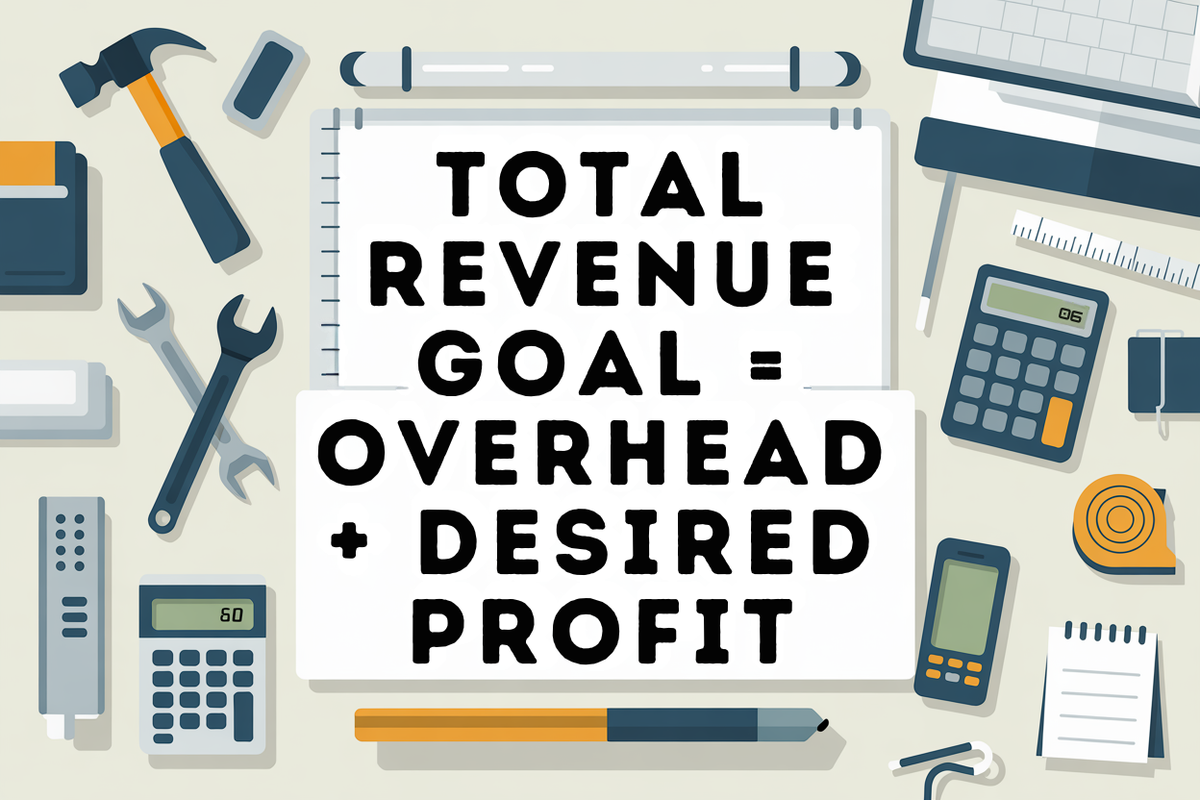
Total Revenue Goal = Overhead Costs + Desired Profit
From there, you can determine the hourly rate you need to charge for your labor to meet that goal.
Your Company's Billable Hourly Rate = Total Revenue Goal / Total Annual Billable Hours
Let's break this down with an example for a small remodeling company.
Example Calculation: Setting Your Company's Hourly Rate
First, calculate your annual overhead expenses:
Office/Shop Rent: $24,000
Utilities: $6,000
Vehicle Expenses (Fuel, Maintenance, Insurance): $15,000
General Liability & Workers' Comp Insurance: $20,000
Marketing & Advertising: $12,000
Software (Accounting, Project Management): $5,000
Office Salaries (Non-billable staff): $60,000
Other Miscellaneous Costs: $10,000
Total Annual Overhead: $152,000
Next, determine your desired annual profit. This is not just your salary; it's the profit the business needs to grow, invest in new equipment, and have a cushion for slow periods.
Desired Annual Profit: $100,000
Now, calculate your total revenue goal:
$152,000 (Overhead) + $100,000 (Profit) = $252,000 (Total Revenue Goal)
Finally, determine your total annual billable hours. Let's say you have two lead carpenters who work 40 hours a week, but only about 70% of their time is billable on projects (the rest is spent on travel, training, and other non-billable tasks).
- 2 Carpenters x 40 hours/week x 50 weeks/year = 4,000 total hours
- 4,000 hours x 70% billable = 2,800 annual billable hours
Now, you can calculate the hourly rate you need to charge for your skilled labor:
$252,000 / 2,800 hours = $90 per hour
This $90/hour is the rate you must charge for your carpenters' time on a job to cover all your overhead and meet your profit goals. This does not include materials, subcontractor costs, or equipment rental, which are added separately.
From Hourly Rate to Project Price
Once you have your billable hourly rate, you can use it to build a project estimate.
Estimated Project Price = (Estimated Labor Hours x Billable Hourly Rate) + Material Costs + Subcontractor Bids + Contingency
Material Costs: Include a markup on materials (typically 15-25%) to cover the costs of sourcing, ordering, and handling.
Subcontractor Bids: Get firm quotes from your plumbers, electricians, and other trades.
Contingency: Always include a contingency fund (typically 10-20% of the total project cost) to cover unforeseen issues. Be transparent with the client about what this fund is for.
{{CTA2}}
Markup, Margin, and a Simple Markup Strategy Contractors Can Use
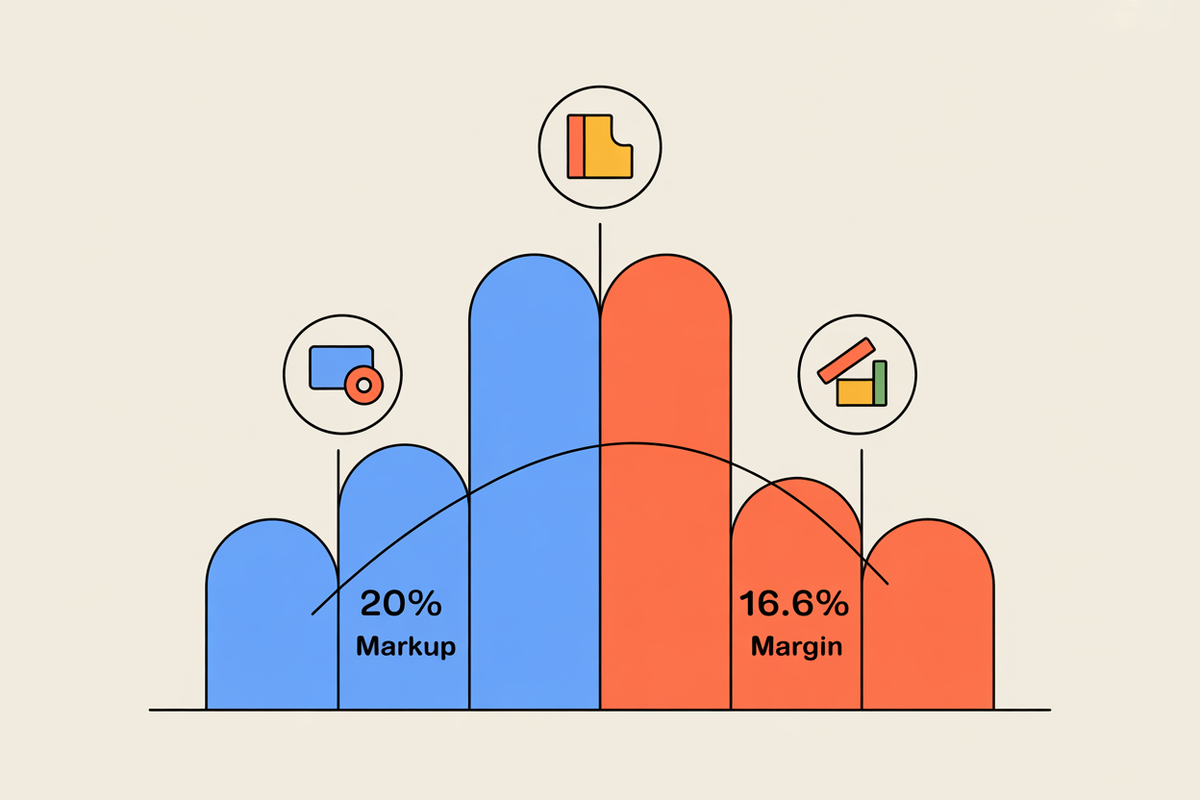
One of the biggest pricing gaps in the remodeling world comes from mixing up markup and margin. They sound similar, but they produce very different financial outcomes. Many contractors think they’re earning 20% profit when in reality they’re only bringing in closer to 16% and that difference adds up fast over a year’s worth of projects.
Markup is the percentage you add to your cost.
Margin is the percentage you keep as profit after costs are paid.
Here’s the catch: A 20% markup does not equal a 20% margin. A 20% markup only returns a 16.6% margin, which means less profit than most contractors think they’re earning.
A quick illustration:

Understanding the difference helps you set numbers that actually protect your profit instead of wiping it out by accident.
A Practical Markup Strategy for Remodeling Contractors
Once you’re clear on the math, the next step is using consistent markups across every project. This prevents you from pricing emotionally or lowering your numbers to “win the job,” which is how most contractors get stuck on the treadmill of low-margin work.
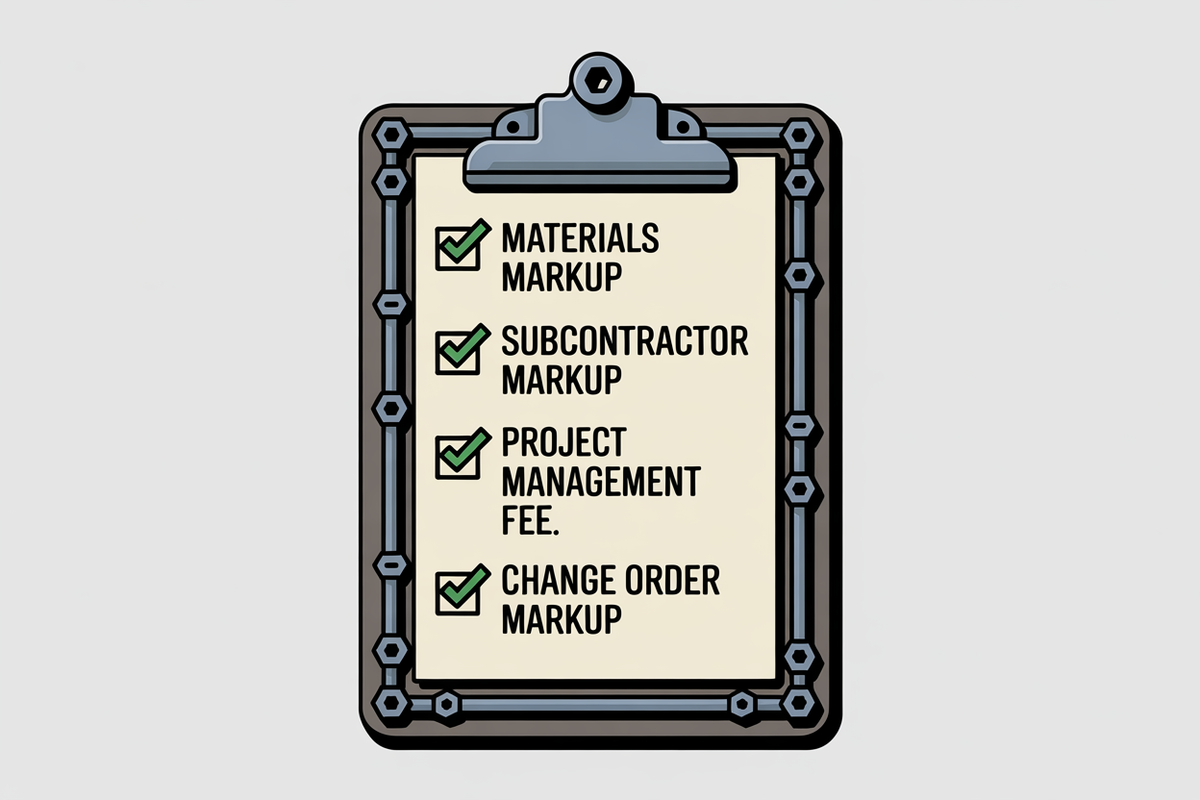
A simple, reliable structure looks like this:
Materials Markup: 15–50%: Covers time spent sourcing, ordering, storing, returns, and handling.
Subcontractor Markup: 10–30%: Covers scheduling, coordination, supervision, and liability exposure.
Project Management Fee: 5–15%: Covers jobsite visits, communication, documentation, and daily management that homeowners never see but always expect.
Change Order Markup: 20–50%: Change orders disrupt schedules, delay other projects, and require same-day decision-making. They should always be marked up higher.
When contractors apply these markups consistently and understand the margin they produce, they stop guessing, stop underpricing, and start building dependable profit into every job.
Communicating Price and Value to Homeowners
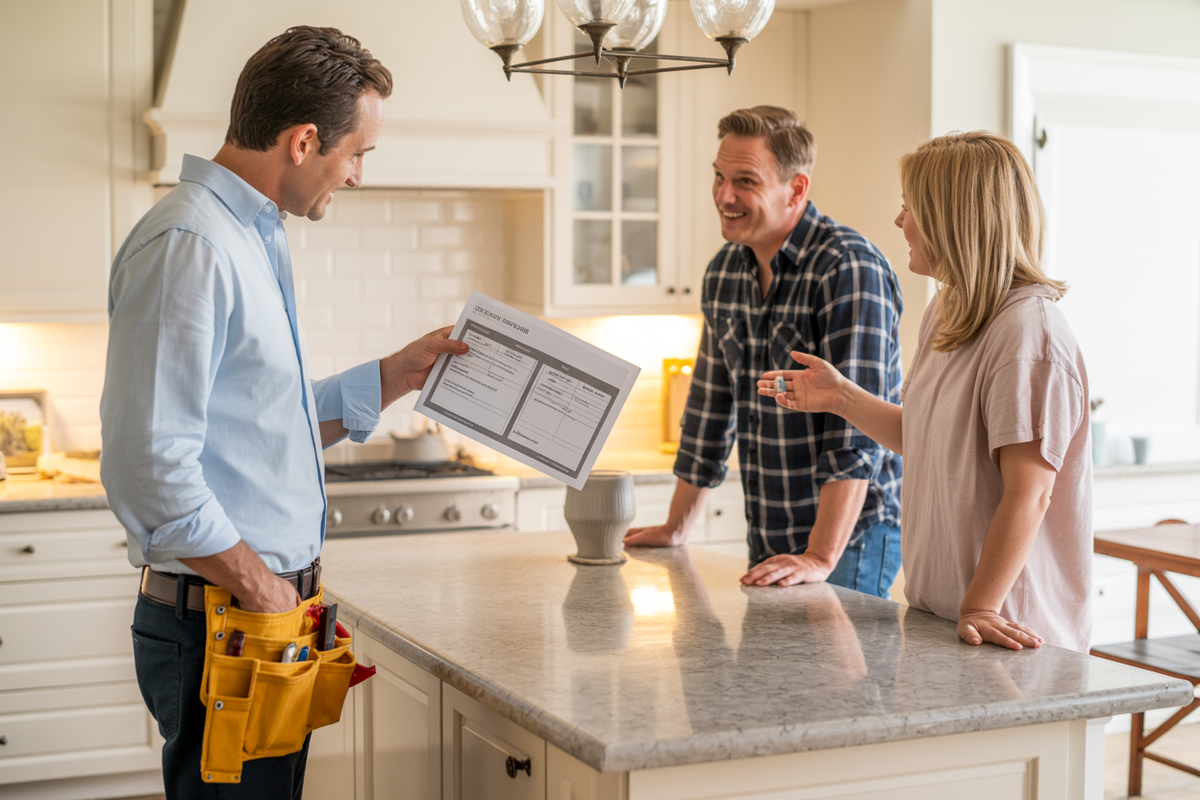
Even with a perfect estimate, clients can experience sticker shock. How you communicate your price is just as important as how you calculate it. The goal is to shift the conversation from cost to value, quality, and peace of mind.
{{CTA3}}
Be Transparent and Detailed
Don't just give the client a single number. Provide a detailed proposal that breaks down the costs. When a client sees a line item for "Site Protection and Dust Control," they understand that you are a professional who respects their home, which helps justify your price.
Educate the Client on the Cost of Poor Quality
Many homeowners have been tempted by a low-ball offer, only to regret it later. Gently remind them of the risks associated with hiring an unlicensed or uninsured contractor. You can say something like:
"I know our price may be higher than other quotes you've received. That's because we are fully licensed and insured, we pull all necessary permits, and we stand behind our work with a warranty. A lower price often means cutting corners in one of these areas, which can put you and your home at risk."
Emphasize Long-Term Value
Frame your service as an investment, not an expense. A well-executed remodel not only improves the client's quality of life but also increases the value of their home.
"We use high-quality materials and construction techniques to ensure your new kitchen will not only look beautiful but will also stand the test of time. This is an investment that will add significant value to your home for years to come."
Using Technology to Build Faster, More Accurate Estimates

Today’s remodeling market moves quickly, and homeowners expect clear, professional estimates without long wait times. Instead of juggling spreadsheets, paper notes, and old job folders, many contractors are turning to modern tools that streamline the entire estimating process.
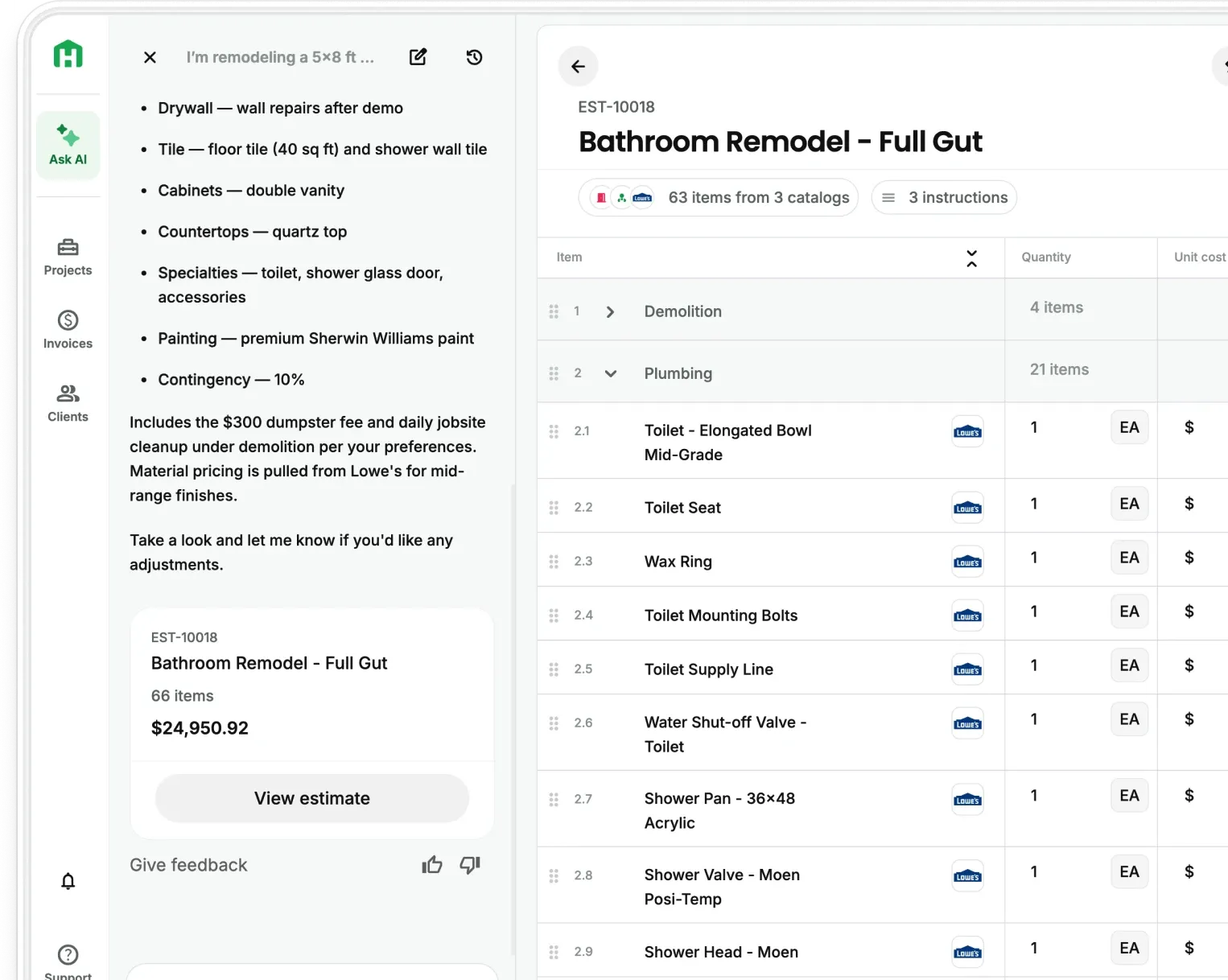
One of the most effective options is Handoff, an all-in-one estimating and proposal platform built specifically for contractors. It speeds up the parts of estimating that normally slow a project down, like measuring, pricing, documenting, and organizing, so you can send polished, accurate estimates without spending hours behind a desk.
Here are a few ways contractors use Handoff to tighten their pricing process:
Photo-to-Estimate Tools: Snap photos of the project, and Handoff.AI automatically identifies work areas and builds line items for you. This reduces guesswork and helps you avoid missing hidden costs.
Up-to-Date Material Pricing: The platform pulls in current material prices, which protects your margin and reduces the risk of outdated numbers slipping into your bid.
Template-Based Estimates: You can save your best estimates as templates for kitchens, bathrooms, flooring, or additions, ensuring consistent pricing from job to job.
Instant Proposals: Once your estimate is dialed in, the system converts it into a professional proposal with scopes, timelines, and terms. This helps clients feel confident about your process and speeds up approvals.
Accurate Job Costing: After the project begins, Handoff helps you track labor, materials, and changes so you can confirm you’re staying profitable from start to finish.
The goal isn’t to rely on software instead of your expertise, it’s to eliminate the time-consuming admin tasks that drain your energy and create room for mistakes. When your numbers are organized, consistent, and backed by real data, your pricing becomes clearer, your margins stay protected, and your proposals look as professional as the work you deliver.
Final Thoughts For Remodeling Contractors

Developing a sound pricing strategy is fundamental to the success of any home remodeling business. By understanding your costs, setting clear profit goals, and choosing the right pricing model for each project, you can build a reputation for fairness and quality.
Most importantly, by learning to communicate your value effectively, you can win the projects you want at a price that ensures your business will thrive for years to come.
{{CTA4}}
Frequently Asked Questions (FAQ)
What is the best pricing model for a remodeling project?
The best pricing model depends on the job. Fixed-price contracts work well when the scope is clear and predictable, while cost-plus contracts are better for complex remodels with more unknowns. Many contractors use a hybrid approach, combining a fixed price for defined work with allowances or cost-plus pricing for parts of the project that may change.
How do contractors make sure their remodeling estimates are profitable?
Profitable estimates start with knowing your real numbers, not just labor and materials, but also overhead, non-billable time, subcontractor management, and desired profit. Contractors also need to use the right markup strategy, build in contingency for surprises, and review estimates against actual project costs over time.
What is the difference between markup and margin in remodeling pricing?
Markup is the percentage you add to your cost, while margin is the percentage of the final selling price that stays as profit. They are not the same. A lot of contractors think they are earning more profit than they really are because they confuse markup with margin, which leads to underpricing jobs without realizing it.
How much contingency should a remodeling contractor include in an estimate?
Most remodeling contractors include a contingency of around 10% to 20%, depending on the complexity of the project and how many unknowns are involved. Older homes, structural changes, and projects with incomplete plans usually need a higher contingency because surprises are more likely once work begins.
How should contractors explain higher prices to homeowners?
The best way is with transparency and detail. Break down the scope clearly, explain what is included, and focus on the long-term value of quality work, permits, insurance, warranty protection, and professional project management. Homeowners are more comfortable with a higher price when they understand exactly what they are paying for and why it matters.
Can estimating software help remodeling contractors price jobs more accurately?
Yes. Estimating software can speed up takeoffs, keep pricing consistent, reduce missed line items, and make proposals look more professional. Tools like Handoff can also help contractors pull current material pricing, reuse estimate templates, and turn estimates into polished proposals faster, which saves time and helps protect profit.
Ready to win more jobs with less manual work? Try Handoff free →