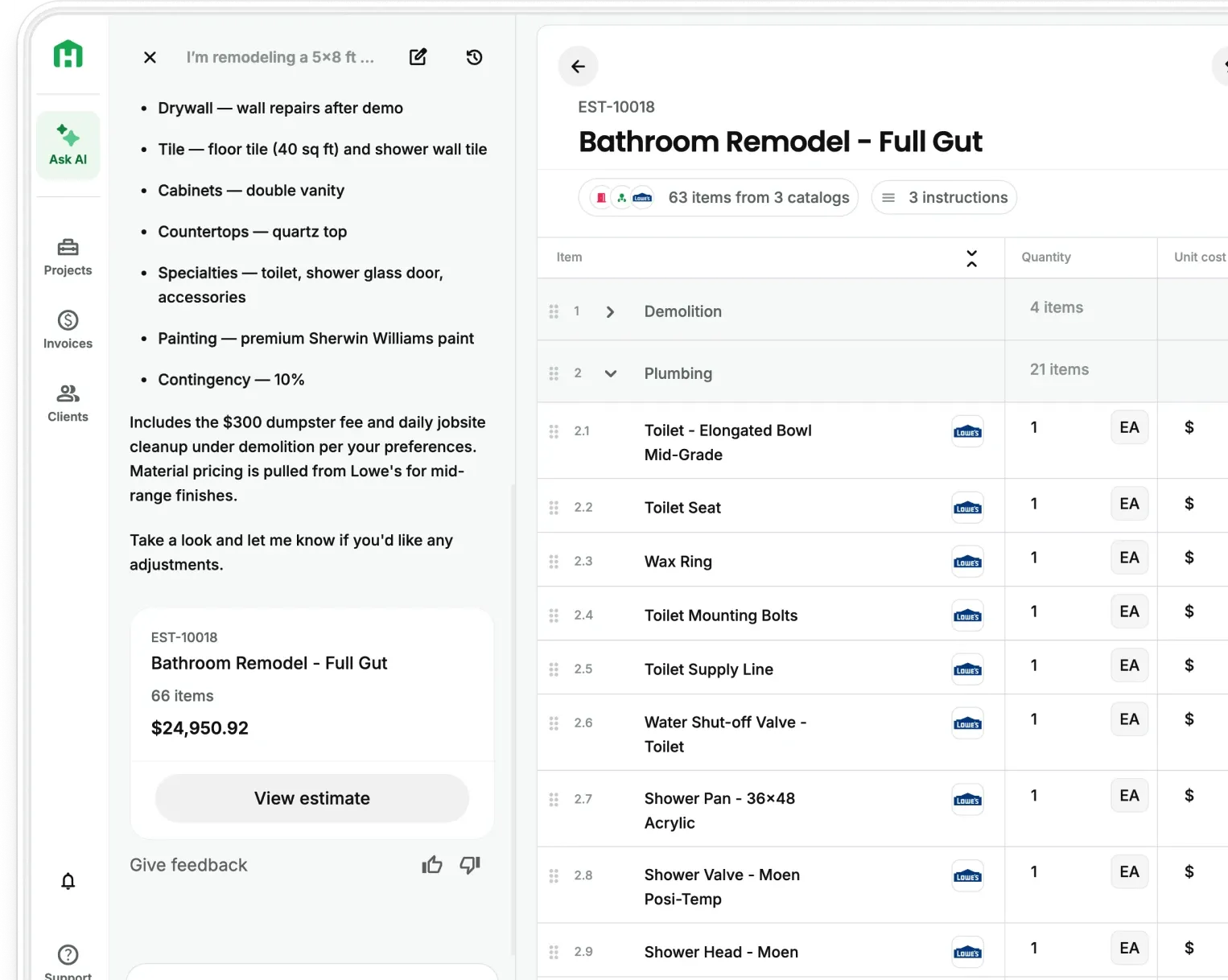
A straight-talking guide to the 10 biggest red flags that turn profitable jobs into financial disaster.
Let me guess. You've been in this business long enough to have at least one job that still makes you wince when you think about it. You know the one, where you thought you had everything figured out, submitted what seemed like a solid bid, got the job, and then watched your profit margin disappear faster than donuts at a safety meeting.
If you're nodding your head right now, welcome to the club. It's a big club, and unfortunately, the membership dues are paid in lost profits and sleepless nights wondering where the hell you went wrong.
Here's the thing: most of these disasters aren't random acts of construction gods having a bad day. They're predictable, preventable, and they follow patterns that you can learn to spot before they cost you money. After working with hundreds of contractors who've been through the wringer, we've identified the ten biggest red flags that signal your estimate is about to become a financial black hole.
The construction industry has some sobering statistics that should make every contractor pay attention. According to recent research, a staggering 90% of construction projects experience cost overruns, with the average project exceeding its budget by at least 16%. Even more concerning, 98% of megaprojects suffer cost overruns of more than 30%. These aren't just numbers on a spreadsheet, they represent real money coming out of real contractors' pockets.
Understanding the most common estimating mistakes contractors make is the first step toward protecting your profit margins.
But here's the good news: most of these profit-killing mistakes are completely avoidable once you know what to look for. Modern contractors are discovering how AI tools can help them win more jobs while avoiding costly estimating errors.
Think of this guide as your early warning system, a way to spot trouble before it spots you. We're not going to cover every aspect of estimating (that would take a book, not an article), but we will give you the diagnostic tools to identify the most common and costly red flags that can turn a promising job into a financial nightmare.
So grab your coffee (or beer), settle in, and let's talk about how to keep your estimates from becoming expensive lessons in what not to do.
Red Flag #1: The “Trust Me, Bro” Scope Problem
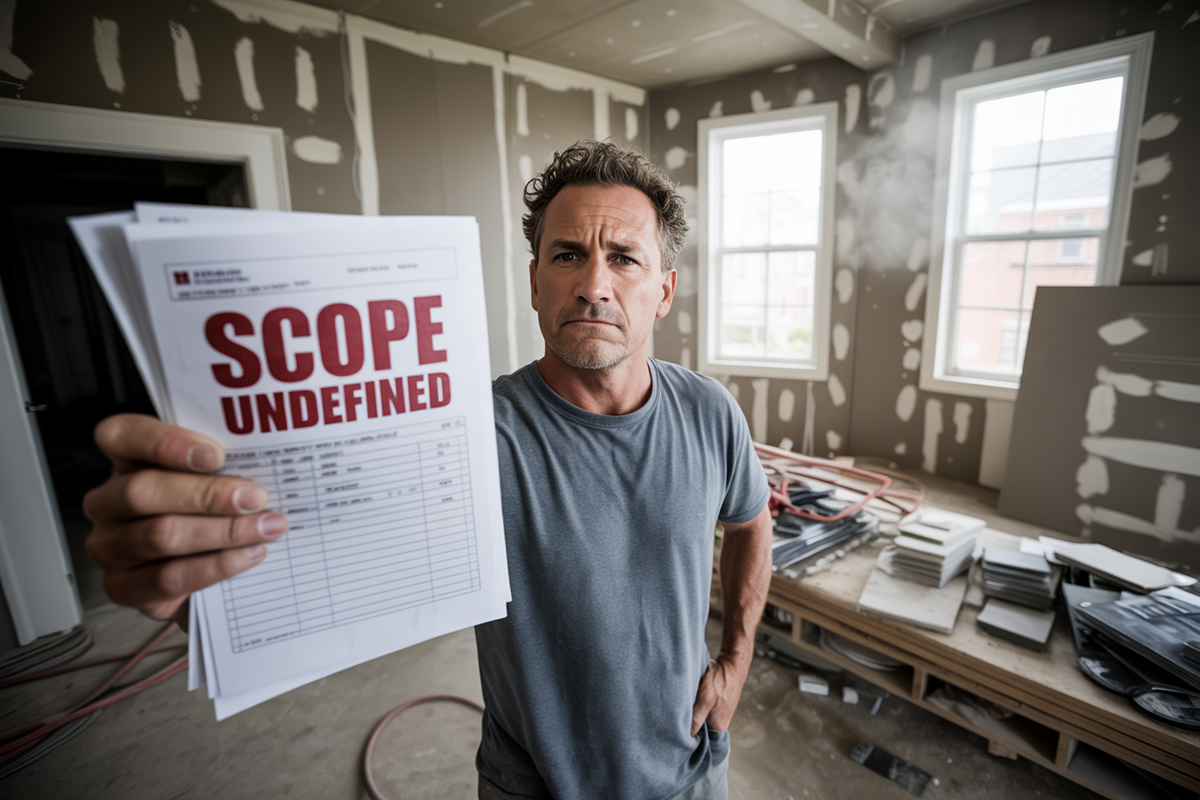
Scope ambiguity is the silent killer of profits. It starts with three dangerous words: “whatever you think.”
You’ve heard it: “Just put in whatever you think looks good.” Or, “Nothing fancy, just basic stuff.” Translation: We have no idea what we want, but we’ll blame you later. That’s the contracting version of “Hold my beer.”
Here’s the truth: vague scopes lead to 15–25% cost overruns. On a $50K job, that’s $7,500–$12,500 gone. Add in the wasted time, schedule delays, and awkward “that wasn’t included?” talks, and it’s a full-blown mess.
Red Flags
- Phrases like “standard quality” or “basic updates.”
- Missing details like no brand, model, or finish listed.
- No clear lines between your work and another trade’s.
How It Usually Goes: Client says “update the bathroom.” You assume a facelift. They expect a full remodel. Three weeks later, they’re wondering why the tile isn’t marble.
The Fix: Clarity. Every. Single. Time.
- List exact materials (brand, model, size, finish).
- Break down labor into clear, measurable tasks.
- Spell out what’s not included.
One GC buddy has a rule: if another contractor couldn’t build the same job from his estimate, it’s not detailed enough. That mindset saved him thousands.
Bottom Line: If a client won’t define what they want, don’t do it for free. Get it in writing before you throw out a number, or watch your margins disappear.
Red Flag #2: The “I’ll Just Eyeball It” Site Assessment Trap
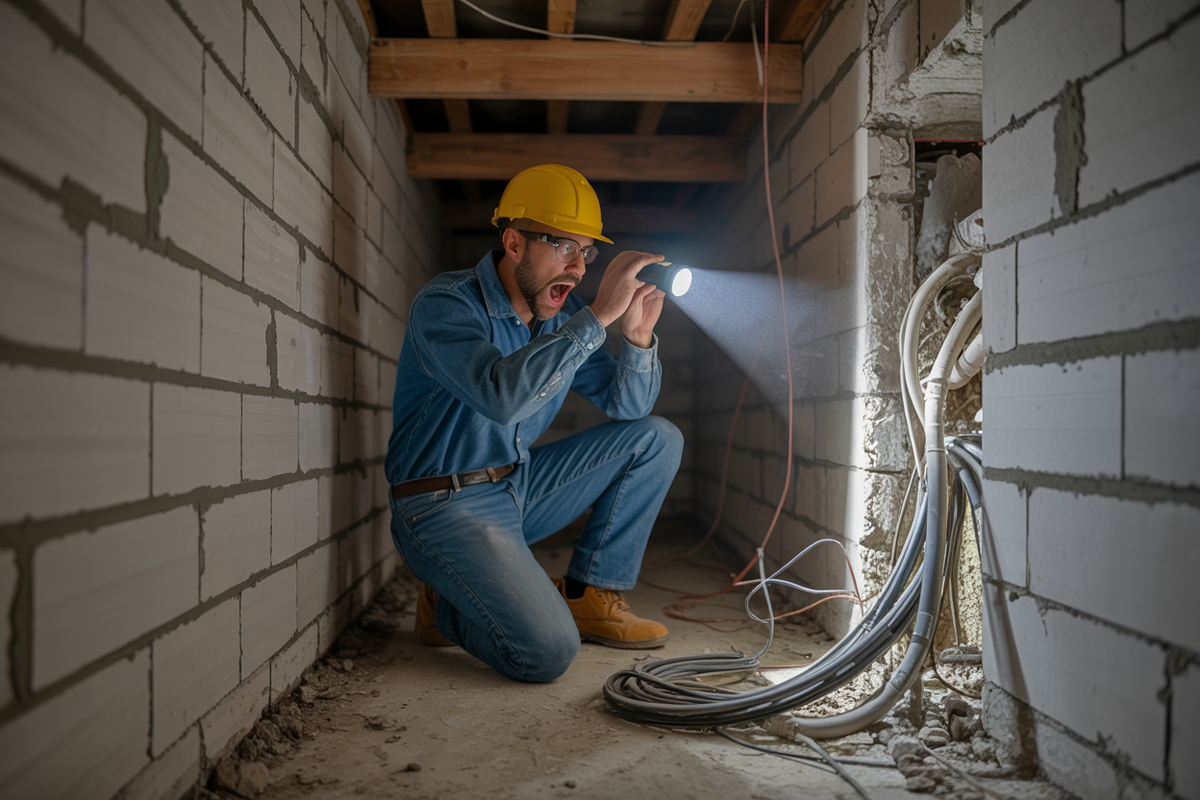
If scope ambiguity is the granddaddy of profit killers, skipping the site visit is its evil twin. This one gets contractors who think they can price a job from a few photos, a phone call, or….God help us…Google Street View.
I’ve seen it plenty: the client swears it’s a “pretty standard setup.” What they don’t mention is the crawl space built for hobbits, an electrical panel from 1920, or a boulder blocking the driveway like it’s guarding treasure.
The Cost of Guesswork
Bidding blind is gambling with your margins. Hidden conditions can jack labor costs 10–30%. You’ll waste materials, slow production, and blow up your schedule.
One guy I know took on a “simple kitchen remodel” based on photos. Looked easy. Until he opened the walls, then found plumbing chaos, sketchy wiring, and framing that defied physics. Three weeks turned into two months of surprises and stress.
AI tools can help catch details from photos or plans, sure. But nothing beats boots on the ground.
The Fix: No shortcuts. No exceptions.
- Visit every site before you bid, yes, even “simple” ones.
- Take photos, measure twice, and write it all down.
- Build in allowances for hidden issues, especially in older homes.
- Use a checklist for access, utilities, and storage.
A GC friend of mine won’t send an estimate until he’s spent an hour onsite. He measures doorways, checks panels, inspects plumbing…the whole nine yards. Overkill? Maybe. But it’s saved him thousands in “gotcha” costs.
Bottom Line: Estimating without a site visit is like diagnosing a car over the phone. You might nail it once in a while, but when you miss, you pay for it.
Red Flag #3: The “My Labor Costs Are Just Payroll” Mistake

This one drains more profit than bad weather and bad clients combined: miscalculating your true labor costs.
If you’re bidding jobs based on hourly wages alone, you’re giving away money without knowing it. That $25/hour carpenter? They really cost closer to $35–$40 once you factor in everything it takes to keep them on payroll. Guess who’s covering that gap? You are.
The Hidden Costs Nobody Thinks About
Labor burden isn’t just wages. It’s:
- Payroll taxes (Social Security, Medicare, unemployment)
- Workers’ comp (2%–20%, depending on your trade)
- Health insurance and benefits ($500–$1,500 per employee/month)
- PTO: vacation, sick time, holidays, training
- Non-productive time: setup, cleanup, material runs, inspections
That last one’s a killer. Most crews are only productive about 30% of an 8-hour day. The rest? Necessary but non-billable. If you’re not pricing for that, your “hourly rate” is a fairy tale.
Real Example: A contractor thought he was crushing it. Turns out his $30/hour electrician was really costing $42/hour after all the extras. On a $75K job, he lost $8K before realizing it.
How to Fix It
- Calculate your real labor burden: Add up every expense: taxes, insurance, benefits, PTO and divide by total payroll. Most land between 35–50% of base wages.
- Price by position, not averages: If the job needs a journeyman, bid at journeyman rates.
- Update yearly: Rates, insurance, and taxes change. So should your math.
- Track productivity: If your crew only builds for 6 of 8 hours, estimate like it.
Bottom Line: If you’re not calculating labor burden, you’re not estimating, you’re guessing. And in this business, guessing kills profits. Know your real costs, or kiss your margins goodbye.
Red Flag #4: The “Lumber Will Never Go Up That Much” Material Price Gamble

If you were in construction during 2020 and 2021, you probably still twitch when you think about lumber prices. In just over a year, framing lumber shot from $354 per thousand board feet to a jaw-dropping $1,479. That’s a 300%+ increase, turning “profitable” jobs into financial nightmares for contractors who assumed prices were predictable.
And it wasn’t just lumber. Since 2020, 80% of construction materials have increased in price, averaging 19% higher costs across the board. Even today, material prices are nearly 40% above pre-pandemic levels.
Material price volatility continues to challenge contractors. Recent developments like new tariffs on copper show why price protection strategies are more important than ever.
The Red Flags
- Submitting fixed-price estimates without escalation clauses
- Using outdated supplier quotes
- Basing estimates on verbal pricing instead of written quotes
- Ignoring buffers for volatile commodities like lumber, steel, and copper
- Taking onlong-term projects with no material price protection
Real-World Fallout
A contractor I know bid a deck at $8K in lumber. Six months later, the same order was $24K. No escalation clause. No buffer. Client wouldn’t cover the difference and guess what, he ate $16K.
How to Protect Yourself
- Add escalation clauses to every contract
- Get written quotes with expiration dates
- Add a 5–10% material buffer
- Pre-buy key materials when prices rise
- Track prices monthly and use multiple suppliers
Stay tuned to industry news: tariffs, shortages, and storms can hit fast. The ones who survived the lumber spike weren’t lucky, they were ready.
Bottom Line: Material prices swing hard. Build in protection or you’ll learn the hard way.
Red Flag #5: The “20% Markup Should Be Enough” Pricing Confusion
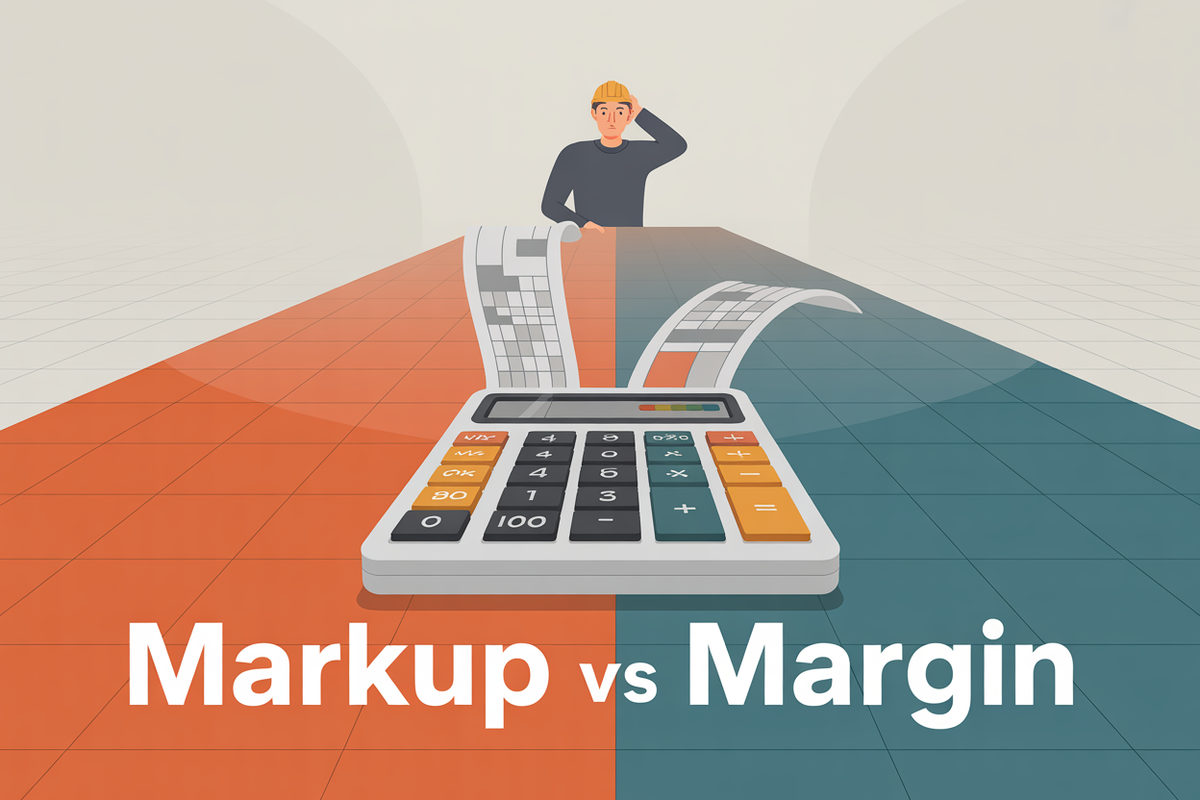
This one trips up even seasoned contractors: markup ≠ margin. If you’re pricing jobs using markup and assuming you’re hitting your target profit margin, there’s a good chance you’re leaving thousands on the table.
Here’s the trap: If you want a 20% profit margin, you can’t just add 20% to your costs. That only gives you a 16.7% margin. To actually hit 20%, you’d need a 25% markup.
Markup vs. Margin 101
- Markup → % you add to cost
- Margin → % of the selling price that’s profit
- They’re related, but not the same thing
Here’s how the math plays out:
- 10% markup → 9.1% margin
- 20% markup → 16.7% margin
- 30% markup → 23.1% margin
- 40% markup → 28.6% margin
The higher your target profit, the bigger the gap becomes.
Real-World Example
A contractor wants a 25% margin on a $100K job, so he marks it up 25% to $125K. Sounds right—but his real margin is only 20%. To hit 25%, he needed $133,333 using:
Selling Price = Cost ÷ (1 − Desired Margin)
That’s an $8,333 mistake on one job. Do that all year, and it adds up fast.
Fix It
- Use margin-based pricing (formula above)
- Track actual vs. target margins
- Standardize your pricing method
- Review quarterly and adjust
Quick Tip: Markup adds. Margin keeps. Get it wrong, and your profits quietly disappear.
Red Flag #6: The “Just a Small Change” Scope Creep Disaster

Scope creep is like that friend who promises to crash on your couch for “just a few days” and ends up staying six months. It starts small and harmless and before you know it, it’s hijacked your project and devoured your profit margin.
Here’s the reality: 75% of construction projects experience scope creep. On average, it leads to a 27% increase in costs and 33% project delays. Translation? It’s one of the top profit killers in construction.
Proper documentation can help prevent scope creep disasters. See how one contractor caught a $2,500 missed scope using better estimating practices
The Red Flags
- No formal change order process
- Agreeing to “quick fixes” verbally
- Failing to document scope exclusions up front
- No clear protocol for handling client-directed changes
- A pattern of doing unpaid extra work
How It Happens
You’re mid-kitchen remodel when the client says, “While you’re here, can you move this outlet?” Then it’s, “Can you paint the hallway?” Then, “Let’s swap that light.” Next thing you know, you’ve done $3,000 in freebies and the client’s shocked you want to charge for it.
The Real Cost
Undocumented changes eat 5–15% of a project’s value. On a $50K job, that’s $2,500–$7,500 gone. Plus:
- Endless “was that included?” debates
- Strained client relationships
- A bad habit of giving away work
How to Protect Yourself
- Use a change order every time
- List exclusions clearly in your contract
- Train your crew to flag scope creep
- Say: “Happy to take care of that, I’ll write up a change order first.”
Bottom Line: Scope creep is a slow leak in your profits. Be helpful, be professional, but don’t work for free.
Red Flag #7: The “We Always Get It Done in That Time” Production Rate Fantasy

Every contractor has fallen for this one at some point: estimating labor based on best-case scenarios instead of real-world conditions. On paper, everything goes perfectly, weather’s perfect, materials arrive on time, and your crew works like a Swiss watch. In reality? Not so much.
The Red Flags
- Using the same productivity rates for all projects and conditions
- Ignoring factors like site access, weather, and complexity
- Basing estimates on your best day ever instead of your typical day
- Failing to track actual vs. estimated labor hours
- Consistently blowing labor budgets across projects
The Reality Check
The average construction worker spends only 30% of the day on actual building activities. The other 70% goes to necessary but non-productive tasks like setup, cleanup, material handling, inspections, coordinating with trades, waiting on deliveries, and dealing with surprises.
Get production rates wrong, and it gets expensive fast:
- 25–50% more labor hours than estimated on complex jobs
- Frustrated crews and low morale
- Missed deadlines and unhappy clients
- Less capacity to take on new projects
Common Example
A contractor figures his crew can lay 500 sq. ft. of hardwood a day, in an empty box of a room. Add tight spaces, built-ins, stairs, or a long haul from the truck, and that five-day job becomes eight fast.
What We Forget
- Weather slows everything
- Tight access kills productivity
- Occupied homes move slower than new builds
Fix It
- Track actual vs. estimated hours
- Use three rate types: optimistic, realistic, conservative
- Adjust for weather, access, and complexity
- Build in time buffers
One GC I know uses this system and hits labor budgets almost every time.
Bottom Line: Stop estimating for perfect days. Plan for real ones…your profit (and sanity) will thank you.
Red Flag #8: The “Subs Will Handle Themselves” Management Mistake

Reality Check
Subs aren’t self-driving cars. You can’t just point and pray. Passing their quotes through with no markup or management time is a fast track to chaos and lost profit.
Red Flags
- No markup or coordination time
- Verbal quotes only
- Unverified insurance or licenses
- Undefined scope boundaries
The Cost
Poor sub management eats 15–30 hours per sub. Five subs = 60–150 hours of unpaid work, $3K–$7.5K gone. Add delays, rework, and change-order drama, and your profit’s toast.
How To Fix It
- Budget 2–4 hours/week per active sub for coordination
- Verify insurance, licenses, and references
- Define scope boundaries clearly
- Add 10–20% markup for management and risk
- Get everything in writing
Bottom Line: Subs don’t manage themselves. Price for it, plan for it, and protect your margins or watch them disappear.
Red Flag #9: The “We’ll Get Paid When It’s Done” Payment Schedule Trap
Reality Check
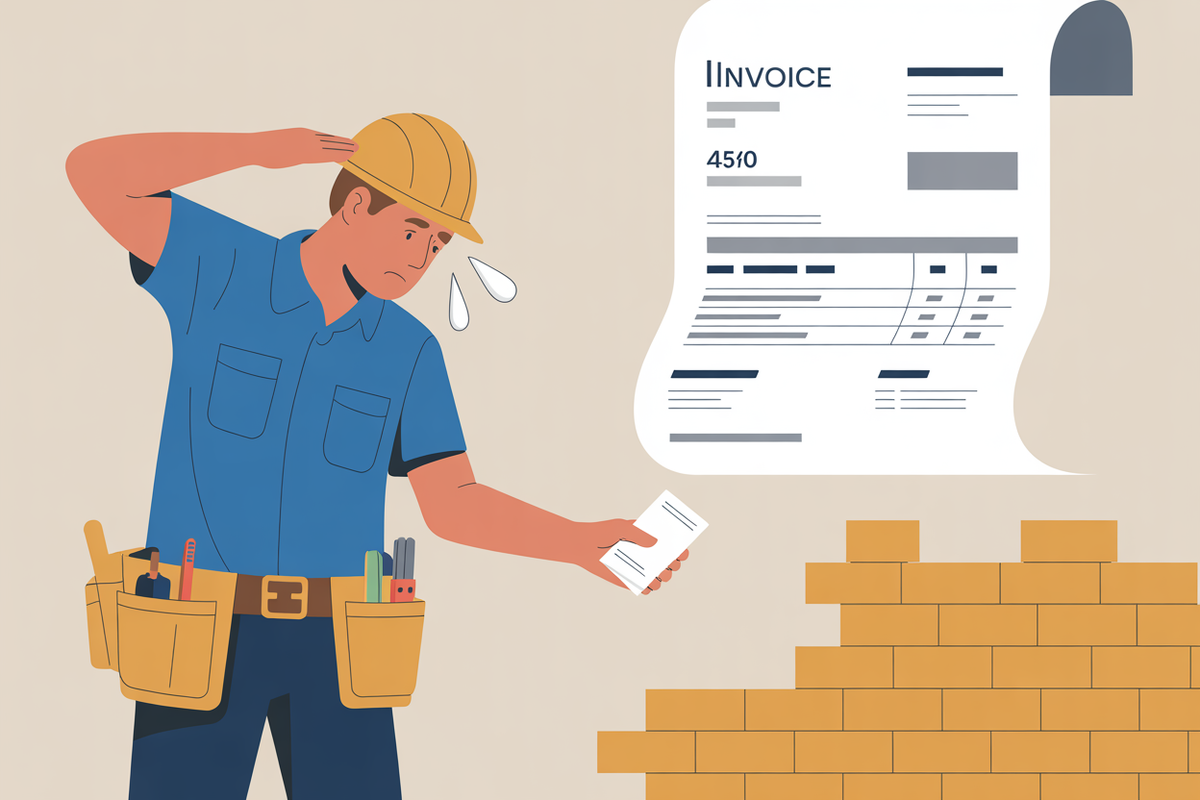
Payment terms aren’t sexy, but they decide whether you stay solvent or go broke. Bad schedules mean you’re basically financing your client’s project, with your own money.
Red Flags
- Front-loaded costs, back-loaded payments
- Big final payments (15%+)
- No deposits or milestone ties
- Payment schedule doesn’t match cash flow
Why It Hurts
You’re paying for materials and labor long before you get paid. On a $100K job, doing 75% of the work while collecting 50% means $25K of your cash floating the job. Add delays or financing issues, and there goes your profit.
Fix It
- Get deposits before ordering materials
- Tie payments to milestones
- Limit final payment to 10% or less
- Front-load to cover early costs
- Add small incentives for early pay
Example Schedule
10% deposit → 25% on material delivery → 25% at 25% completion → 25% at 50% → 10% at 75% → 5% at final walkthrough
Bottom Line: Payment terms aren’t paperwork, they’re protection. Build them smart, stay ahead on cash, and stop being your client’s bank.
Red Flag #10: The “Nothing Ever Goes Wrong” Contingency Planning Failure

Reality Check
If you think every project will go as planned, I’ve got a bridge to sell you. Skipping contingency is like driving without insurance, fine until it’s not. And when it’s not, your profits take the hit.
Red Flags
- No buffer for surprises
- Same contingency % for every job
- No risk assessment
- “Unexpected” issues killing profit
The Cost
Something always goes wrong, like delays, bad plumbing, mystery wiring. A missing contingency fund means those fixes come out of your pocket.
Example: A GC bid a bath remodel at $18.5K with no buffer. Found nightmare plumbing mid-job…$3,200 gone.
Fix It
- 5% contingency for new builds
- 10–15% for remodels
- 15–20% for old/high-risk homes
- Do a quick risk checklist before final pricing
- Track where contingencies get used to refine estimates
Bottom Line: Contingency planning isn’t pessimism, it’s professionalism. Something will go wrong. Plan for it, price for it, and protect your profit.
Avoiding estimating disasters is just one part of building a successful contracting business. Explore 30 proven ways to generate quality construction leads to keep your pipeline full of profitable projects."
Protecting Your Profits Is a System, Not a Guess
Construction isn’t just about building, it’s about managing risk. Every one of these red flags: vague scopes, bad labor math, price swings, slow pay, and missing contingencies, is a silent leak in your profit margin. Ignore them, and you’ll work harder than ever while wondering where the money went.
The Good News: profit leaks are fixable. The most profitable contractors don’t get lucky, they run systems!
You can’t control weather or clients, but you can control how you price, plan, and protect your jobs. That’s what separates survivors from thriving pros.
Next Step: audit your estimating process. Look at your last few jobs and ask:
- Where did I lose money?
- Am I actually hitting my margins?
- Where do I need more data or discipline?
The goal isn’t perfection, it’s predictability. When you price with clarity and plan for risk, you stop gambling with profit and start running a business.
Because in the end, profit isn’t what you bid, it’s what you keep!
Ready to win more jobs with less manual work? Try Handoff free →