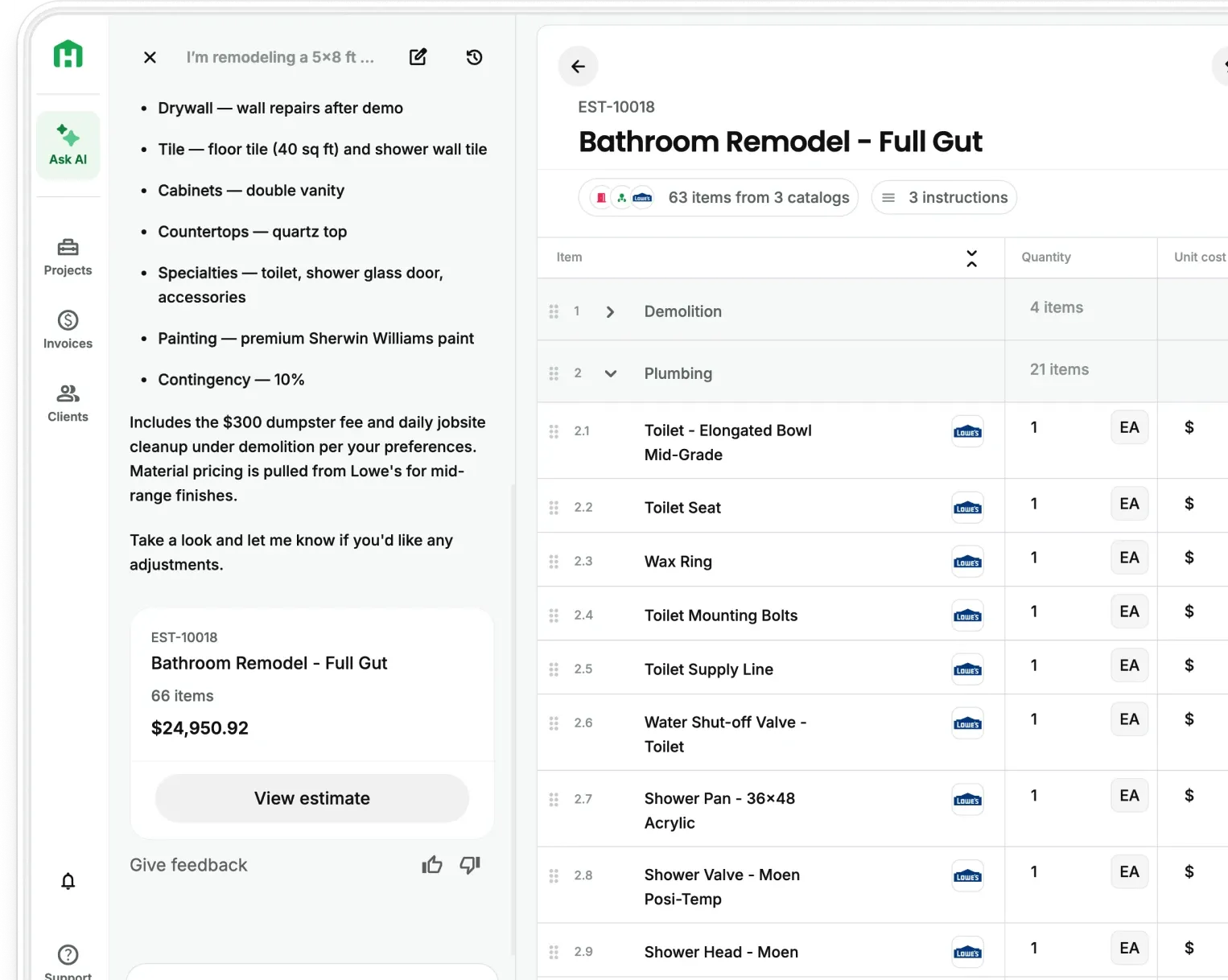
Estimating should reinforce how your business operates, not force you to adapt your workflow to software.
Most remodelers already have pricing systems that work. Labor rates are set. Vendor relationships are established. Margins are intentional. The challenge isn’t deciding what to charge, it’s making sure those decisions show up consistently in every estimate.
When pricing lives outside your estimating workflow, teams slow down. Estimates require extra review. Numbers get adjusted after the fact. Confidence drops, even when the work is solid.
We’re introducing Custom Catalogs, a new feature that brings your pricing directly into Handoff. By uploading your labor rates, material price books, and markups, estimates are created using your pricing by default. This keeps estimates aligned with how you already price work and reduces the time spent correcting numbers after they’re built.
Estimates That Reflect How You Actually Price Jobs
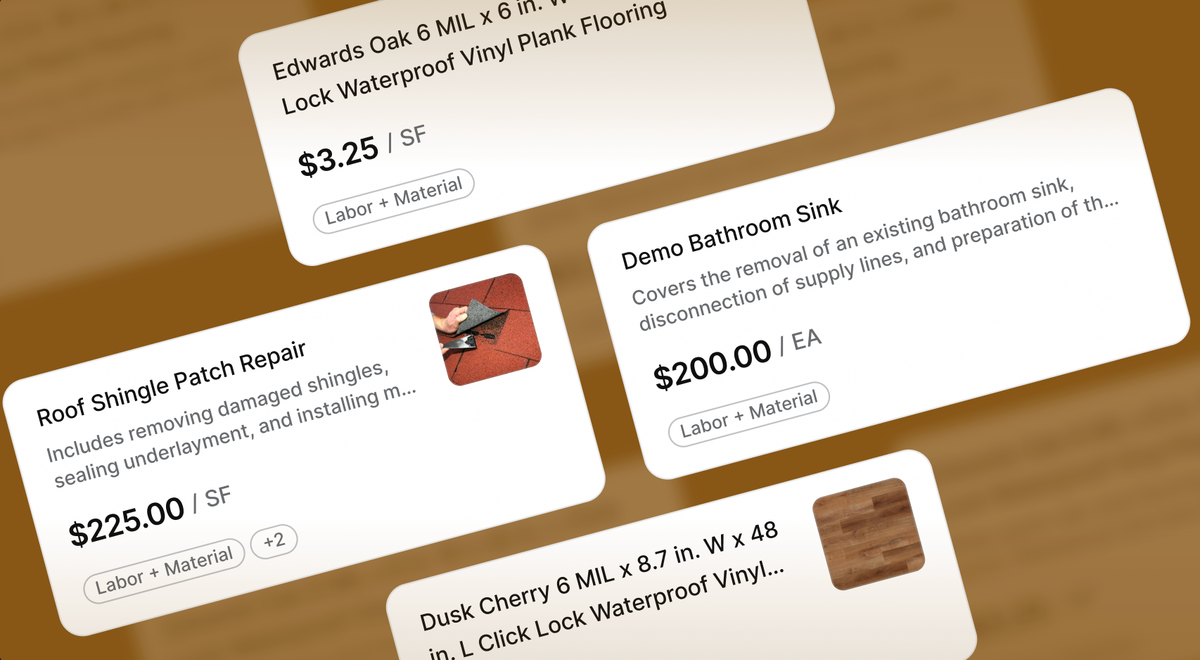
Custom Catalogs are built for remodelers who want estimating software to follow their pricing rules, not override them.
Instead of treating pricing as a cleanup step at the end of an estimate, Custom Catalogs apply your structure from the start. This shifts estimating from a review-heavy process to one that’s easier to trust as it’s being built.
Here’s how that shows up in practice:
Your Pricing Is Used First
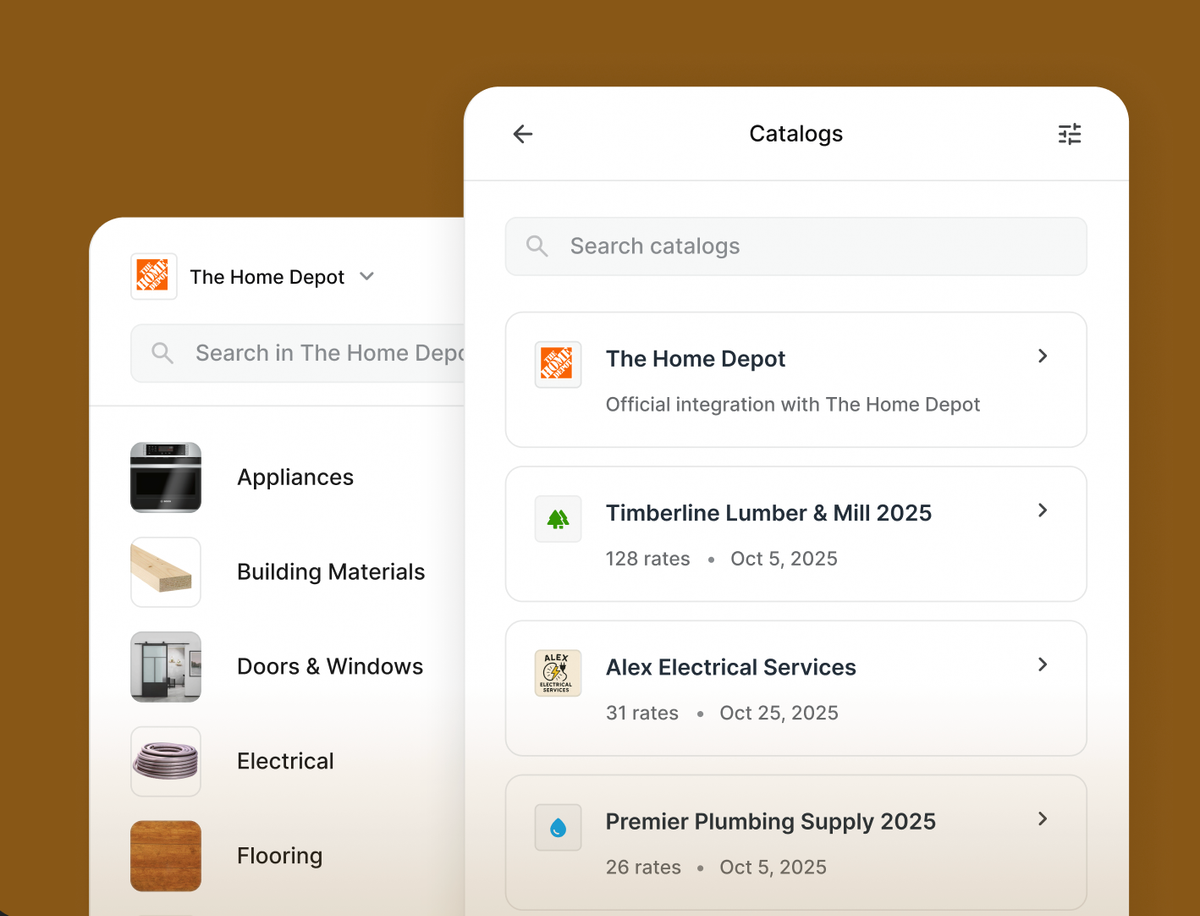
When an estimate is created, Handoff follows a clear order. Your catalogs are always applied first. Supplier catalogs can be used if enabled. AI-generated pricing is only used when no existing pricing exists. This ensures estimates start with your labor rates, material costs, and margins, not generic assumptions.
Bring Existing Price Books Into the Workflow
Pricing can be imported from PDFs, Excel or CSV files, Word documents, or images. Vendor quotes, labor rate sheets, and material lists can all be reused without rebuilding them manually.
Maintain Control Over Rates and Margins
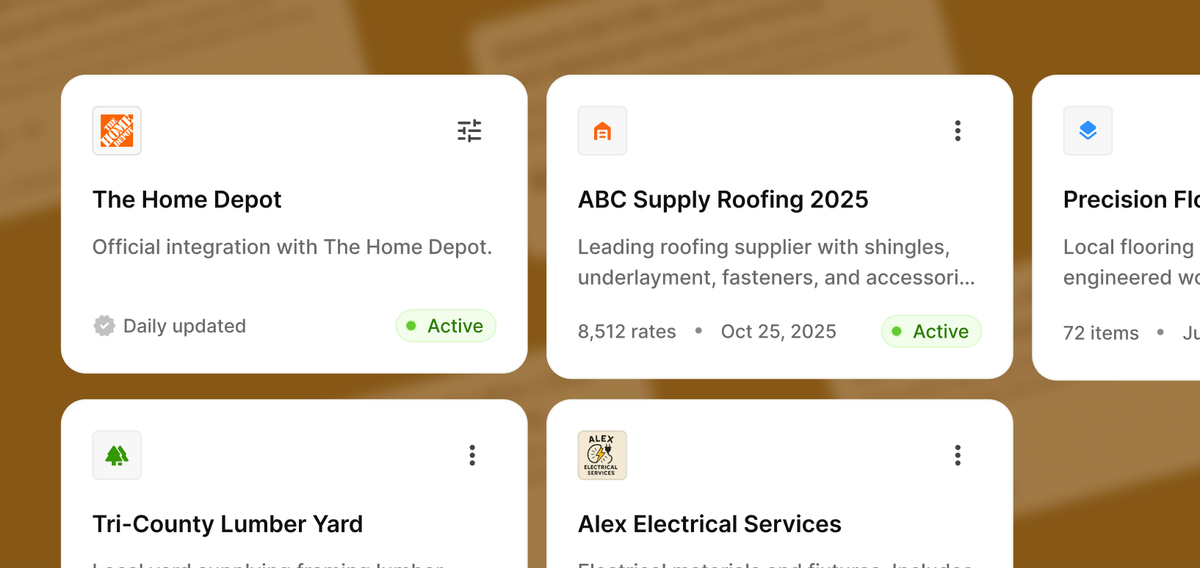
Pricing details such as units, markups, and margins can be managed at the catalog level. Updates made once carry across future estimates, helping teams stay consistent as volume grows.
Clear Pricing, Without Guessing or Rechecking
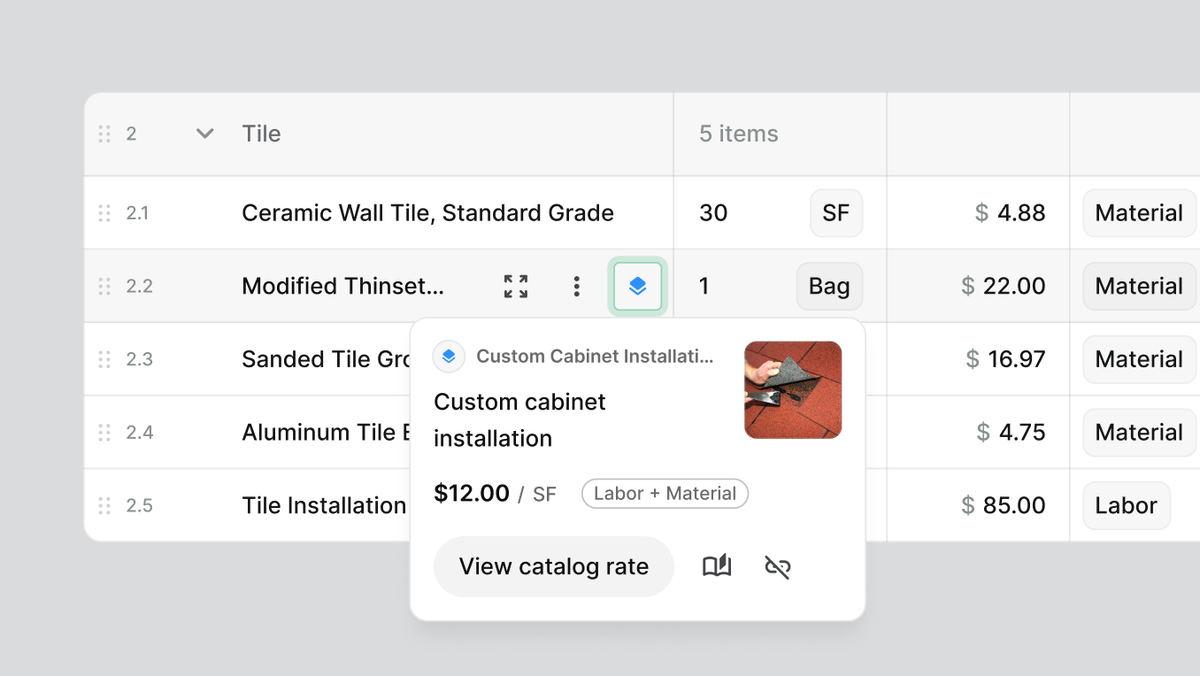
As projects become more detailed, visibility matters.
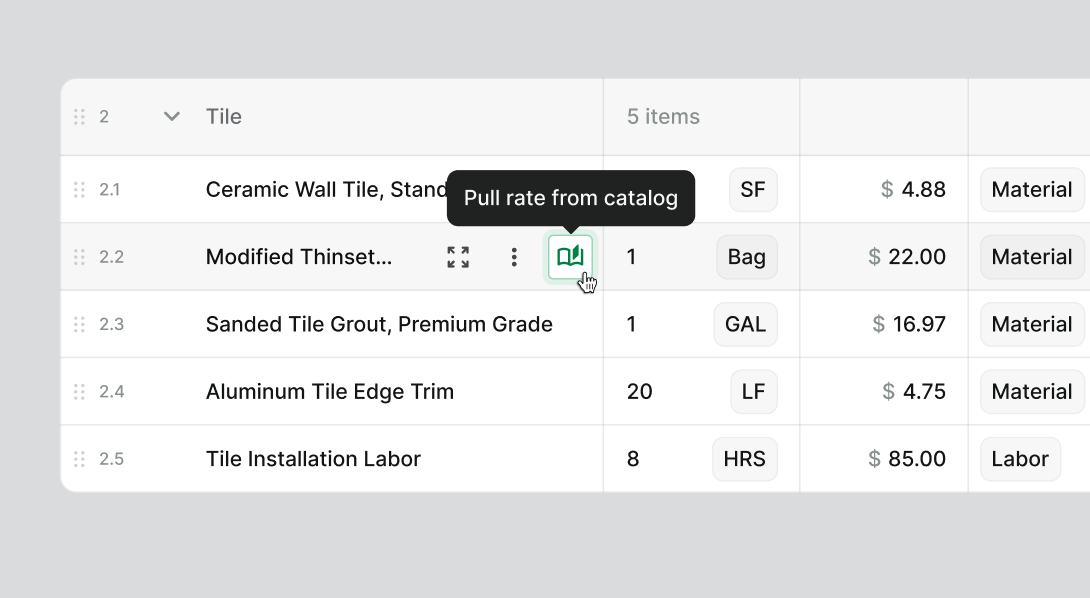
Custom Catalogs make pricing transparent inside each estimate. You can see which catalog is applied to every line item, swap rates when needed, unlink pricing, or manually attach catalog items.
This reduces the need to read through entire estimates just to confirm that pricing rules were applied correctly. Teams spend less time verifying numbers and more time focusing on scope and presentation.
Built for Remodelers Who Offer Multiple Options
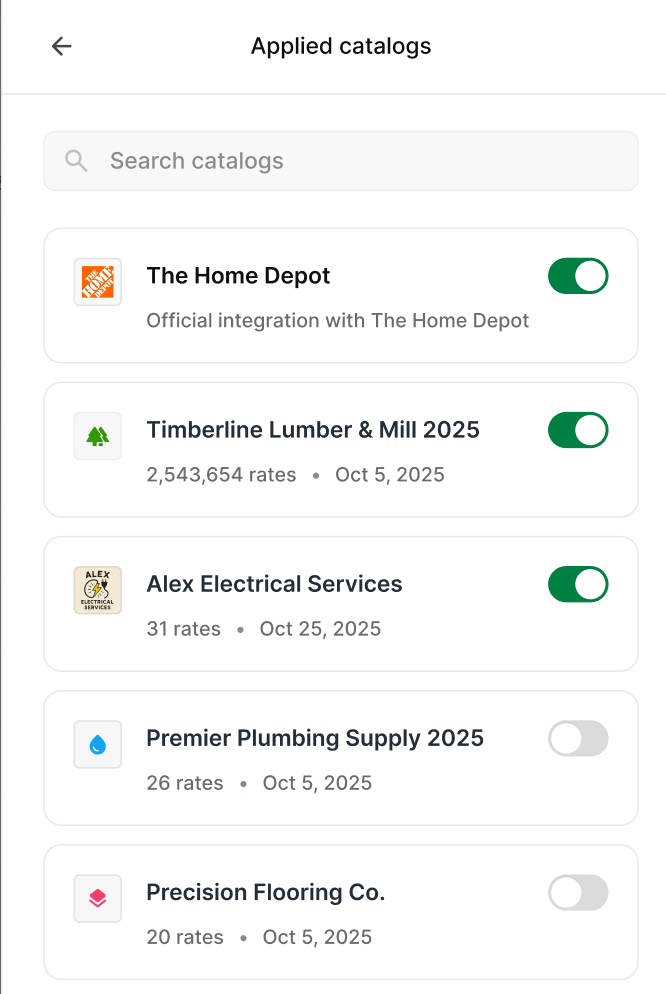
Many remodelers present more than one pricing option to clients based on scope, materials, or finish levels.
Custom Catalogs support this by allowing you to create multiple catalogs and select which one an estimate should use. Pricing strategies can be switched without rebuilding estimates or recalculating totals, keeping sales conversations flexible while maintaining consistency behind the scenes.
Pricing That Improves Over Time
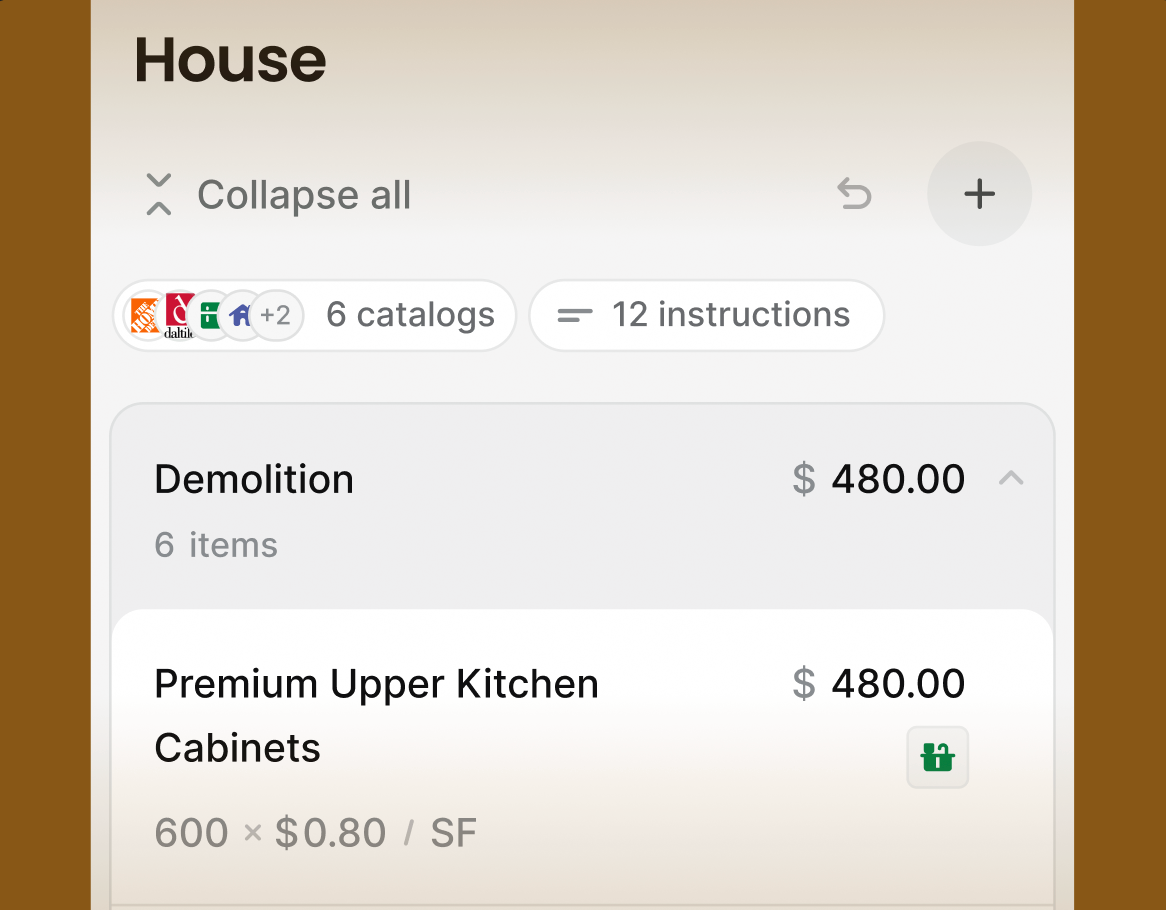
Pricing changes are inevitable. When they happen, updates made inside an estimate can be pushed back to the catalog.
This allows future estimates to reflect updated rates automatically, instead of repeating the same corrections on every job. Older catalogs can also be archived safely without affecting historical estimates or completed projects.
Over time, pricing becomes more consistent instead of drifting.
Who Custom Catalogs Are Designed For
Custom Catalogs are built for remodelers and builders who rely on structured pricing to run their business.
They are handy for teams managing detailed labor rates, vendor-specific material pricing, and consistent margins across multiple projects, as well as remodelers producing a high volume of estimates or offering various pricing options to clients.
What Contractors Told Us
Contractors consistently shared that adjusting pricing after every estimate slowed them down and made estimating harder to rely on.
Many asked for a way to upload vendor quotes, apply pricing rules automatically, and avoid rechecking every estimate to confirm rates were applied correctly. Custom Catalogs were built directly in response to that feedback.
Available Now
Custom Catalogs are now available to Flex, Pro, and Scale Plan users and included in active trials.
If you already maintain pricing spreadsheets, labor rate sheets, or vendor quotes, you can upload them today and start building estimates that reflect how your business already prices work.
Open Handoff and start using Custom Catalogs
Frequently Asked Questions (FAQ)
What are Custom Catalogs in Handoff?
Custom Catalogs let contractors upload their own labor rates, material pricing, and cost structures into Handoff. This ensures estimates are built using your actual pricing instead of generic data or assumptions.
How do Custom Catalogs improve construction estimating accuracy?
Custom Catalogs improve accuracy by applying your real pricing from the start of the estimate. Instead of adjusting numbers after the fact, your labor rates, material costs, and markups are already built in, which reduces errors and rework.
Can I import my existing price lists into Handoff?
Yes. You can import pricing from Excel, CSV files, PDFs, Word documents, or even images. This makes it easy to bring your existing cost books, vendor quotes, and labor rate sheets directly into your estimating workflow.
Can I update pricing in Custom Catalogs over time?
Yes. When pricing changes, you can update it in your catalog and have those changes apply to future estimates. This helps keep your pricing consistent and prevents the need to fix the same numbers repeatedly.
Can I use different pricing options for different clients or projects?
Yes. Handoff allows you to create multiple catalogs and choose which one to apply to an estimate. This is useful for offering different pricing tiers, material options, or project scopes without rebuilding the estimate each time.
Why should contractors use Custom Catalogs instead of adjusting estimates manually?
Because it saves time and improves consistency. When pricing is applied automatically based on your catalogs, you spend less time reviewing and correcting estimates and more time focusing on scope, presentation, and closing the job.