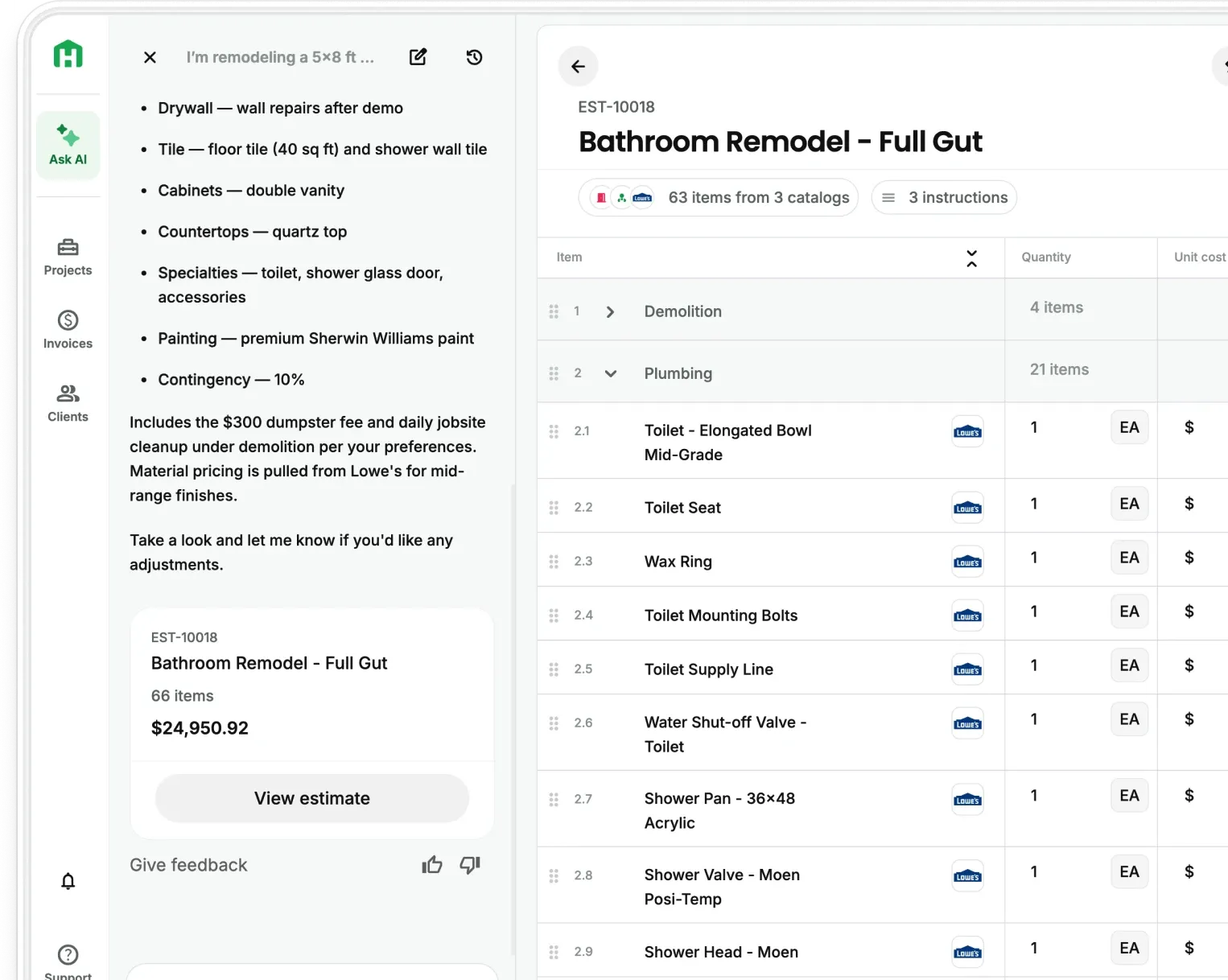
I’m going to be blunt. As a general contractor, your most valuable asset isn’t your tools or your truck; it’s your time. And if you’re still doing estimates the old-fashioned way, you’re burning through that asset faster than a rookie on a demo crew.
I’ve been there. The late nights hunched over blueprints, the endless spreadsheets, the gut-wrenching feeling that you missed something that’s going to cost you big time. It’s a grind, and frankly, it’s a poor use of your expertise.
For years, I accepted this as the cost of doing business. Then, I discovered AI-powered estimating, and it completely changed the game. I’m not talking about some complicated, enterprise-level software that requires a team of IT guys to run.
I’m talking about practical, powerful tools that are built for contractors like us. It’s about getting your time back, so you can focus on what actually makes you money: building relationships, running your projects.
What Is AI Estimating in Construction?
AI estimating is the use of artificial intelligence to automate construction takeoffs, material quantities, pricing logic, and proposal creation. Instead of manually measuring plans and assembling spreadsheets, AI estimating software analyzes blueprints, photos, and scopes of work to generate fast, accurate estimates in minutes.
For general contractors, AI estimating replaces the slowest and most error-prone parts of bidding: manual takeoffs, outdated pricing, and repetitive proposal writing, all the while keeping pricing control in the contractor’s hands.
The Ultimate Time-Sink: Deconstructing the Traditional Estimate
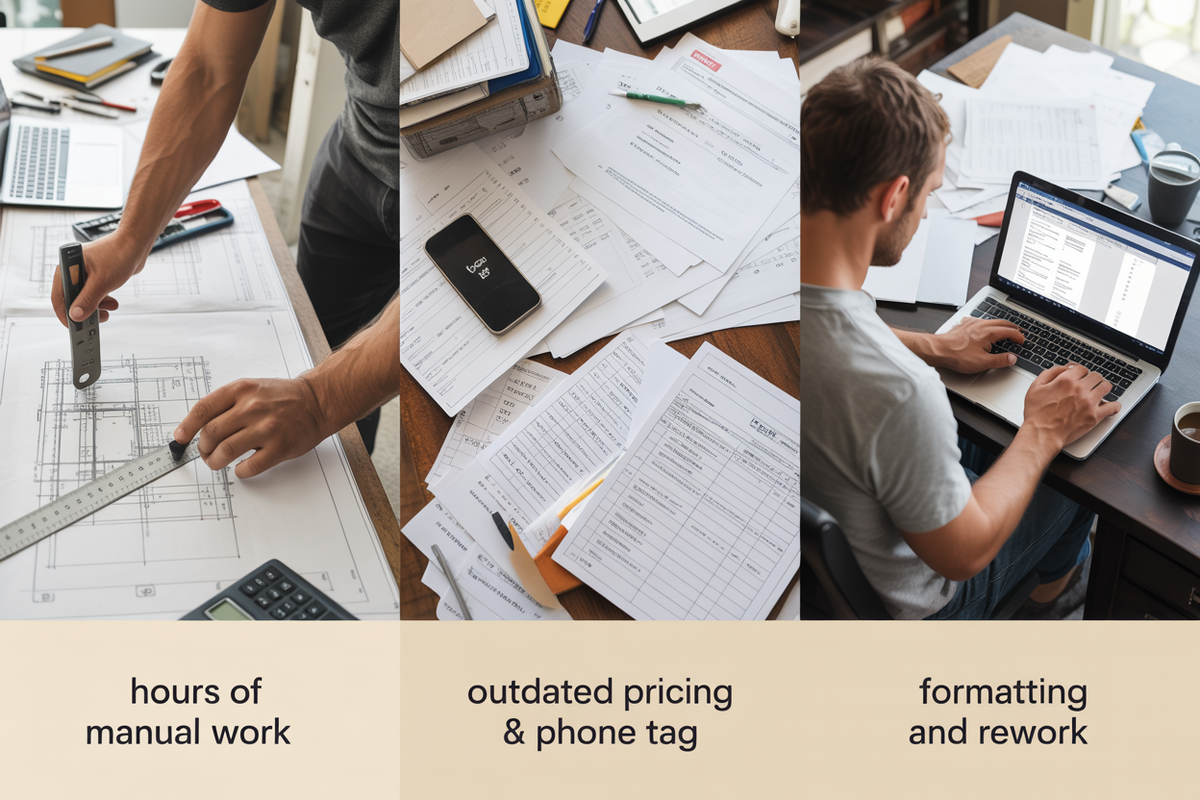
Let’s break down where your time actually goes during a traditional estimate. First, you have the takeoff. You’re manually measuring, counting every outlet, every linear foot of baseboard, every fixture. It’s tedious, mind-numbing work that’s incredibly easy to mess up. One slip of the mouse or one missed page of the plans can throw your entire bid off.
Next comes the pricing. You’re digging through old price sheets, calling suppliers for current costs, and trying to get quotes back from your subs. It’s a chaotic process of phone tag and email chains. Finally, you have to assemble it all into a professional-looking proposal that, you hope, makes sense to the client and sets you apart from the competition.
By the time you're done, you've sunk hours, maybe even days, into a bid you might not even win. That's time you could have spent on a job site, meeting with a potential new client, or even just getting home at a decent hour. The opportunity cost is massive.
The Hidden Cost of Manual Takeoffs: Where Your Money Actually Goes (And How AI Estimating Can Help)
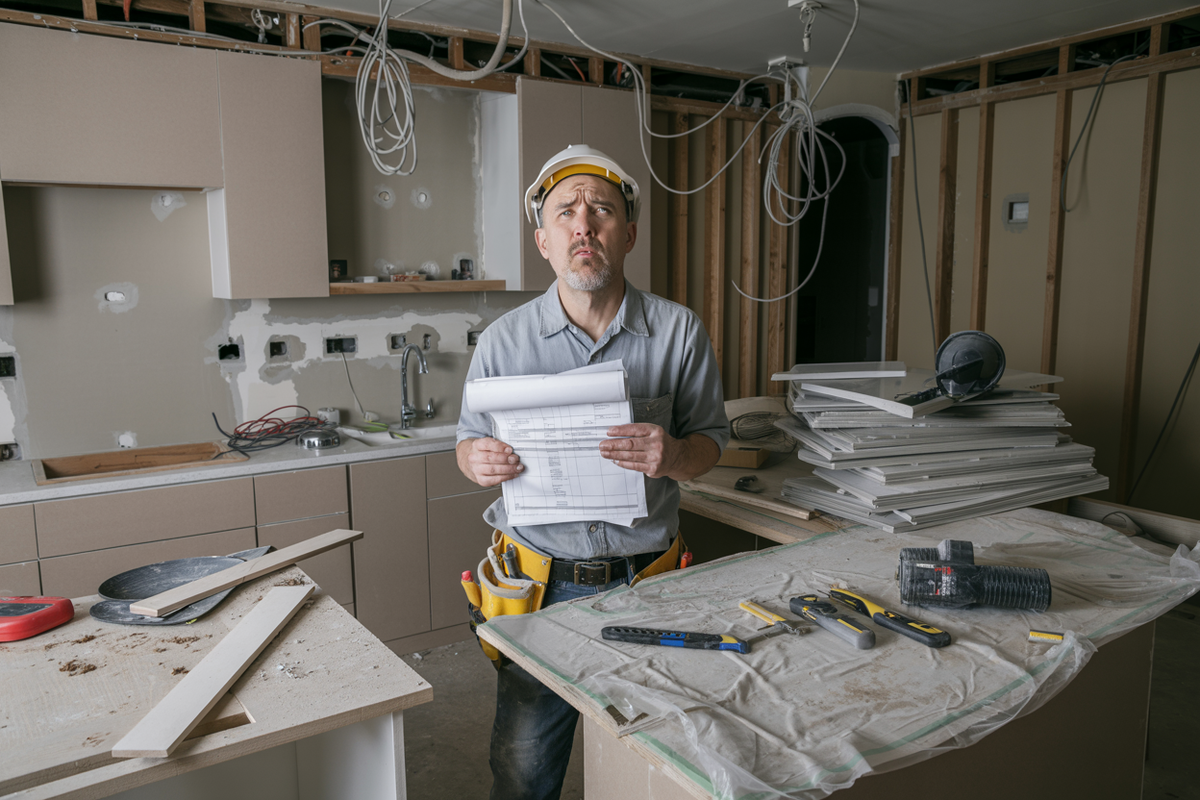
Let me put some real numbers to this problem, because the cost of manual estimating goes far beyond just the hours you spend hunched over plans. It's a silent profit killer that most contractors don't fully appreciate until they see the alternative.
Consider a typical kitchen remodel estimate. If you're doing it the old way, you're looking at roughly four to six hours of work just for the takeoff alone. That's measuring cabinets, counting outlets and switches, calculating tile square footage, measuring countertop runs, counting plumbing fixtures, and tallying up all the trim work.
For a seasoned estimator billing their time at seventy-five dollars per hour internally, that's three hundred to four hundred fifty dollars in labor cost before you've even started pricing materials or writing the proposal.
Now multiply that across your business. If you're bidding on ten jobs a month and winning three of them, you've just spent thirty to forty hours on takeoffs for jobs you didn't get. That's a full work week of unbillable time every single month.
At that same seventy-five dollar internal rate, you're burning through twenty-two hundred to three thousand dollars monthly in estimating costs for work you'll never do. Over a year, that's nearly thirty-six thousand dollars in lost productivity.
But the real kicker is the error rate. Research shows that manual takeoffs have an error rate of anywhere from five to fifteen percent, depending on project complexity and estimator fatigue.
On a fifty-thousand-dollar kitchen remodel, a ten percent error means you're either leaving five thousand dollars on the table or pricing yourself out of the job.
I've seen contractors lose their shirts because they undercounted materials or missed an entire scope item buried on sheet seventeen of the plans. One missed HVAC relocation or structural beam can turn a profitable job into a break-even nightmare.
There's also the speed problem. In today's market, clients expect fast turnarounds. If it takes you three days to get an estimate back to a homeowner and your competitor using AI gets theirs back in four hours, who do you think looks more professional and responsive?
I've lost jobs simply because I was too slow, even when my price was competitive. The client went with the contractor who showed up first with a detailed, professional proposal.
Let's talk about the opportunity cost in concrete terms. If manual estimating limits you to ten bids per month, and you're winning at a thirty percent close rate, that's three jobs.
But if AI estimating lets you double your bid volume to twenty bids per month at the same close rate, you're now winning six jobs. That's doubling your revenue without adding overhead. For a contractor doing five million annually, that's the difference between five million and ten million in top-line revenue.
The math is undeniable. Every hour you spend manually counting fixtures and measuring walls is an hour you're not spending building client relationships, managing your crews, or actually generating revenue on a job site.
When you factor in the error costs, the lost opportunities, and the competitive disadvantage of slow turnaround times, the true cost of manual takeoffs can easily exceed fifty to seventy-five thousand dollars per year for a small to mid-sized contractor. That's real money leaving your business every single year.
How AI Gives You Your Time Back: A Practical Breakdown

This is where AI estimating, and specifically a tool like Handoff, becomes a game-changer. It’s not about replacing your skills; it’s about automating the grunt work so you can apply your skills where they matter most. Here’s how it practically saves you time at every step:
Instant AI-Powered Takeoffs
Instead of spending hours manually measuring and counting, you simply upload the project plans. The AI gets to work instantly, scanning the documents and performing a detailed takeoff in minutes.
It uses computer vision to recognize symbols and components, quantifying materials and fixtures with a level of speed and accuracy you just can’t match by hand. This isn’t just faster; it’s more reliable. The AI doesn’t get tired, it doesn’t get distracted, and it doesn’t miss a page. The hours you used to spend on tedious takeoffs are immediately given back to you.
Automated Pricing and Proposals
Once the takeoff is complete, a smart system like Handoff helps you turn those quantities into a full-fledged proposal in record time. You can connect your own pricing, create pre-built templates for different job types, and generate a professional, client-facing document without wrestling with Word or Excel. It streamlines the entire process from takeoff to proposal, eliminating the administrative busywork that bogs you down.
Handoff even has features that can handle back-office tasks, acting like an AI agent for your business, which frees you up even more.
Faster Bids Mean More Opportunities
The most direct benefit of saving time on each estimate is that you can simply get more bids out the door. If you can reduce the time it takes to create an estimate from two days to a few hours, you’ve just quadrupled your bidding capacity without hiring a single new person.
This is how you grow your business. You’re not just working harder; you’re working smarter. You can be more selective about the jobs you bid on and focus your energy on the ones that are the best fit for your company.
Real Contractors, Real Results: How AI Estimating Pays Off
I know what you're thinking. This all sounds great in theory, but does it actually work in the real world? Let me share a couple of stories from contractors who made the switch and saw immediate, measurable results.
Keeler Construction: From Four Hours to Twenty Minutes And How AI Estimating Helped Conversions

Tim O'Keefe runs Keeler Construction Group out of South Side Chicago, handling everything from kitchen remodels to full additions. Before adopting AI estimating, Tim was spending two to four hours on every single estimate. That's half a workday just to put together one proposal. The manual process was killing his productivity, and he knew he was leaving money on the table by not being able to bid on more jobs.
When Tim discovered AI-powered estimating, he was skeptical at first. But after running a test estimate while sitting on his couch watching TV, he was sold.
The proposal looked professional, the numbers were accurate, and it took him just twenty minutes from start to finish. He sent it to his wife as a test, and they were both stunned by how fast and polished it was.
The results were dramatic. Tim went from producing four proposals in eight hours to cranking out twelve proposals in the same timeframe. That's tripling his productivity without hiring anyone new. In one month alone, he sent out over forty proposals, something that would have been completely unmanageable with his old system.
He was even able to send proposals before leaving the job site, which impressed clients and dramatically improved his response times.
But the real game-changer was the automated follow-up feature. Tim admitted that one of his biggest revenue losses came from simply forgetting to follow up with prospects when things got busy. With AI handling the reminders and resends, no lead slipped through the cracks. His conversion rates went up, and he started winning more work without working longer hours.
Read the full case study of how Keller Construction Group used AI Estimating for their construction business.
Lasting Impressions: The $2,500 Mistake That Never Happened (And How AI Estimating Helped)
Matthew Dodge owns Lasting Impressions, a remodeling company in Pennsylvania. He's a seasoned pro who's been walking job sites and quoting from memory for years. But even the best of us make mistakes, and on one high-stakes renovation, Matthew's reliance on mental notes almost cost him big time.
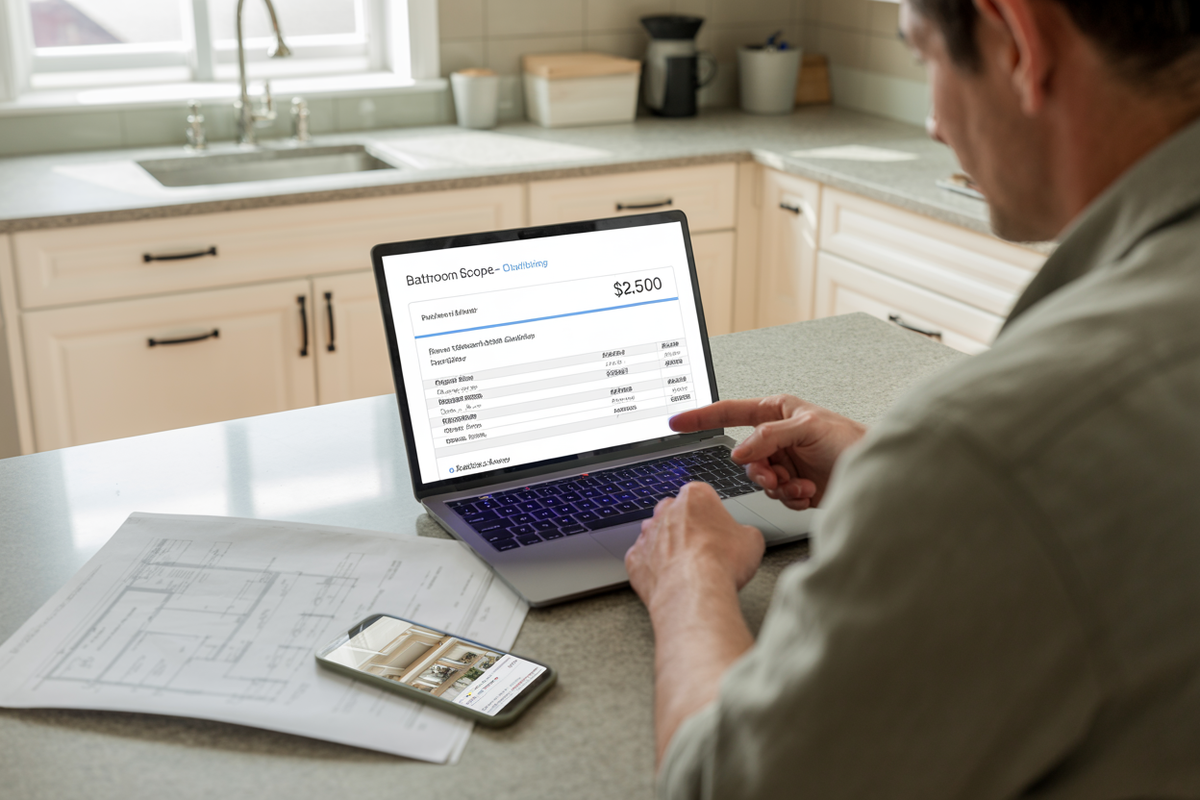
During a walkthrough, he completely forgot to include an entire bathroom in his estimate. It wasn't a small oversight, it was a $2,500 scope gap that would have destroyed his profit margin if it had gone unnoticed.
Fortunately, Matthew had started using photo-based AI estimating. He snapped pictures during the site visit and uploaded them to generate his estimate. When the AI processed the images, it flagged the bathroom he had missed.
That single catch paid for his software subscription several times over. But the benefits didn't stop there. Matthew cut his quoting time in half, going from hours of manual work to just minutes with the AI doing the heavy lifting.
His estimates became more accurate, his proposals looked more professional, and his clients noticed the difference. He wasn't just saving time; he was building trust and protecting his bottom line.
Read the full case study about how Lasting Impressions used AI estimating.
What to Look for in AI Estimating Software for Contractors
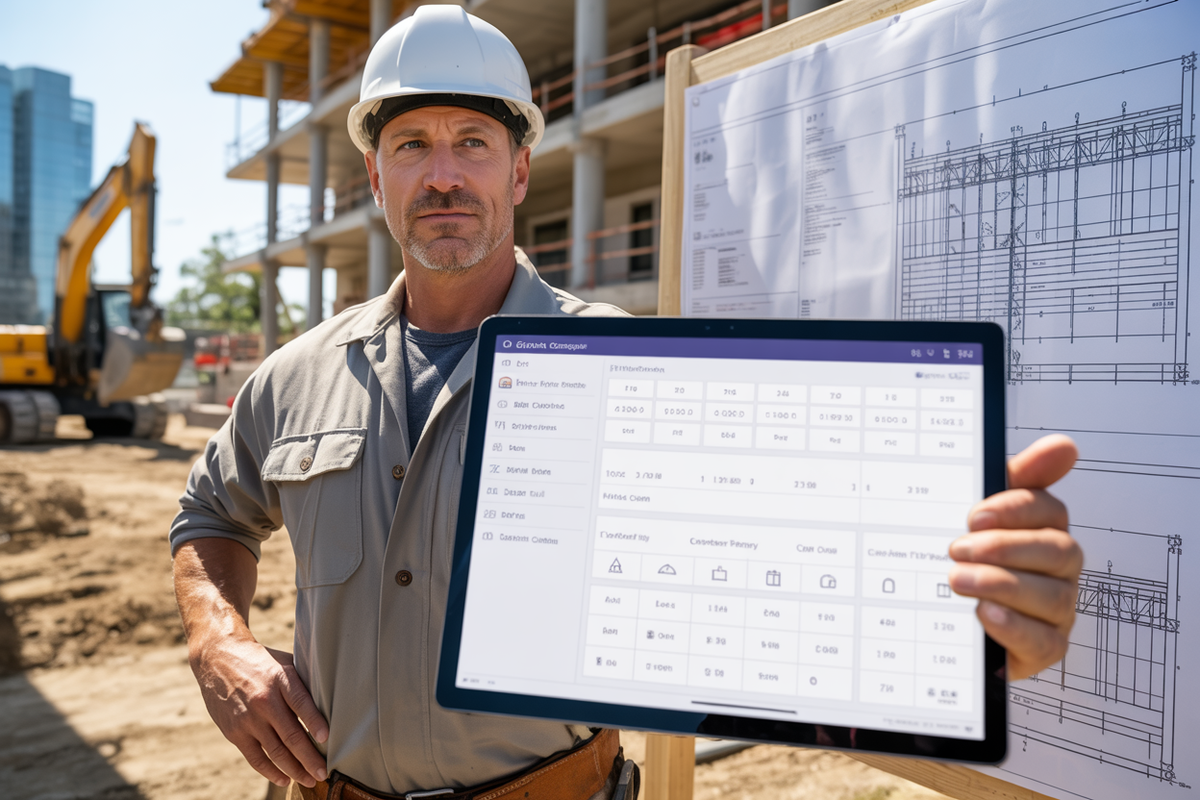
Not all AI estimating tools are built for real-world contractors. When evaluating AI estimating software, focus on these essentials:
- Plan-based and photo-based estimating (blueprints and walkthrough photos)
- Editable pricing logic so you control margins, not the software
- Trade-level detail, not generic lump sums
- Proposal automation that looks professional to homeowners
- Follow-up automation so leads don’t die quietly
- Speed on-site, not “send it to the office later” workflows
It's Not Just About Speed, It's About Strategy

When you’re not bogged down with counting and pricing, your role as a contractor evolves. You have the mental bandwidth to think strategically. You can spend more time analyzing the project for potential value engineering opportunities.
You can have more in-depth conversations with the client to truly understand their needs. You can build stronger relationships with your subcontractors.
This is the hidden power of AI estimating. It elevates you from being a simple bidder to being a true partner to your clients. You’re not just providing a number; you’re providing solutions. And in this business, that’s how you build a reputation that lasts.
A Contractor’s First Steps into AI Estimating
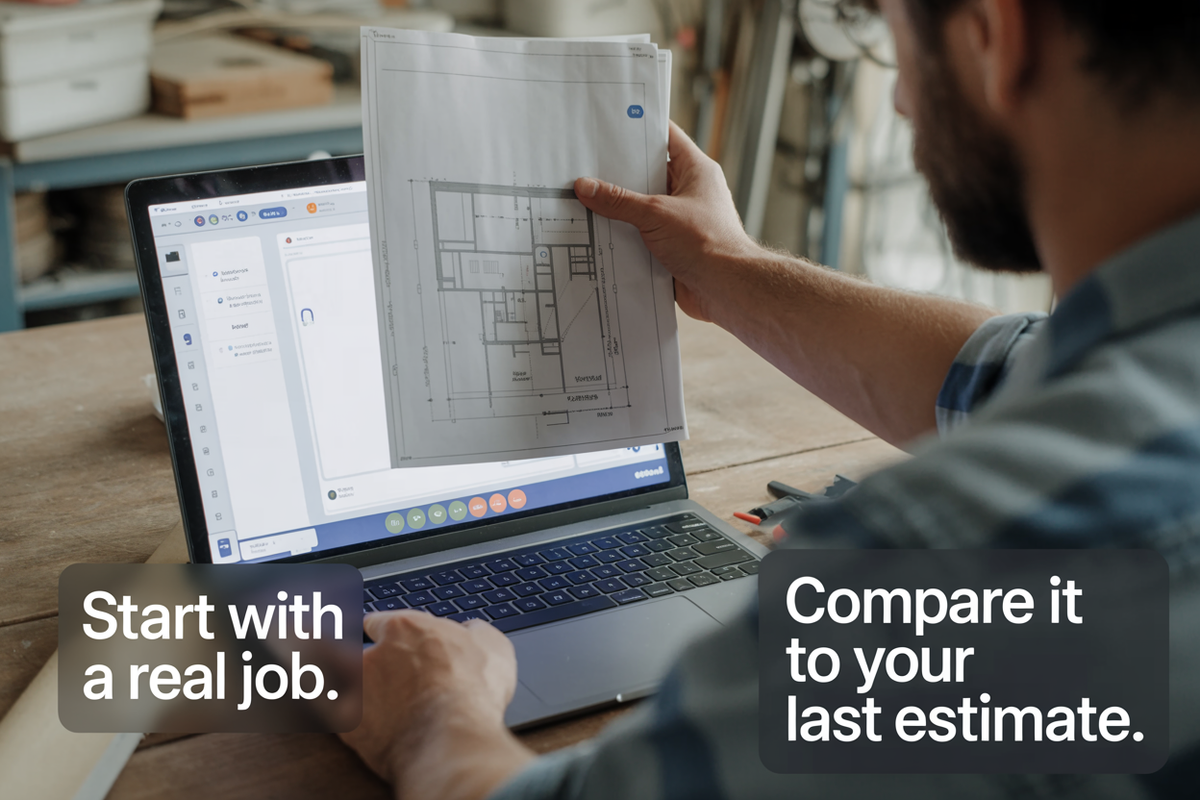
Adopting this technology is more straightforward than you might think. You don’t need a degree in computer science. You just need a willingness to work smarter.
Start by exploring a tool built for contractors. Handoff, for example, is designed specifically for remodelers, handymen, and fix-and-flip professionals. It’s not bloated with features you’ll never use. It focuses on the core needs of your business: creating fast, accurate estimates and managing your projects and clients efficiently.
Look for a solution that offers a demo or a free trial. Get your hands on the software and run one of your recent projects through it.
See for yourself how quickly you can generate a takeoff and a proposal. Compare the AI-generated numbers to the ones you did manually. The results will speak for themselves.
The bottom line is this: the construction industry is changing, and the contractors who thrive will be the ones who embrace technology to become more efficient. AI estimating isn't a threat to your job; it's the most powerful tool you have to reclaim your time, grow your business, and get back to doing what you do best, building.
AI estimating isn’t about cutting corners. It’s about removing the slow, manual work that keeps contractors stuck. When estimating is faster, more accurate, and easier to repeat, you win more jobs without burning out.
The contractors adopting AI estimating today aren’t just saving time, they’re building businesses that scale.
AI Estimating FAQs for General Contractors
Is AI estimating accurate?
Yes, when used correctly. AI estimating eliminates fatigue-based errors common in manual takeoffs and flags missing scope items that are often overlooked.
Does AI estimating replace contractors?
No. AI estimating replaces manual work, not judgment. Contractors still control pricing, scope, and final decisions.
Can AI estimating work for remodels and small jobs?
Absolutely. Remodels benefit the most because they’re where missed scope and estimating errors happen most often.
How fast is AI estimating compared to manual estimating?
Most contractors reduce estimating time by 70–90%, turning multi-hour estimates into 15–30 minute workflows.
Frequently Asked Questions (FAQ)
What is AI estimating in construction?
AI estimating uses software to automate takeoffs, material quantities, pricing, and proposal creation. Instead of manually measuring plans and building spreadsheets, contractors can generate estimates from drawings, photos, or notes in minutes while still controlling pricing and scope.
Is AI estimating actually accurate?
Yes, when used correctly. AI reduces common human errors like missed measurements or skipped scope items, especially on long or complex plans. It doesn’t get tired or overlook details, which is where most manual estimating mistakes happen.
Does AI estimating replace contractors or estimators?
No. It replaces the repetitive, time-consuming work, not your judgment. You still decide pricing, adjust scope, and finalize the estimate. Think of it as speeding up the process, not taking control away.
How much time can AI estimating actually save?
Most contractors cut estimating time by 70–90%. What used to take several hours or even days can often be done in 15–30 minutes, especially for standard remodels or repeat job types.
Can AI estimating work for remodeling and smaller jobs?
Yes, and that’s actually where it shines most. Remodels have more unknowns and are more prone to missed scope. AI helps catch those gaps early and keeps estimates consistent across similar jobs.
What should contractors look for in AI estimating software?
Look for tools that support plan-based and photo-based estimating, allow you to control pricing and markups, generate clean client-ready proposals, and handle change orders without forcing you to rebuild the estimate. Speed and ease of use matter just as much as features.
Ready to win more jobs with less manual work? Try Handoff free →