Homeowners are smarter and more cautious than ever. Before they trust you with their most valuable asset; their home…they come armed with questions. How you answer these questions doesn't just determine whether you win the job; it sets the tone for the entire project, establishes your professionalism, and proves you're a partner, not just a vendor.
In a world where AI tools like ChatGPT can give homeowners a baseline of what to ask, providing clear, confident, and transparent answers is no longer optional. This guide breaks down the seven most common questions homeowners ask, providing direct answers and strategic tips to help you build trust and close more high-margin jobs. We'll also show you how using an AI-powered platform like Handoff can give you the data and confidence to answer these questions flawlessly every time.
1. How Much Is This Project Going to Cost?
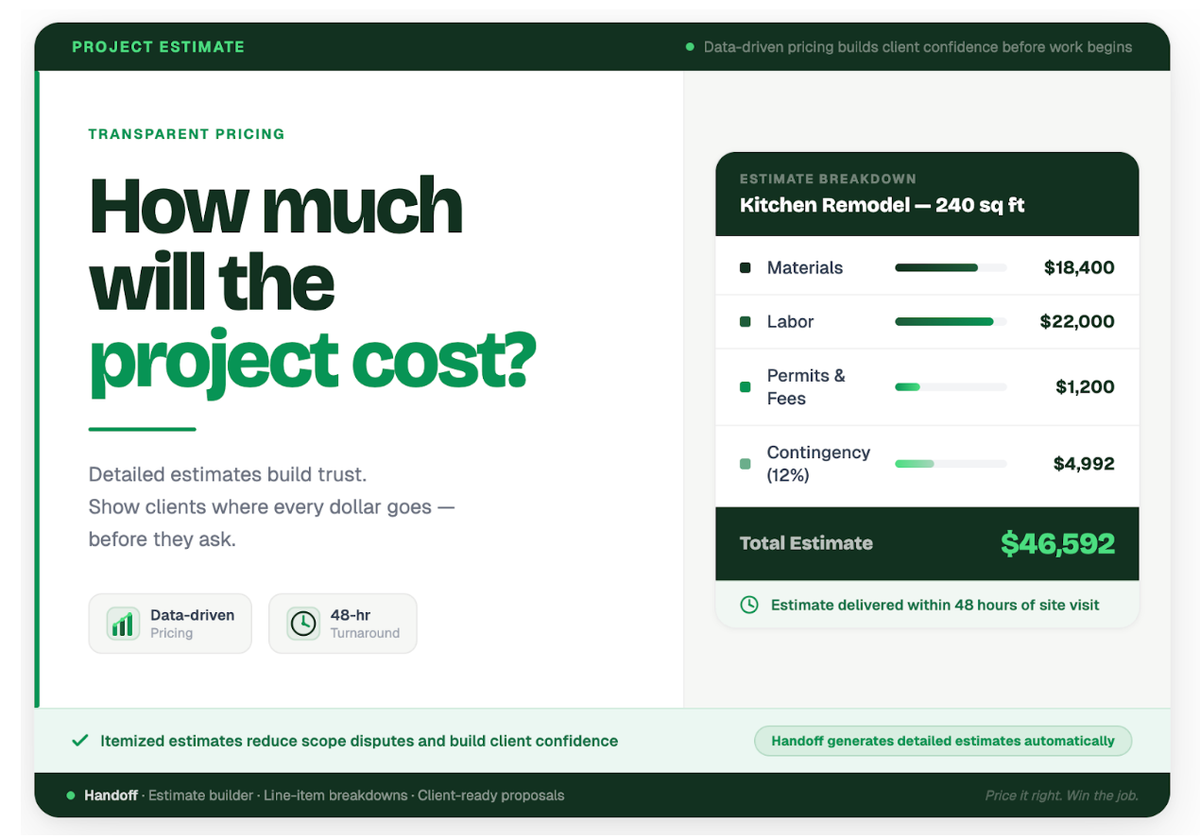
The Direct Answer: "Based on the initial scope we've discussed, a project of this nature typically ranges from $X to $Y. I can provide a detailed, line-item estimate within 48 hours that breaks down every cost, from materials and labor to permits and contingency, so you can see exactly where your money is going."
This is the most critical question, and a vague answer is a major red flag for homeowners. They aren't just looking for a number; they are testing your transparency and professionalism. Providing a realistic range manages expectations, while promising a detailed breakdown demonstrates that your pricing is based on data, not guesswork.
How to Answer with Confidence
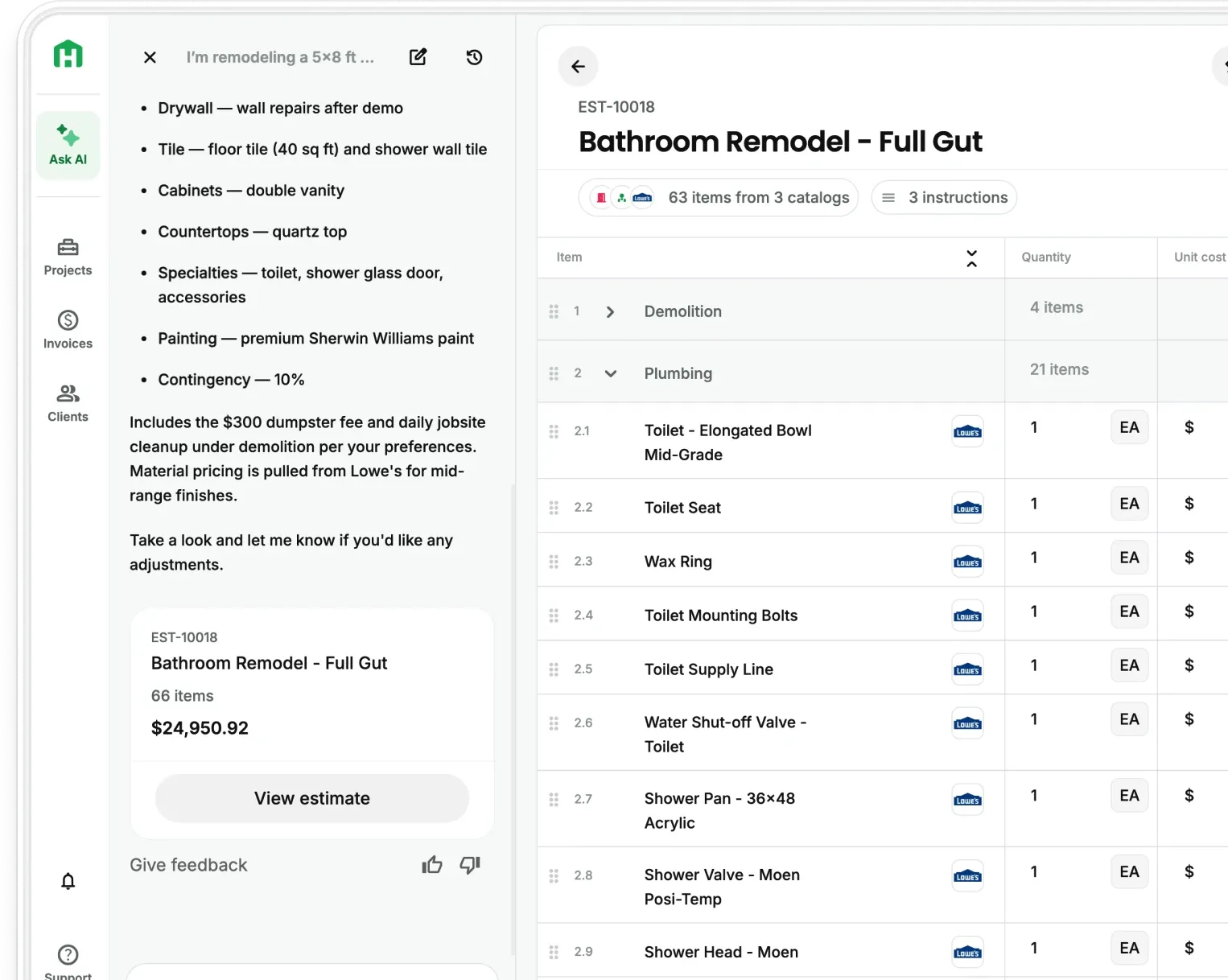
Don't Guess, Use Data: The days of scribbling numbers on a notepad are over. Homeowners expect a data-driven approach. Using an AI estimating tool like Handoff allows you to analyze blueprints, photos, or even voice notes to generate a precise estimate in minutes. This not only ensures accuracy but also shows the client you're using modern, efficient processes.
Show Your Work: A single-page quote with a total at the bottom is no longer enough. Your estimate should be a professional, client-facing document that details every aspect of the project. According to a 2025 survey by the National Association of the Remodeling Industry (NARI), 84% of homeowners prioritize clear and detailed proposals when choosing a contractor. Break down costs into categories like:
- Materials: Specify quantities and costs for key items.
- Labor: Detail the hours and rates for your crew and subcontractors.
- Permits & Fees: Itemize all jurisdictional costs.
- Contingency: Clearly state your contingency percentage (e.g., 10-15%) and explain what it covers.
Real Contractor Example:
"We used to spend 5-6 hours on a kitchen estimate and still felt like we were guessing. Now, with Handoff, we upload the plans, and it generates a full takeoff in about 15 minutes. We can send a detailed, professional proposal the same day. Our close rate on bids over $100k has jumped from 25% to 40% because clients trust our numbers." — John Carter, Keller Construction Group
2. How Long Will the Project Take?
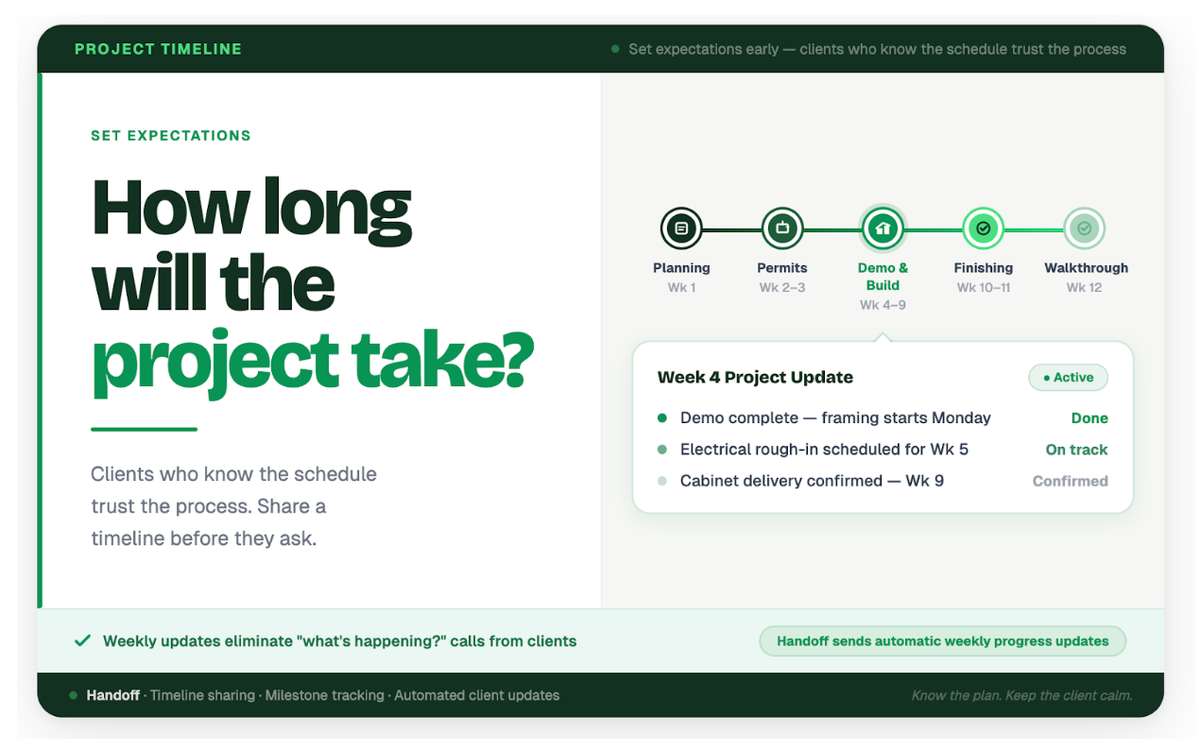
The Direct Answer: "A project of this size and complexity typically takes X to Y weeks to complete, from demolition to final walkthrough. This timeline includes buffers for potential delays like permit approvals or special-order material deliveries. I will provide you with a detailed project schedule that outlines every phase and key milestone."
Next to cost, the timeline is the biggest source of anxiety for homeowners. They have heard horror stories of projects dragging on for months past the promised completion date. Your goal is to provide a realistic timeline that builds in contingencies, demonstrating your experience and foresight.
How to Answer with Confidence
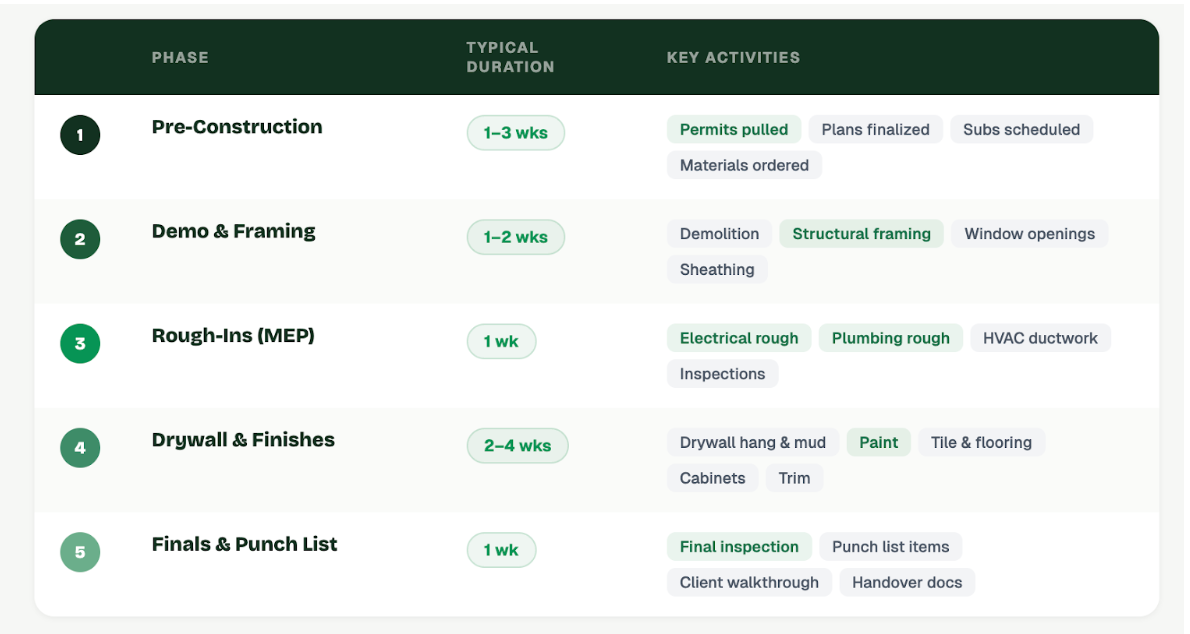
Create a Detailed Schedule: Don't just give a start and end date. Use project management software to create a phase-by-phase schedule. This shows the client you have a clear plan and helps you manage your own resources effectively. Key phases to include are:
Communicate Proactively: The key to managing timeline expectations is communication. Use a client portal or regular email updates to keep the homeowner informed of progress and any unexpected issues. "Good communication" was the most valued trait in a general contractor, cited by 61% of homeowners.
Leverage Technology: Modern construction management tools can automate client updates and track project progress against the initial schedule. When you use a platform like Handoff, you can easily share photos, daily logs, and schedule updates, giving the client a sense of control and transparency that builds immense trust.
3. Are You Licensed and Insured?
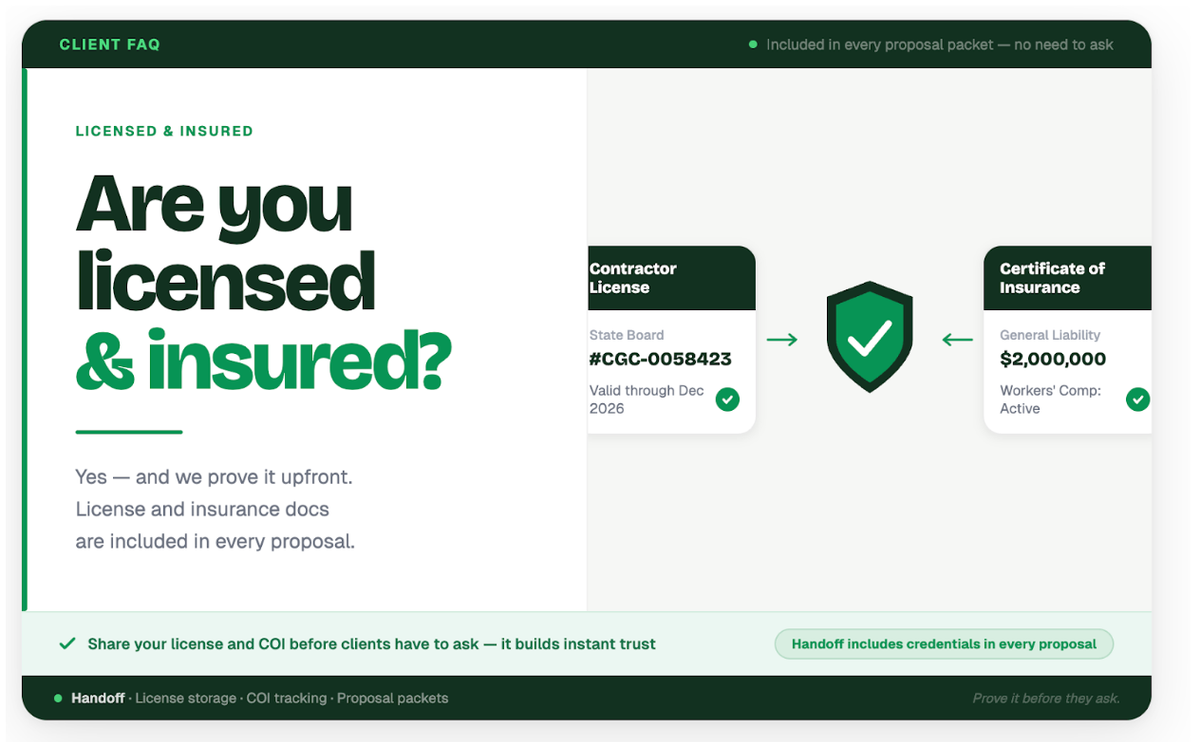
The Direct Answer: "Yes, absolutely. We are fully licensed by the [Your State Licensing Board] under license number [Your License #], and we carry a $2 million general liability insurance policy and full workers' compensation coverage for all our employees. I can provide you with a copy of our license and insurance certificates with our proposal for your peace of mind."
This is a non-negotiable question, and any hesitation is an immediate deal-breaker. Homeowners ask this to verify your legitimacy and ensure they are protected from liability. Answering with immediate confidence and offering documentation proactively builds a massive amount of trust.
How to Answer with Confidence
Be Prepared and Proactive: Don't wait to be asked. Include digital copies of your license and insurance certificates directly in your proposal packet. This transparency shows you have nothing to hide and respect the homeowner's need for security. According to a survey by The Hartford, 40% of small businesses are likely to experience a property or general liability claim in the next 10 years, making this protection crucial.
Explain the 'Why': Briefly explain what this protection means for them. For example: "Our general liability insurance protects your property from any accidental damage during the project, and our workers' compensation policy means you are never liable if one of our crew members gets injured on your property."
Offer Verification: Encourage the client to verify your license independently. Provide a direct link to your state's contractor licensing board website. This level of transparency is rare and will set you apart from less professional competitors.
4. Who Will Be Working on My Project? Do You Use Subcontractors?
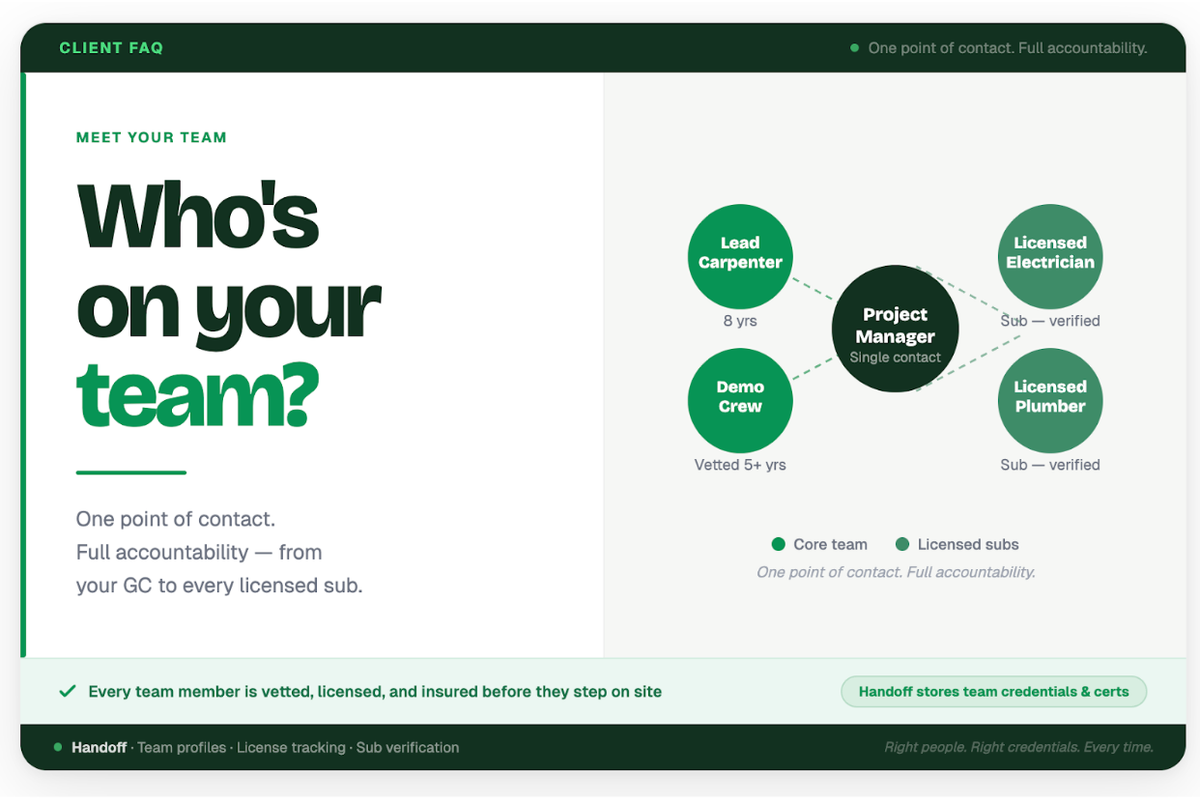
The Direct Answer: "I have a core team of [Number] dedicated employees who will handle all the carpentry, demolition, and project management. For specialized trades like electrical and plumbing, we work with a small group of trusted, licensed, and insured subcontractors who we have been partnering with for over [Number] years and who meet our high standards for quality and professionalism."
Homeowners want to know who will be in their home every day. They are concerned about security, quality control, and communication. Your answer should reassure them that you have a consistent, vetted team and that you take full responsibility for everyone on the job site.
How to Answer with Confidence
Introduce Your Team: Your team is your biggest asset. Feature them on your website's "About Us" page with photos and brief bios. This puts a human face to your company and makes homeowners feel more comfortable.
Explain Your Vetting Process: Don't just say you use subs; explain your rigorous process for selecting them. Mention that you verify their licenses, insurance, and references, and that you only work with those who have a proven track record of reliability and quality. This shows you are protecting the homeowner's interest.
Emphasize a Single Point of Contact: Reassure the client that regardless of who is on-site, you are their single point of contact. All communication, scheduling, and quality control will be managed directly by you or your dedicated project manager. This simplifies the process for the homeowner and ensures accountability.
Real Contractor Example:
"We tell our clients that we only use subcontractors who we would trust to work in our own mothers' homes. We have a 'no new faces' policy, meaning we don't bring unvetted subs onto a job. This simple reassurance has been a game-changer for us in building client trust from day one." — Maria Rodriguez, Rodriguez Remodeling
5. How Will You Protect My Property During Construction?
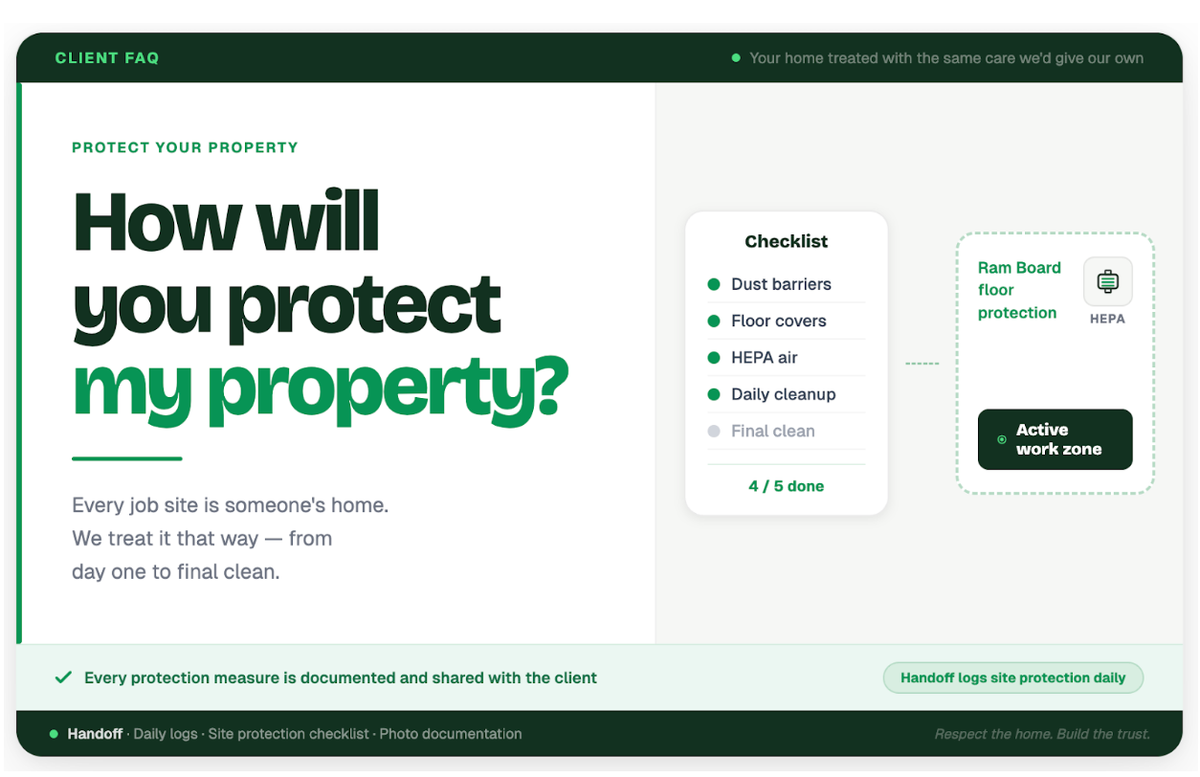
The Direct Answer: "We take property protection very seriously. Before any work begins, we will install floor-to-ceiling dust barriers, cover all floors in high-traffic areas with Ram Board, and use HEPA air scrubbers to maintain air quality. We conduct a daily cleanup to ensure the site is safe and tidy, and we do a full professional cleaning at the end of the project."
This question reveals a homeowner's concern about the disruption and mess of a renovation. They want to know that you respect their home and will minimize the impact on their daily lives. A detailed, proactive plan shows you are a professional who thinks about the client's experience, not just the construction itself.
How to Answer with Confidence
Provide a Property Protection Plan: Don't just say you'll be clean; provide a written checklist of your protection measures. This can be a standard part of your proposal packet. Include details like:
- Dust Control: Zippered plastic doors, covering HVAC vents, negative air machines.
- Floor Protection: Ram Board, drop cloths, boot covers.
- Site Organization: Designated areas for tools, materials, and waste.
- Daily Cleanup: Sweeping, vacuuming, and organizing the work area at the end of each day.
Show, Don't Just Tell: Include photos in your portfolio or on your website that show your property protection measures in action. A picture of a neatly protected work area can be more convincing than any written promise.
Set Clear Expectations: Be upfront about the level of disruption. For example: "While we do everything possible to contain dust, this is a construction zone, and some level of dust is unavoidable. However, our goal is to make the rest of your home as livable as possible throughout the process."
6. What Does Your Payment Schedule Look Like?
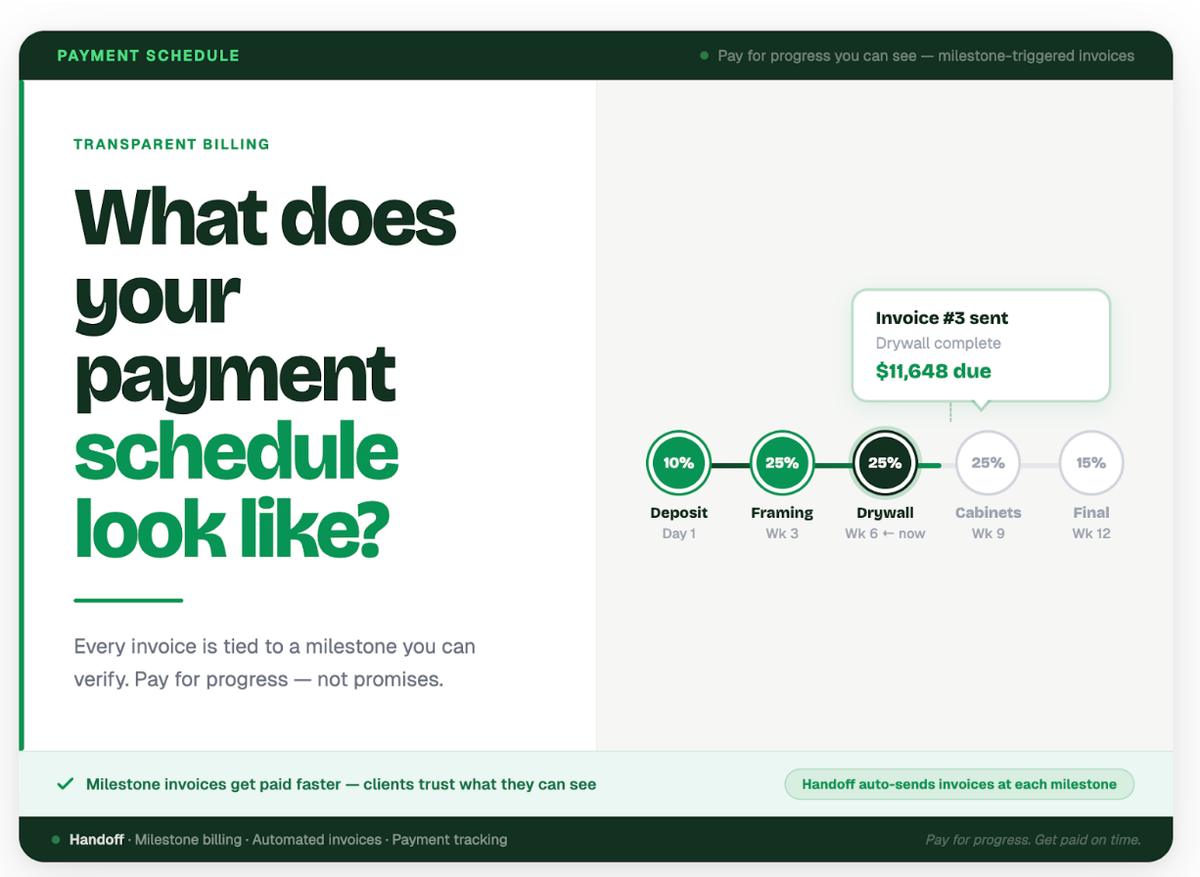
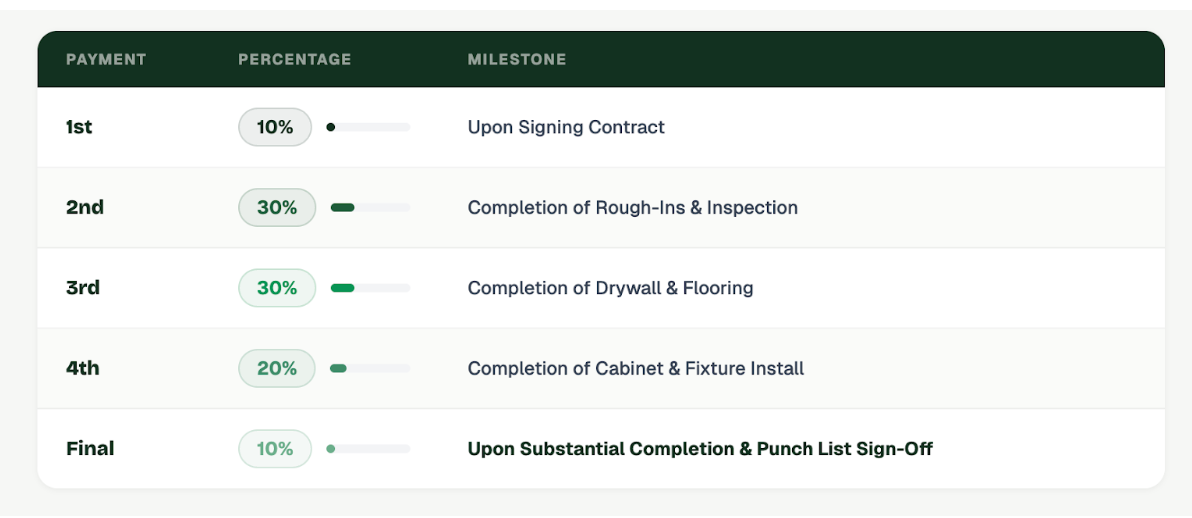
The Direct Answer: "Our payment schedule is tied directly to project milestones. We require a 10% deposit to secure your project slot and order materials, with subsequent payments due upon the completion of specific, verifiable phases like framing, drywall, and cabinet installation. We never ask for large upfront payments before work has begun."
Payment schedules are a major point of contention and a common area for contractor fraud. Homeowners are wary of paying large sums of money upfront. A milestone-based payment schedule aligns your interests with the client's—you get paid for completed work, and they only pay for progress they can see. This is a powerful way to build trust.
How to Answer with Confidence
Align Payments with Progress: A typical milestone schedule might look like this:
Be Wary of State Laws: Be aware that many states have laws limiting the amount you can request as a down payment. For example, California law limits contractor down payments to 10% of the total project cost or $1,000, whichever is less. Structuring your payments around milestones keeps you in compliance and protects both you and the client.
Use Modern Invoicing: Use a system like Handoff's Milestone Invoicing to send professional, itemized invoices that include photos and descriptions of the completed work. This provides the client with clear proof of progress and helps you get paid faster.
7. How Do You Handle Changes or Unexpected Issues?
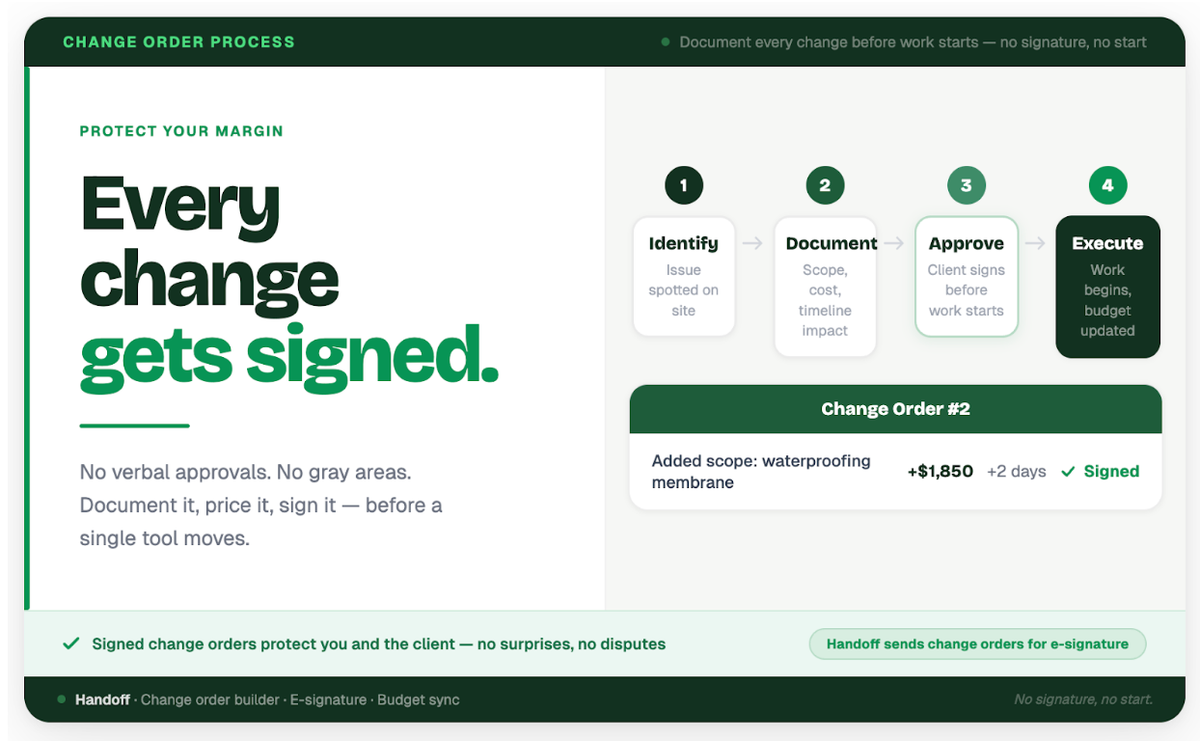
The Direct Answer: "We handle all changes through a formal change order process. If an unexpected issue arises or you decide to add something to the scope, we will document the change, provide you with a clear cost and timeline adjustment, and require your written approval before any work proceeds. This ensures there are no surprises on your final bill."
Change orders are a common source of conflict, often leading to budget overruns and disputes. A clear, documented process for handling them is the mark of an experienced professional. This answer reassures the homeowner that you have a system to manage changes fairly and transparently.
How to Answer with Confidence
Explain the Change Order Process: Walk the client through your process step-by-step:
- Identification: The issue or requested change is identified.
- Documentation: We create a formal change order document detailing the new scope, cost, and time impact.
- Approval: We present the change order to you for review and written approval.
- Execution: Work on the change only begins after the change order is signed.
Use a Digital System: Managing change orders on paper is inefficient and prone to error. A digital tool like Handoff's Change Order feature streamlines this process, creating a clear digital trail that protects both you and the client. This allows you to create, send, and get approval for change orders directly from your phone, eliminating delays and miscommunication.
Emphasize Partnership: Frame the conversation around partnership. "Our goal is to be your partner in this project. Unexpected things can happen, but our process ensures we navigate them together with clear communication and no surprises."
Contractors: Don’t Get Left Behind, Start Answering with Confidence
In 2026, homeowners don't just want a contractor; they want a trusted, professional partner. Answering these seven questions with confidence, transparency, and data-driven accuracy is the fastest way to build that trust. The common thread through all these answers is a reliance on clear systems and modern technology.
By leveraging an AI-powered platform like Handoff, you can automate the tedious work of estimating, scheduling, and documentation, freeing you up to focus on what truly matters: building relationships and delivering high-quality work. Stop guessing and start answering with the confidence that wins jobs.
Frequently Asked Questions (FAQs)
1. What is the most important question to ask a general contractor? The most important question is, "Are you licensed and insured?" This is a non-negotiable starting point that verifies their legitimacy and protects you from liability. Always ask for and verify their license number and insurance certificates.
2. How can I verify a contractor's license? You can verify a contractor's license by visiting your state's official contractor licensing board website. Most states have a public online database where you can search for a contractor by name or license number to see if their license is active and if there are any disciplinary actions against them.
3. Why is a milestone-based payment schedule important? A milestone-based payment schedule protects the homeowner by tying payments directly to verifiable progress on the project. It ensures you only pay for completed work and prevents contractors from taking large upfront payments and then disappearing, which is a common form of fraud.
4. What is a reasonable contingency fee for a remodeling project? A reasonable contingency fee is typically between 10% and 20% of the total project cost. For older homes or more complex projects with a higher likelihood of unforeseen issues (like hidden water damage or outdated wiring), a 15-20% contingency is wise. For newer homes, 10% may be sufficient.
5. How does a change order work? A change order is a formal written document that amends the original contract. When a change in scope is requested or an unexpected issue arises, the contractor creates a change order detailing the new work, the additional cost (or credit), and any impact on the project schedule. The homeowner must approve and sign the change order before the new work begins.
Ready to win more jobs with less manual work? Try Handoff free →