Quick Answer: What is the best marketing strategy for homebuilders in 2026? The most effective homebuilder marketing strategy combines high-quality visual portfolios, targeted local SEO, and automated lead capture. By showcasing past projects, managing local directory reviews, and creating authoritative content that answers common homeowner questions, builders can consistently attract and convert high-value clients.
Key Takeaways
- Visual proof converts: High-quality project portfolios and before-and-after galleries keep visitors on your site up to 3x longer.
- Speed wins jobs: Contractors who respond to leads within an hour are 7x more likely to qualify them.
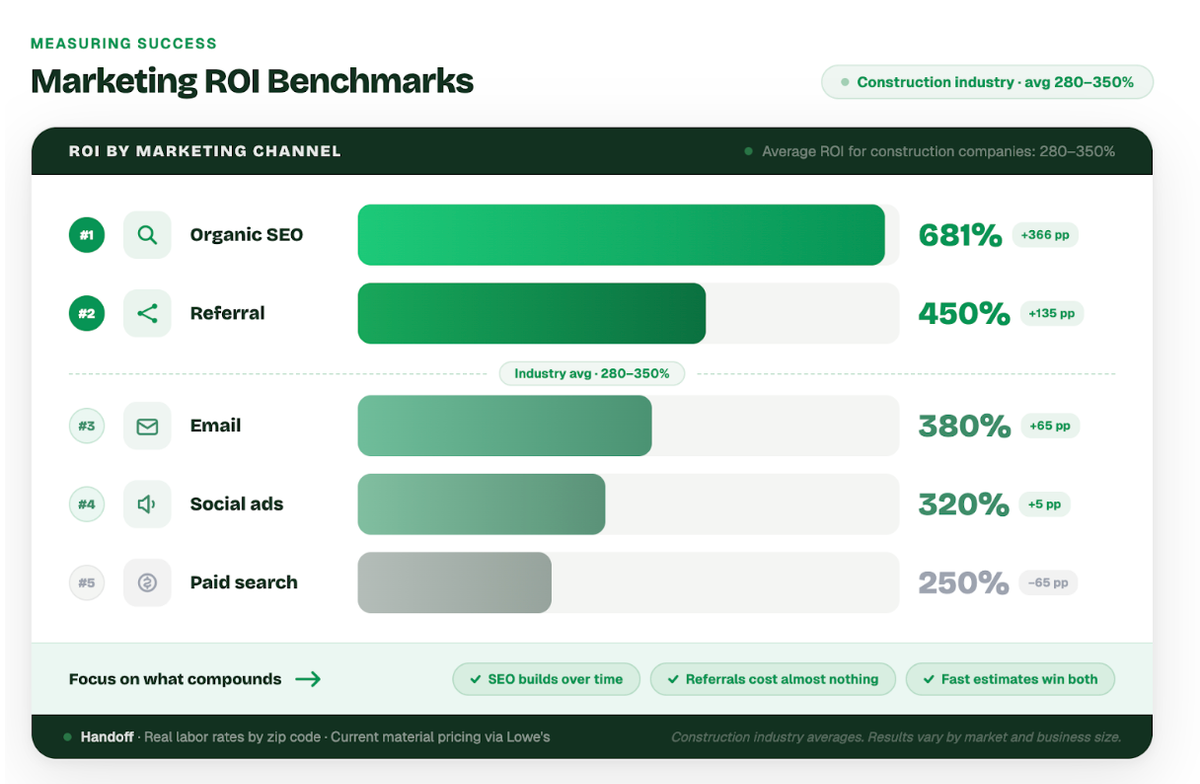
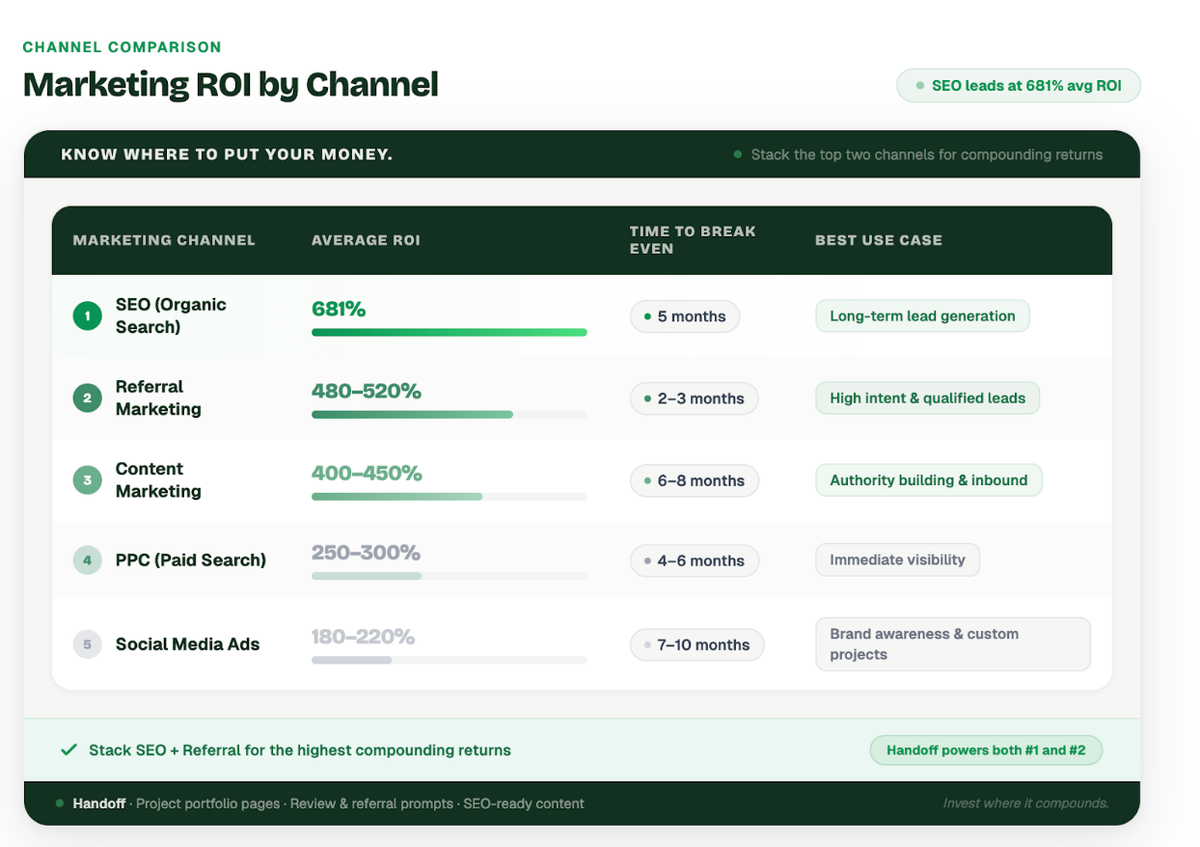
- ROI is measurable: The average marketing ROI for construction companies ranges between 280% and 350%, with organic SEO driving the highest long-term returns at 681%.
- AI is changing search: 58.5% of Google searches now end without a click. Homebuilders must optimize their content to directly answer questions so AI search engines will cite them.
In residential construction, standing out requires more than just building beautiful homes. Whether you are starting a construction business or scaling an established firm, relying solely on word-of-mouth limits your growth and project consistency.
Marketing does not need to be a massive financial drain. Strategic investments can yield substantial results, helping your brand stand out, attract qualified leads, and engage with your target market. As search engines evolve to feature more AI-generated answers and voice search results, your marketing must adapt to provide clear, authoritative information that homeowners and the search engines they use, can trust.
Here are 15 proven tactics to drive more sales without working 60+ hours a week.
15 Proven Marketing Tactics for Homebuilders in 2026
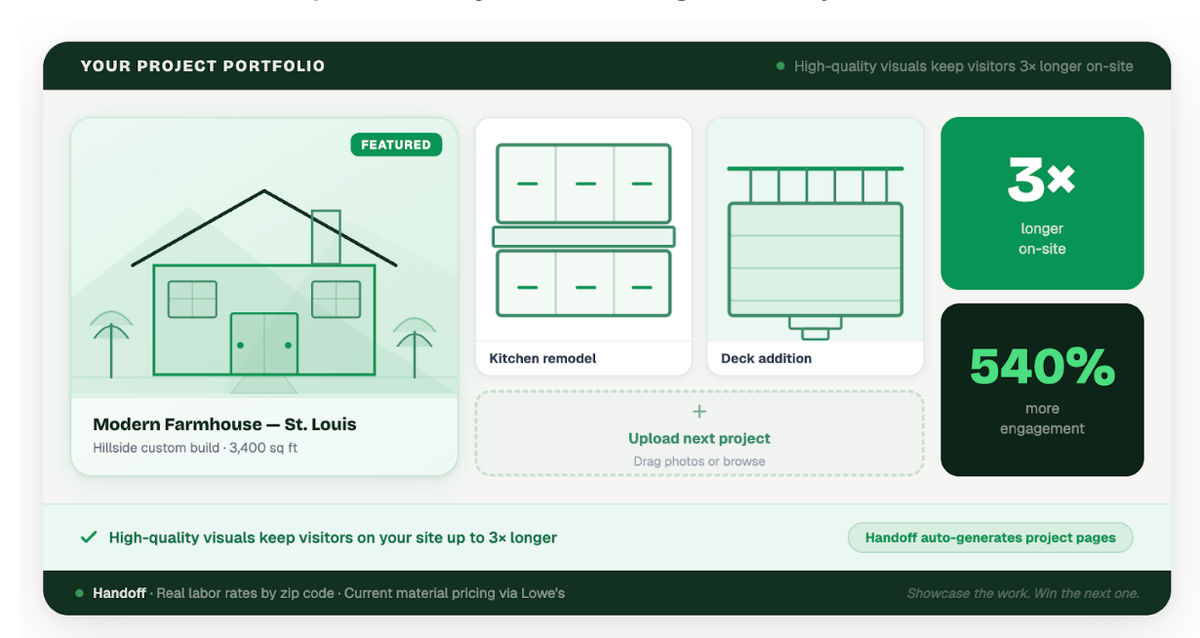
Putting your best work front and center acts as your digital showroom. People believe what they see, and showcasing your projects helps potential clients visualize your capabilities. High-quality visuals can significantly increase website and social media engagement. Regularly update your online portfolio with stunning images and compelling project stories.
Example: A custom homebuilder in St. Louis hired a professional architectural photographer to shoot their latest modern farmhouse build. They posted a carousel of these high-resolution images on Facebook and LinkedIn, detailing the specific challenges they overcame with the lot's steep grade. This single post resulted in a 540% increase in Facebook engagement and generated three direct inquiries for similar hillside builds.
2. Participate in Local Groups and Forums
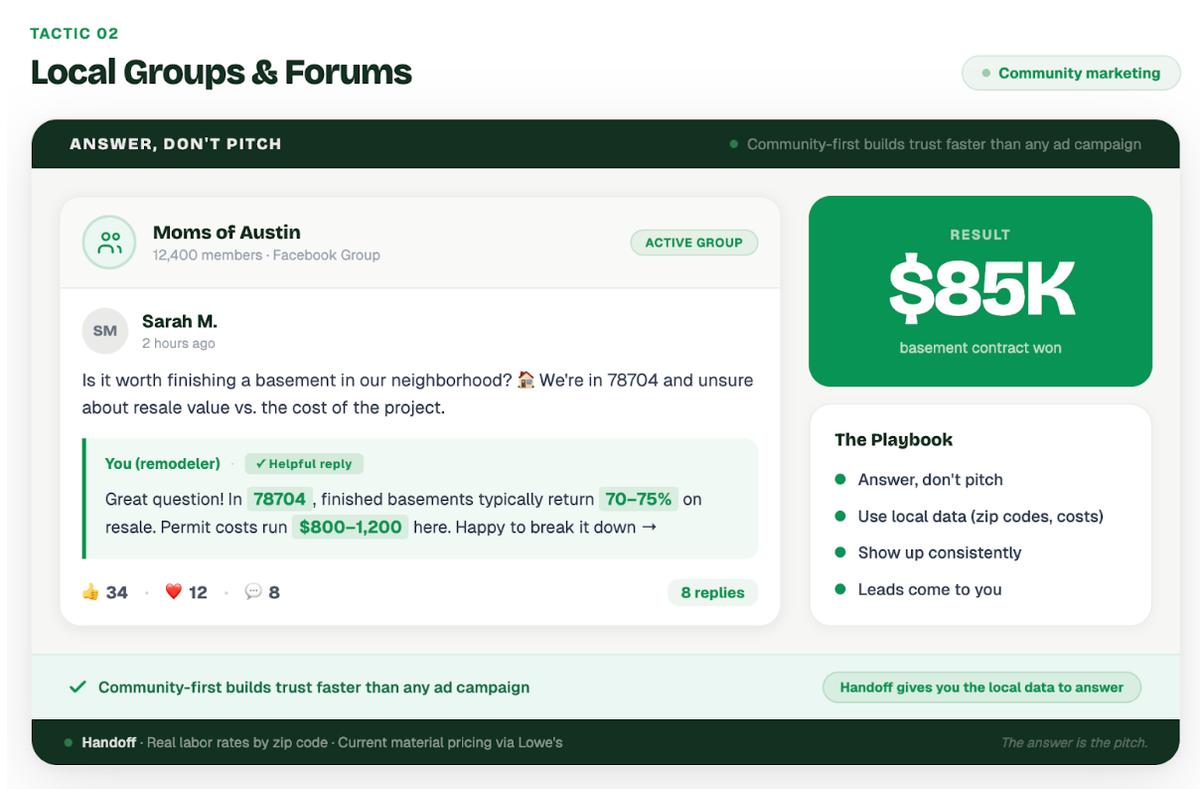
Engaging online with potential clients and networking with other industry professionals is a powerful grassroots strategy. Active participation builds your local reputation and generates leads naturally. Join local groups on platforms like Facebook or Nextdoor, and start contributing by answering questions and offering free advice. This community-first approach is a highly effective method for using AI to get more construction leads by establishing local trust.
Example: A remodeler joined a local "Moms of Austin" Facebook group. Instead of pitching their services, they simply answered questions when homeowners asked for advice on permitting or material costs. When one member asked, "Is it worth finishing a basement in our neighborhood?", the remodeler provided a detailed breakdown of average ROI for that specific zip code. That helpful response led to a $85,000 basement finishing contract.
3. Create Content that Proves Your Expertise
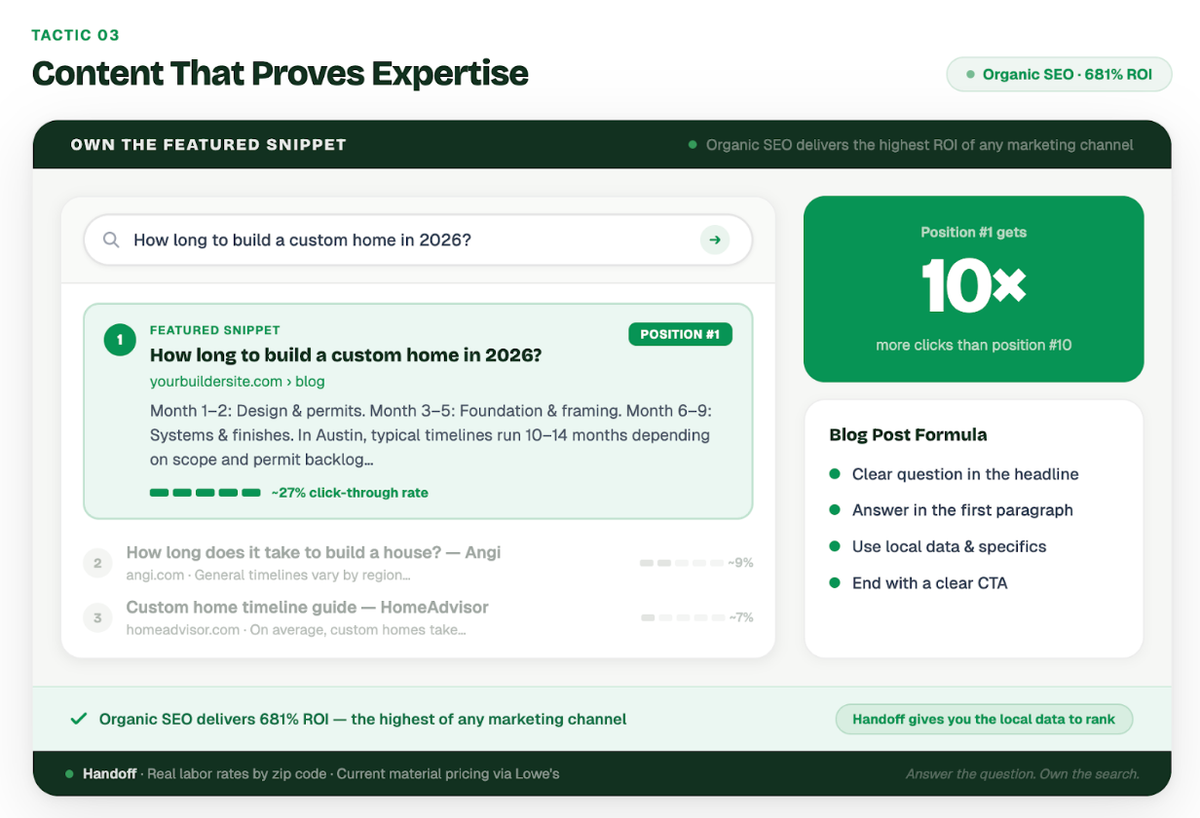
Blogging about homebuilding topics establishes you as an authority. Educational, strategically written content can position your business on page one of search results, where the number one organic result is 10 times more likely to receive a click than a page in the tenth spot. Start writing articles to answer common customer questions, structuring them with clear headings and concise answers.
Example: A builder noticed clients constantly asking about the timeline for custom builds. They wrote a comprehensive blog post titled "How Long Does It Take to Build a Custom Home in 2026? A Month-by-Month Timeline." Because it directly answered a common question with clear, structured data, Google featured it as a snippet at the top of the search results, driving a steady stream of organic traffic to their site.
4. Make it Easy for Clients to Leave Reviews
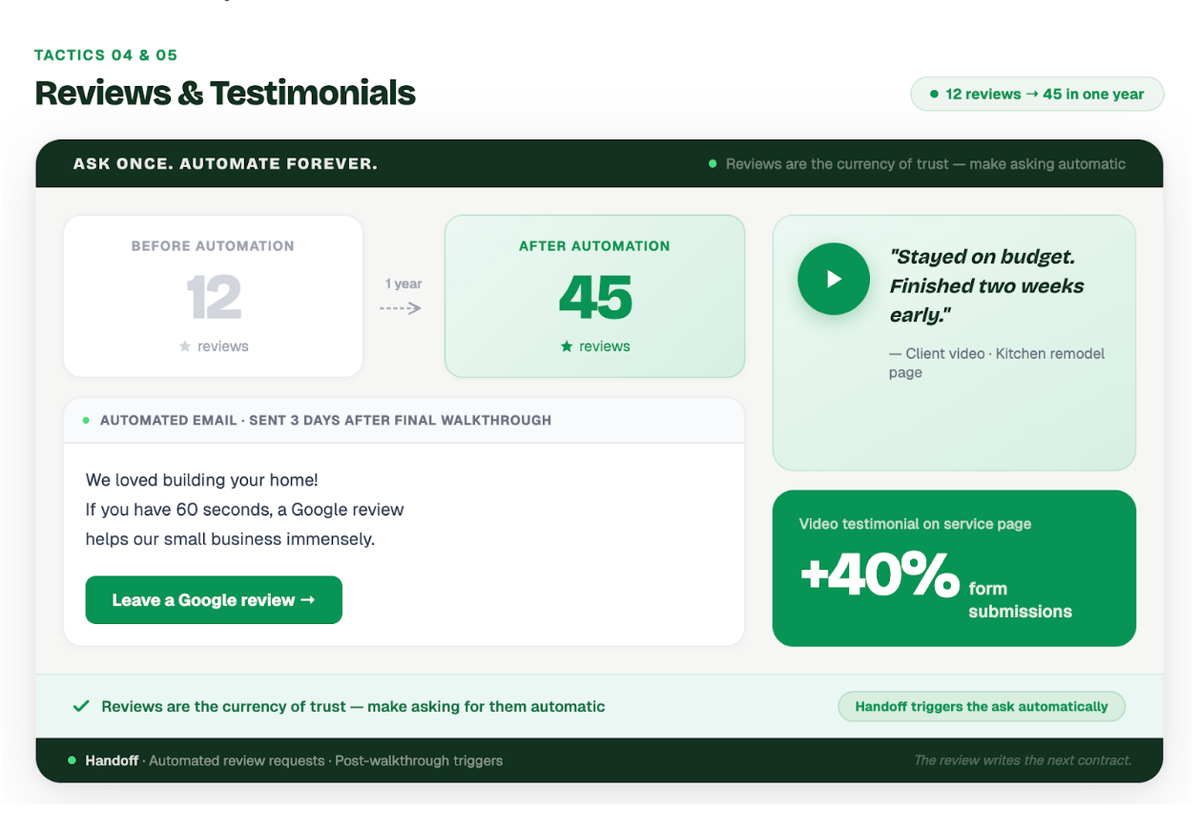
Facilitating the review process for your clients on platforms like Google and Houzz is essential for local SEO. Reviews are the currency of trust in the homebuilding industry. Positive reviews enhance your credibility and attract more clients, significantly lowering customer acquisition costs. Send automated follow-up emails after completing a project, including direct links to your review profiles.
Example: A residential contractor integrated an automated email into their project closeout process. Three days after final walkthrough and payment, the client automatically receives an email saying, "We loved building your home! If you have 60 seconds, a Google review helps our small business immensely," along with a direct link. This simple automation increased their 5-star reviews from 12 to 45 in one year.
5. Feature Testimonials to Build Credibility
Using positive feedback from past clients persuades new prospects by serving as social proof. Testimonials influence potential clients' decision-making in your favor. Showcasing real customer stories tied to specific projects can dramatically improve trust, leading to higher conversion rates. Regularly update your website with fresh testimonials highlighting your communication, budget accuracy, and problem-solving skills.
Example: Instead of a generic "They did a great job" quote, a builder asked a past client to record a 30-second video on their phone standing in their new kitchen. The client specifically mentioned how the buil
der stayed exactly on budget and finished two weeks early. The builder embedded this video directly on their "Kitchen Remodels" service page, resulting in a 40% increase in form submissions on that page.
6. Implement Lead Capture Forms
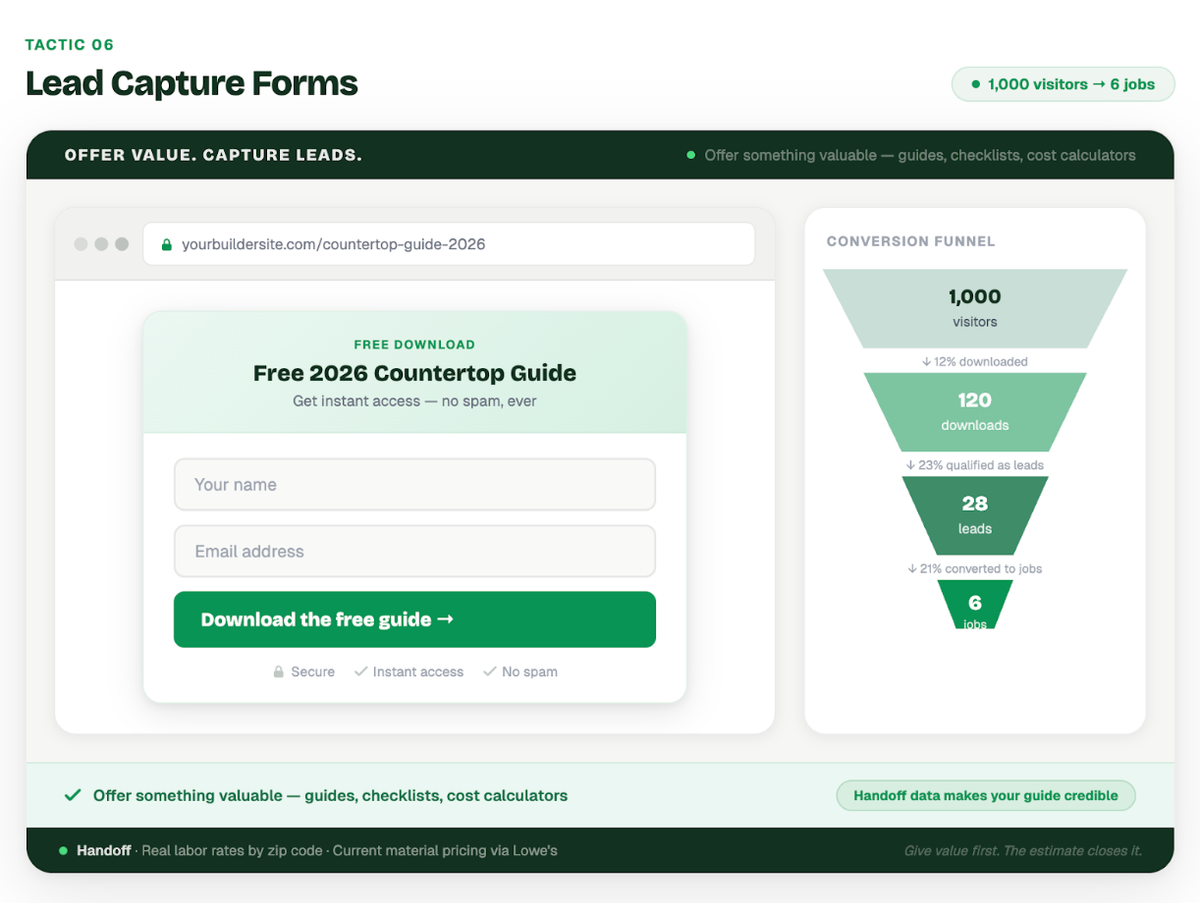
Online forms that collect visitor information in exchange for something valuable act as your digital net for catching leads. Without these, visitors might browse and leave without a trace. Effective lead forms convert casual website traffic into genuine business opportunities. Place these forms strategically on a lead-generating construction website and offer something tempting.
Example: A luxury custom homebuilder added a pop-up form to their website offering a free, downloadable PDF titled "The 2026 Guide to Selecting Premium Countertops." To download it, visitors had to enter their name and email address. This strategy captured the contact information of homeowners who were clearly in the early research phase of a remodel, allowing the builder to nurture them via email over the next six months.
7. Increase Visibility via Local Directories
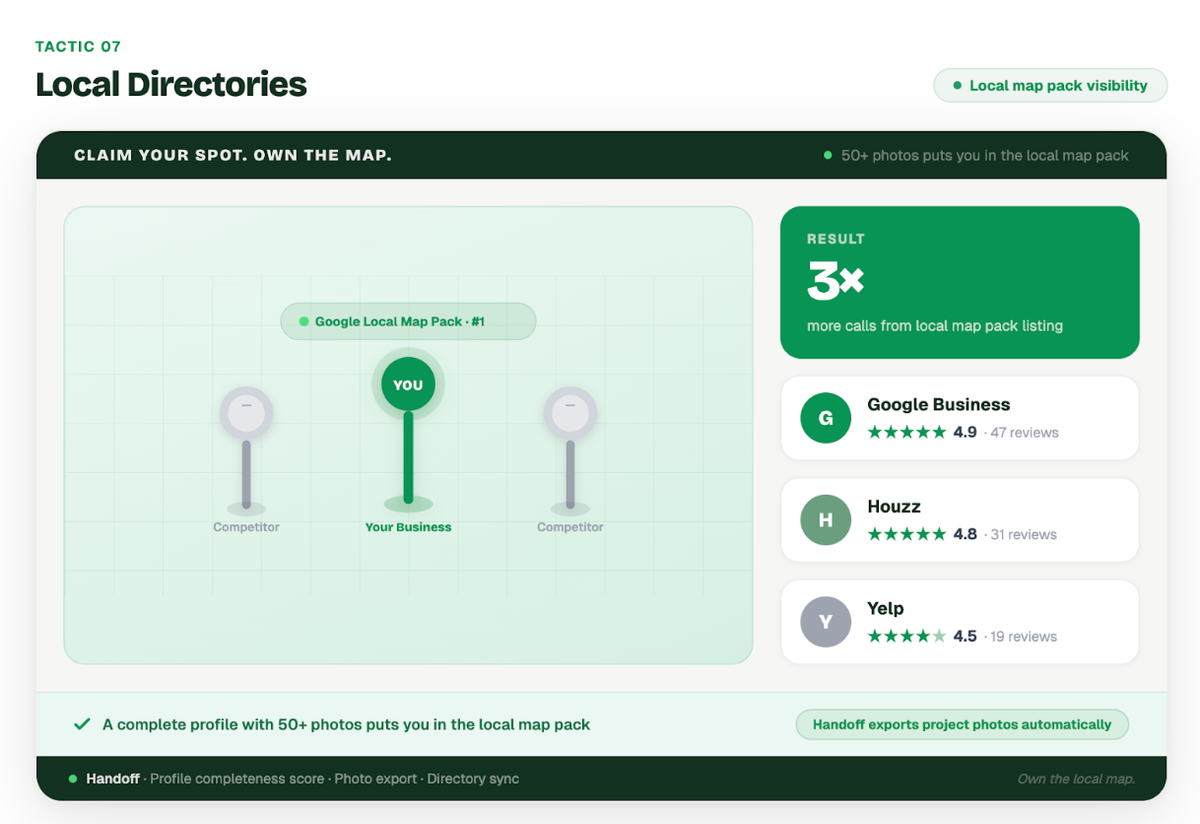
Registering your business on online directories puts your name exactly where people are looking. Being easily found online increases inquiries and improves your local SEO footprint. Set up and optimize profiles on directories like Google Business Profile, Yelp, and Houzz, ensuring your information is accurate, up-to-date, and rich with project photos.
Example: A contractor claimed their Houzz profile, which had previously been empty. They uploaded 50 high-quality photos of their past projects, categorized them by room (e.g., "Transitional Bathrooms," "Outdoor Living Spaces"), and added detailed descriptions with local keywords. Within three months, they received two high-end design-build inquiries directly through the Houzz platform.
8. Team Up with Local Professionals
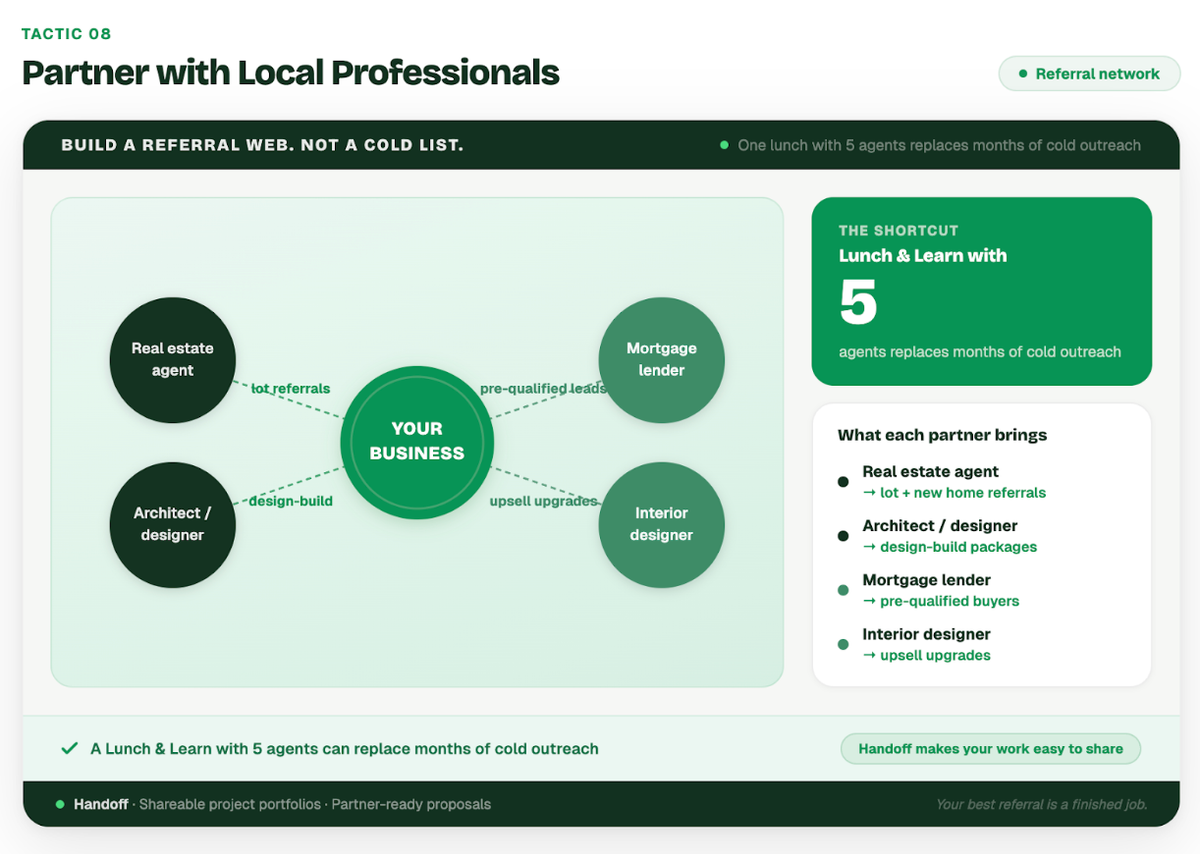
Building partnerships with local real estate agents, architects, and designers funnels high-quality leads to your business. Collaborations often lead to more comprehensive projects and referrals, potentially increasing your average project size. Reach out to potential partners, propose collaborative projects, and focus on pricing projects more profitably together.
Example: A homebuilder hosted a "Lunch and Learn" event at their office, inviting five top-producing local real estate agents. The builder educated the agents on current construction costs per square foot and how to identify lots suitable for custom builds. In return for this valuable education, the agents began exclusively referring their clients who couldn't find existing inventory to this specific builder.
9. Drive Engagement with Social Media Ads
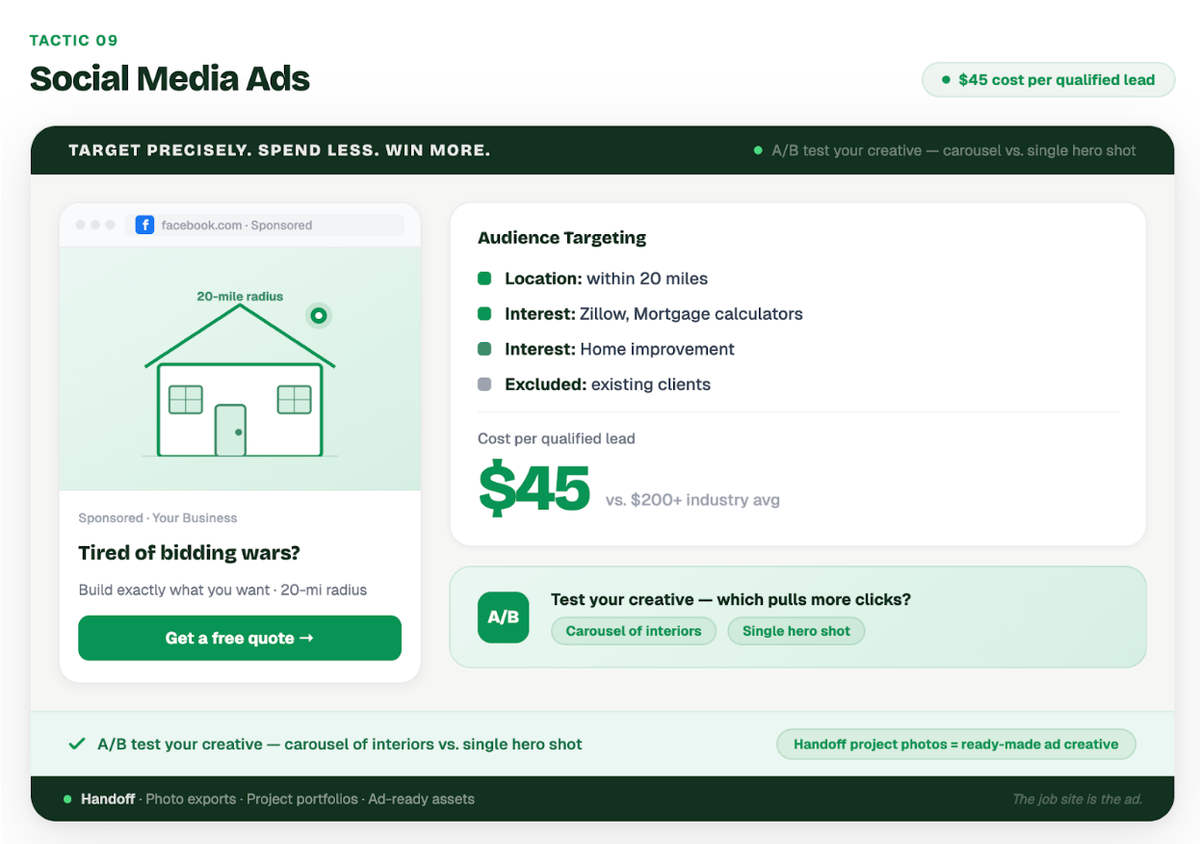
Running targeted advertisements on platforms like Facebook and Instagram allows you to reach a vast, localized audience. Social media ads often have a high return on investment due to their targeting precision based on location and interests. Develop eye-catching ad creatives with compelling copy and use A/B testing to see what resonates best with your local market.
Example: A builder running a new subdivision campaign used Facebook Ads to target users within a 20-mile radius who had recently shown interest in "Zillow," "Mortgage Calculators," or "Home Improvement." The ad featured a carousel of their model home interiors with the headline, "Tired of bidding wars? Build exactly what you want." The campaign generated leads at a cost of just $45 per qualified inquiry.
10. Keep Clients Informed with Email Marketing
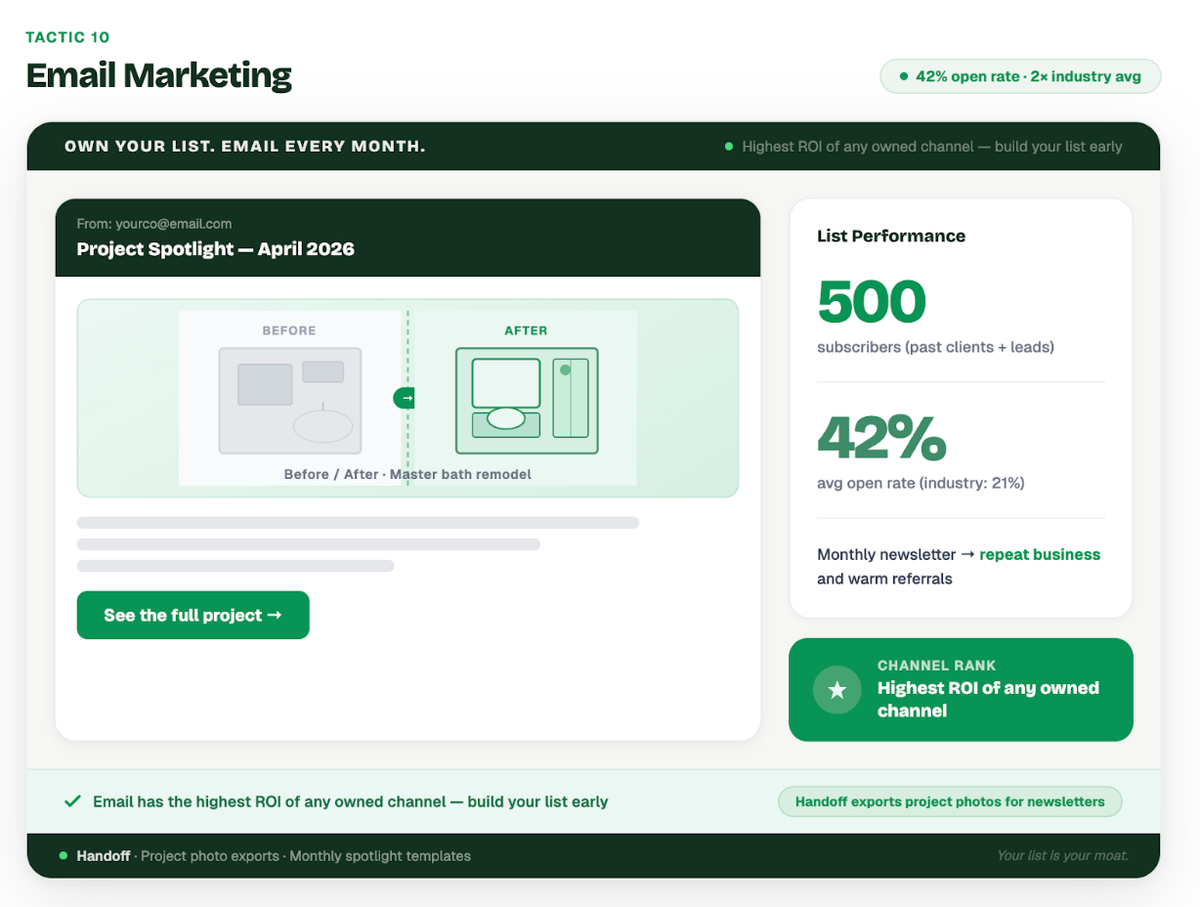
Sending out emails to a list of subscribers keeps them engaged with your brand over the long sales cycle of custom homebuilding. Email is a direct line to potential and current clients, ideal for personalized communication. Email marketing is known for its high ROI, fostering loyalty, and repeat business. Start building your email list early using sign-up incentives on your website.
Example: A contractor sends a monthly "Project Spotlight" newsletter to their email list of 500 past clients and warm leads. The email features one recently completed project, complete with before-and-after photos and a breakdown of the materials used. A past client who received the newsletter saw a stunning deck addition and immediately replied to the email to book a consultation for their own backyard.
11. Tell Your Story with Video Marketing
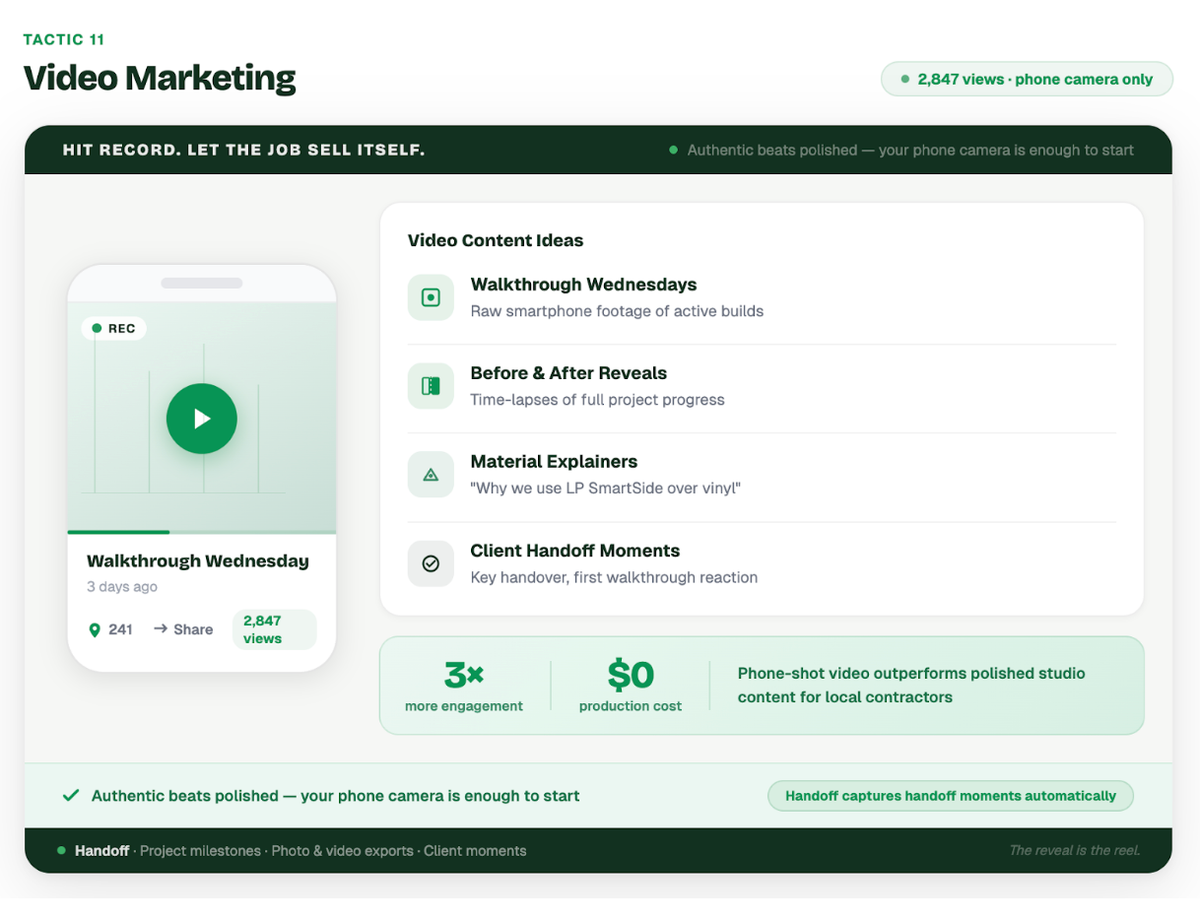
Using video to showcase your properties and share behind-the-scenes looks at your projects is highly effective. Video is one of the most engaging forms of content, capable of quickly conveying a vast amount of information. Videos can improve SEO, increase dwell time on your site, and boost conversion rates. Create a YouTube channel and integrate videos into your website and social media strategy.
Example: A builder started filming raw, unedited "Walkthrough Wednesdays" on their smartphone. Every Wednesday, the owner walks through an active job site, explaining what the framing crew is doing or why they chose a specific type of insulation. These authentic, educational videos posted to Instagram Reels built massive trust with their audience, showing they have nothing to hide behind the drywall.
12. Enhance Your Website's User Experience
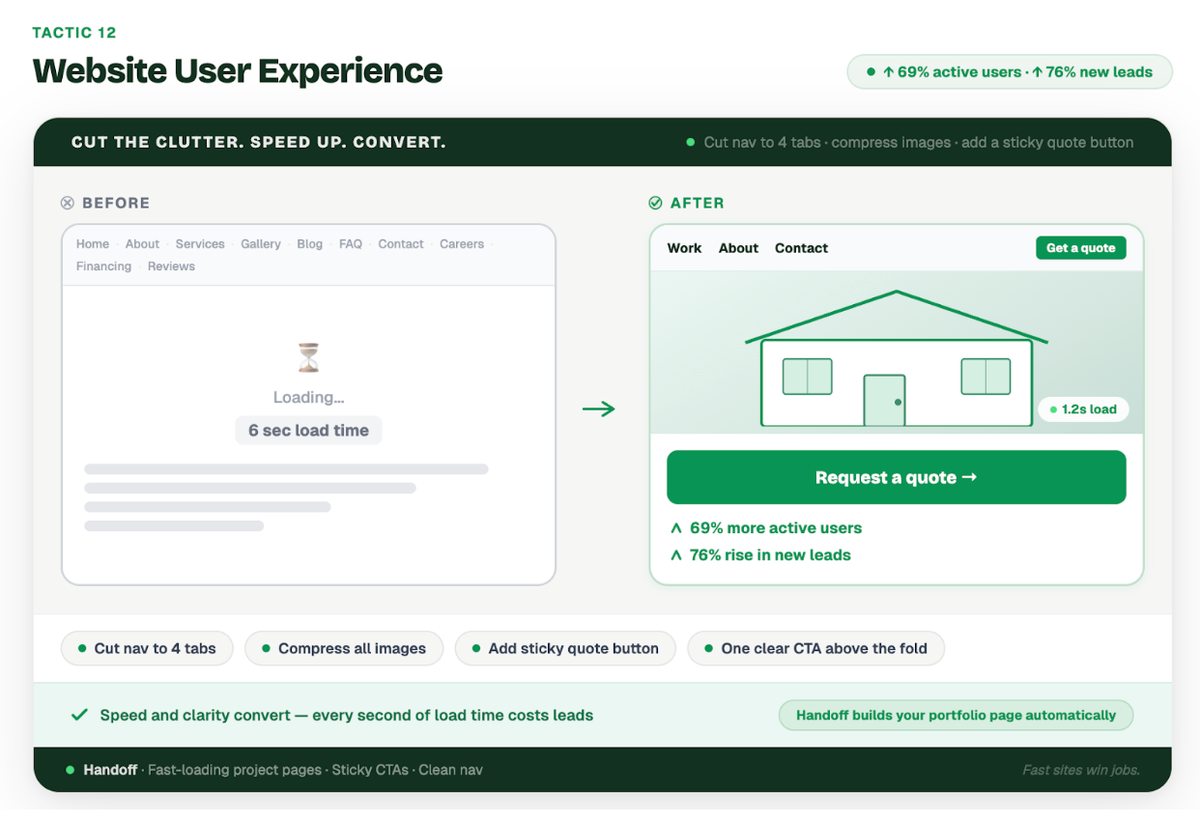
Optimizing your website to improve user interaction and satisfaction is critical for conversion. A well-designed website dramatically enhances how visitors perceive your brand. Evaluate your current design and implement construction website best practices that simplify navigation and optimize for mobile users.
Example: A Naples luxury homebuilder realized their website was taking 6 seconds to load on mobile devices, causing users to bounce. They compressed their large portfolio images, streamlined their navigation menu from eight tabs down to four, and added a sticky "Request a Quote" button that stays visible as users scroll. This redesign resulted in a 69% increase in active users and a 76% rise in new leads.
13. Re-Engage Visitors with Re-Targeting Ads
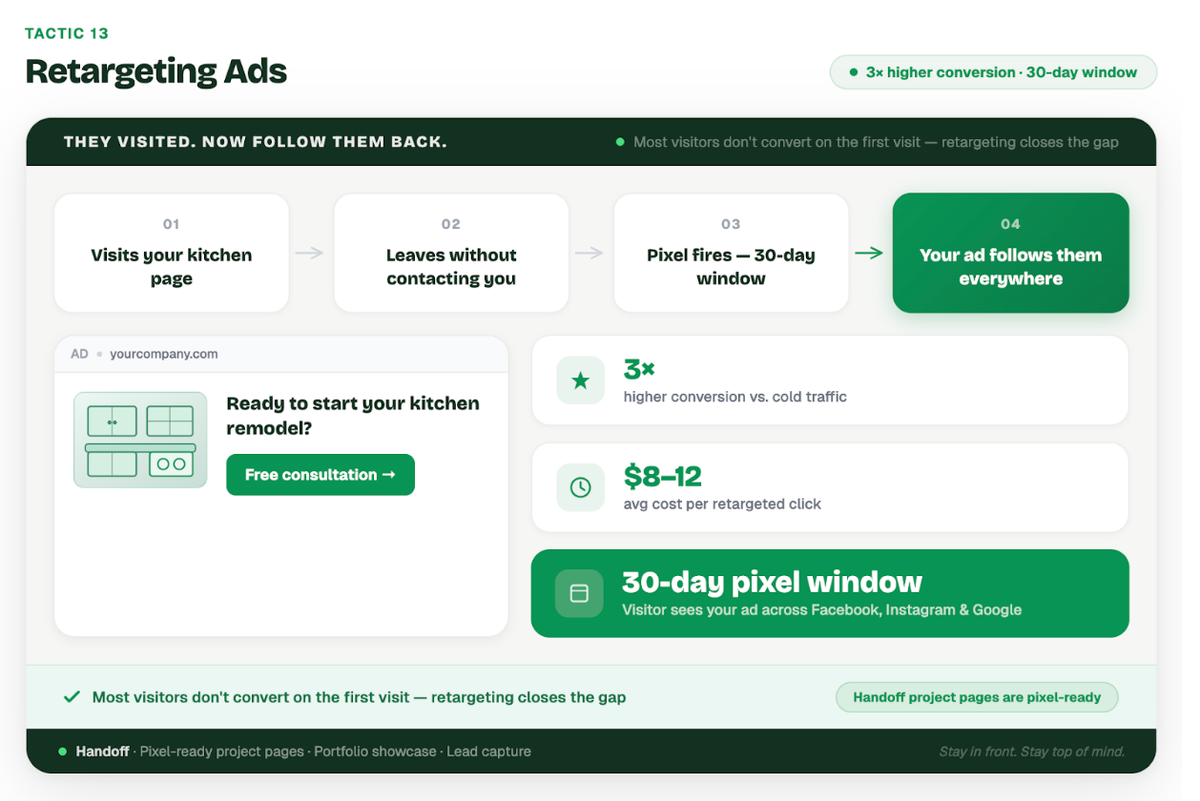
Using online ads to target users who have visited your website but did not convert keeps your brand top-of-mind. Retargeting encourages return visits, which are statistically more likely to convert. This strategy can significantly improve conversion rates by focusing on individuals who have already shown intent. Set up retargeting campaigns with customized messaging across search and social media platforms.
Example: A homeowner visits a builder's "Custom Kitchens" page but leaves without filling out a contact form. The builder uses Google Ads retargeting so that for the next 30 days, while that homeowner browses other websites or reads the news online, they see banner ads featuring the builder's best kitchen projects with the text, "Ready to start your kitchen remodel? Get a free consultation."
14. Showcase Properties with Aerial Photography
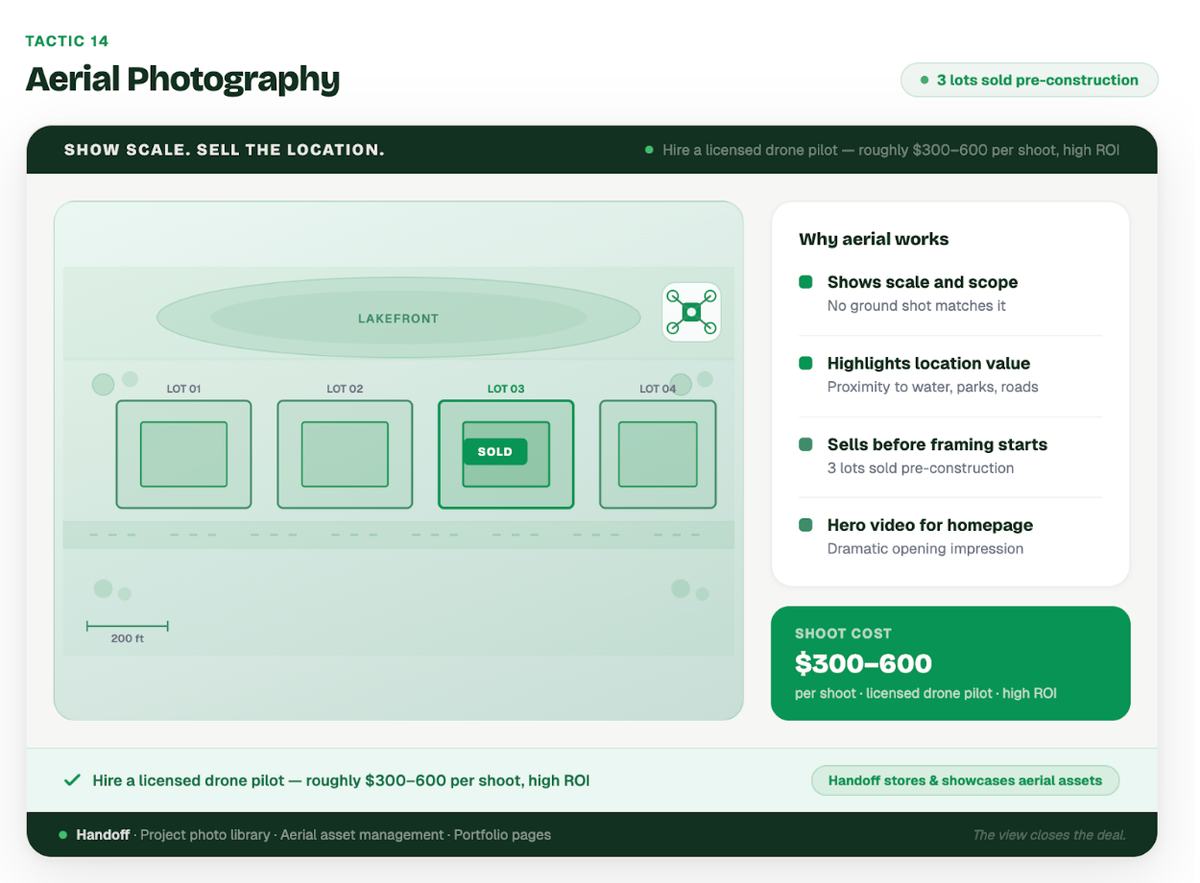
Capturing high-quality aerial footage of your properties and construction sites provides a unique perspective. Aerial photos and videos highlight the scope, scale, and detail of your projects. Drones elevate your property listings, making them more attractive and likely to engage potential buyers. Invest in drone technology or hire a professional drone photographer for your next major build.
Example: A builder developing a new community on a scenic lakefront hired a drone pilot to capture sweeping video of the lots, showing their proximity to the water and the surrounding tree line. They used this footage as the hero video on their website's homepage. The dramatic aerial perspective sold three lots before the model home was even framed.
15. Manage Your Online Reputation with Google Business Profile
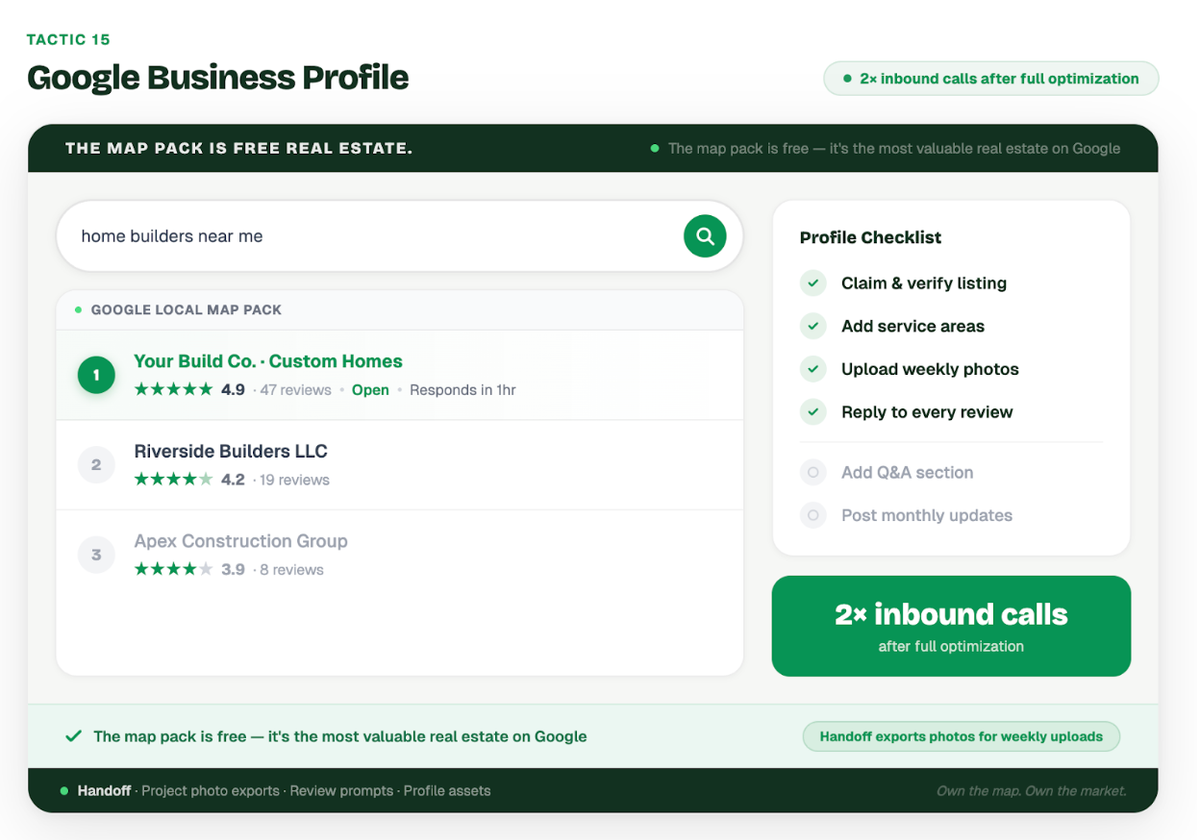
Google Business Profile is a free tool that allows businesses to manage their online presence across Google Search and Maps. It is the single most important factor for local SEO, making it easier for customers to find and contact you. Claim and verify your listing, update your information regularly, and actively encourage customers to leave reviews to dominate the local "map pack."
Example: A contractor noticed they weren't showing up when people searched "home builders near me." They fully optimized their Google Business Profile by adding their exact service areas, updating their business hours, and uploading weekly photos of their job sites directly to the profile. Within a month, they moved into the top three results in the Google Maps section, doubling their inbound phone calls.
Measuring Success: Construction Marketing ROI Benchmarks
To ensure these strategies are effective, it is important to track Return on Investment (ROI) and focus on maximizing project profitability. The construction industry demonstrates exceptional marketing ROI when strategies are properly implemented. Overall, the average marketing ROI for construction companies ranges between 280% and 350%.
The following table outlines the average ROI and break-even timelines for common marketing channels in the construction sector:
Frequently Asked Questions (FAQ)
What is the best marketing channel for homebuilders? Organic Search (SEO) is the best long-term marketing channel for homebuilders, delivering an average ROI of 681%. However, referral marketing provides the fastest returns, breaking even in just 2 to 3 months.=
How much should a homebuilder spend on marketing? Most successful mid-size construction companies invest between $65,000 and $120,000 annually on marketing, while enterprise commercial builders invest 2.8% to 3.2% of their annual revenue.
Why is my construction website not generating leads? The most common reasons construction websites fail to generate leads are slow load times (over 3 seconds), confusing navigation, lack of mobile optimization, and missing trust signals like reviews and high-quality project galleries.
How fast should I respond to a new construction lead? You should respond to new leads within one hour. Data shows that contractors who respond within an hour are 7 times more likely to qualify the lead and win the job compared to those who wait 24 hours.
Next Steps For Marketing Your Construction Business
Incorporating these 15 marketing strategies can significantly boost your homebuilding business. By consistently implementing these tactics, you will build trust, generate qualified leads, and expand your reach without breaking the bank.
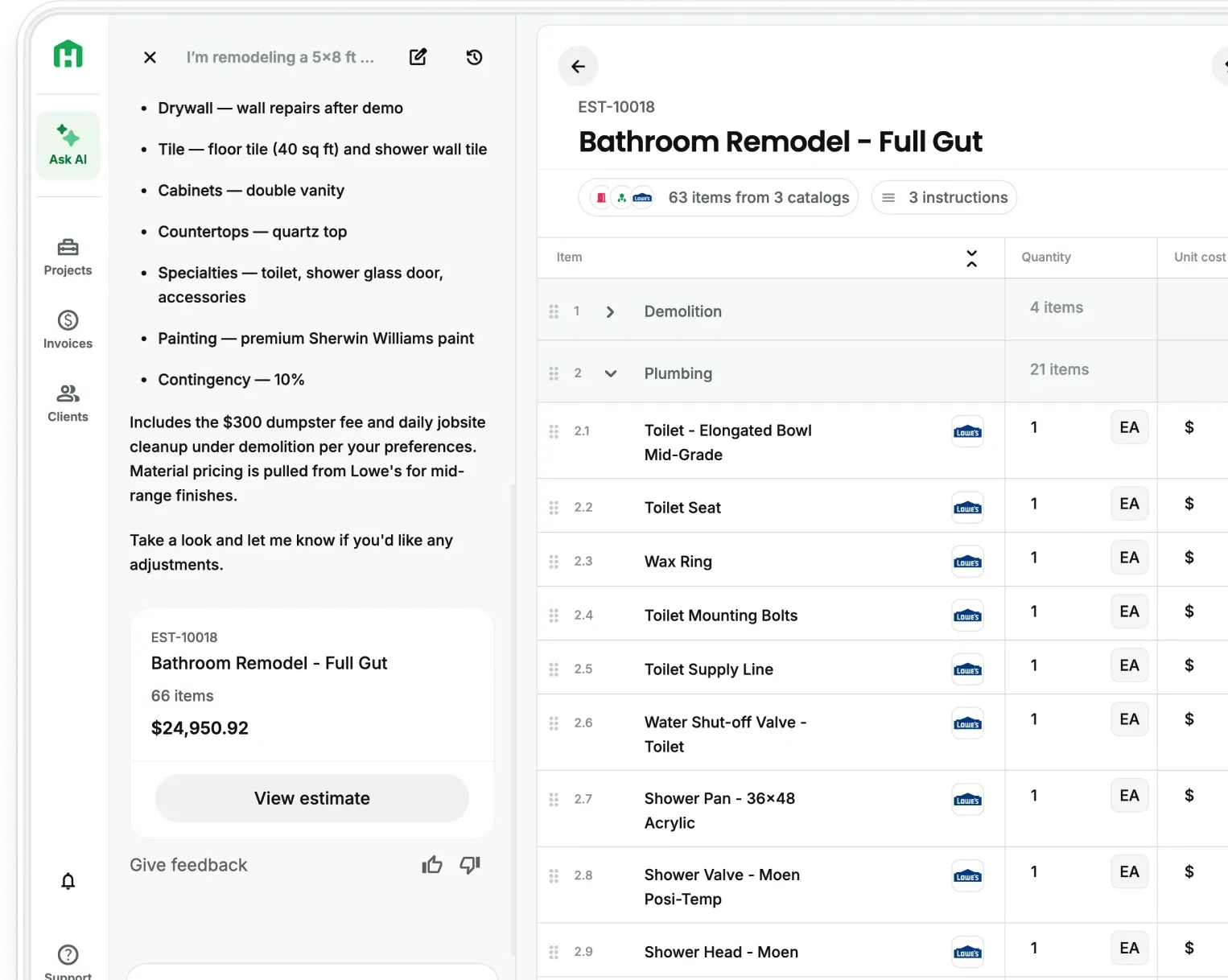
However, generating leads is only half the battle. Once those leads come in, you need to estimate and propose projects quickly and accurately. By adopting AI estimating software, you can automate your back-office, generate instant proposals, and focus on what you do best: building exceptional homes.
Ready to streamline your entire workflow? Explore how AI-powered project estimation with Handoff.ai can transform your sales process today.